The only consistency in culture’s ‘inclusion’ is its exclusion of Jewish culture - opinion
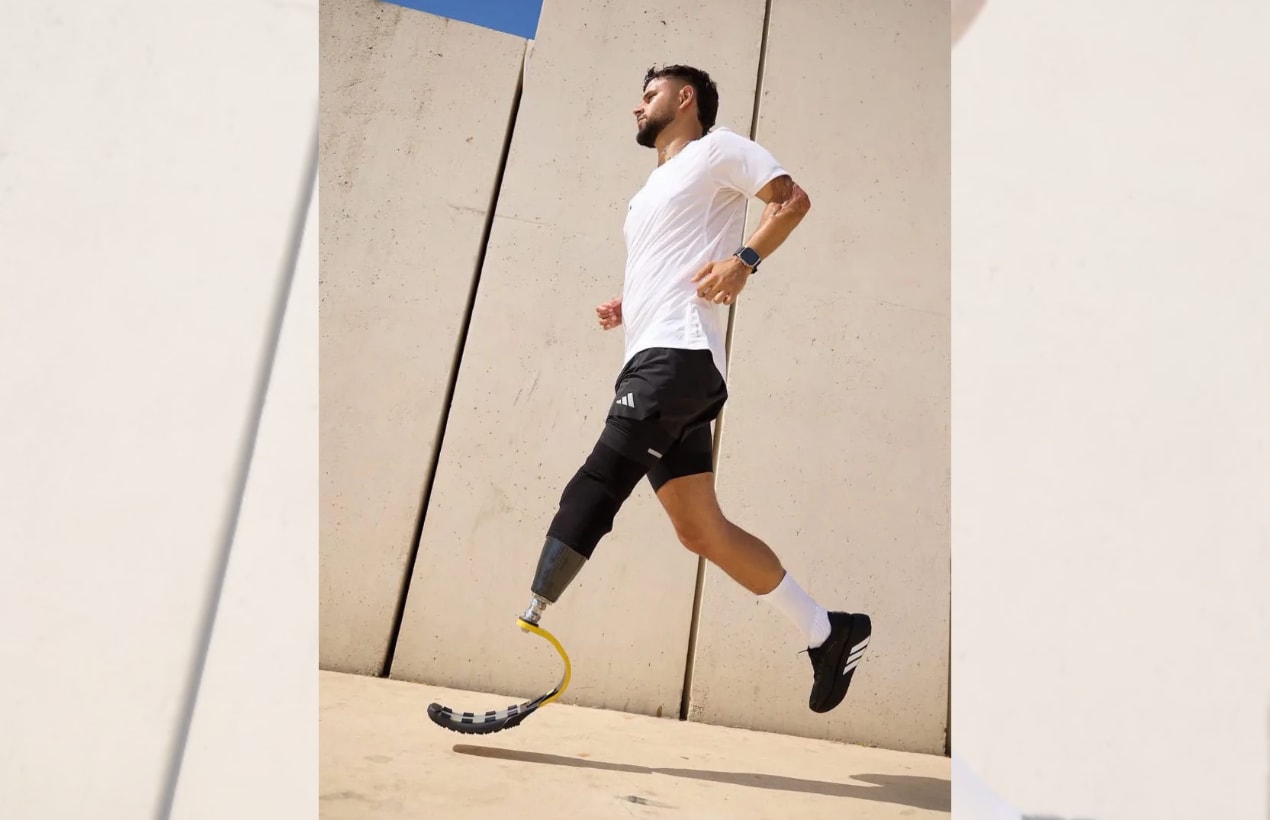
We have entered the upside-down world of culture: a reality in which Adidas apologizes for featuring an amputee in a local campaign promoting a single-shoe service for amputees.
During the last great corporate social-justice movement, the same global brand reshared Nike’s Black Lives Matter post, declaring, “Together is how we move forward.” For one celebrated moment, two competitors joined forces to defend the dignity of a marginalized group. The principle was simple: Black lives matter, without qualification or political precondition.
By that same logic, we seem to have backtracked. Last week, Israeli amputee Shalev Biton’s identity was enough to turn an accessibility initiative into a “political provocation.” He was apparently “not the right kind of amputee” to include.
Along came actor Javier Bardem, amplifying language associating Biton with “child killers.” Biton had promoted the reasonable proposition that a person with one leg should be able to purchase one shoe. Bardem helped turn his inclusion into an international offense for which Adidas ultimately apologized.
This exposed a profound failure of moral discrimination: the inability, or refusal, to distinguish between a government, a war, and an injured individual.
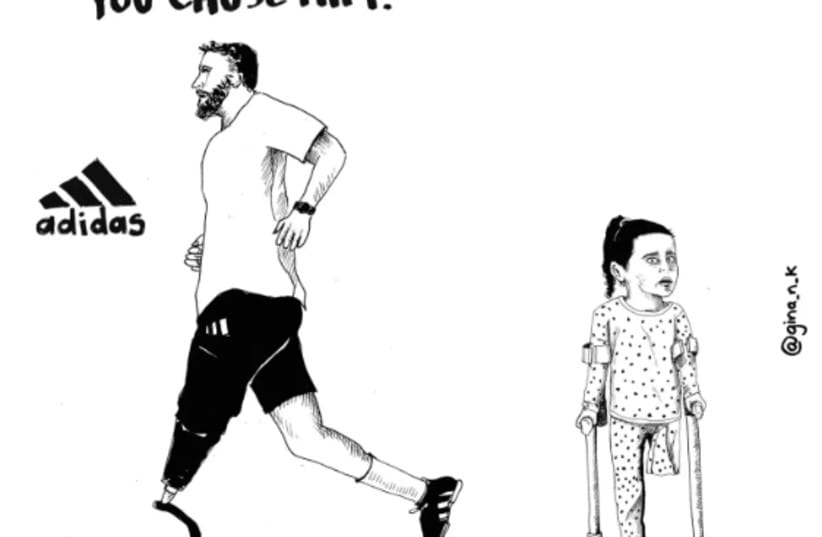
Adidas did not apologize because its campaign failed at inclusion; it apologized because that inclusion extended to the “wrong” person. When institutions devoted to inclusion cannot recognize their own exclusion during a period of intense hostility toward Jews and Israel, that is not naivety. It is cowardice.
Companies are, by no means, obliged to adopt DEI policies. But once Adidas made inclusion part of its public identity, it assumed an obligation to apply that principle consistently. When diversity, equity, and inclusion must first seek the approval of the Boycott, Divestment and Sanctions movement, the principle has surrendered to group pressure.
Adidas’ founder, Adi Dassler, was a Nazi Party member. A company with that history should understand the consequences of deciding that some identities are less worthy of public representation.
Last week, that same double standard resurfaced at New Jersey’s MetLife Stadium. Macklemore, the American rapper best known for two hits a decade ago, used his opening sets for Ed Sheeran to call for a “Free Palestine,” accuse Israel of genocide and apartheid, perform “Hind’s Hall,” and project political imagery.
On the second night, after objections to his first performance were already public, he doubled down. The problem was not that Macklemore expressed sympathy for Palestinians. Nor is support for Palestinian statehood inherently antisemitic.
The problem was the conversion of someone else’s mainstream concert into a one-sided political rally, with no comparable acknowledgment of October 7, and the hundreds of music lovers murdered while dancing at a festival.
Since writing this article, the silence has now produced a statement.
On September 14, Messina Touring Group, promoter of Sheeran’s US Loop Tour, confirmed that Macklemore would not appear on the remaining dates. The promoter acted not on its own authority but only after upcoming venues refused to host him over the risk of ticket cancellations.
What followed then was the oldest backstage plot in show business: Macklemore accused Robert Kraft, Jewish owner of Gillette Stadium where a future show was planned, of having “rallied other stadium owners into pressure of canceling the artist.”
Macklemore seems to not understand that one’s actions may have consequences, and that a powerful Jewish individual is not the raison d’être of his own bad behavior. Macklemore’s political performance was intended to generate exactly the attention his recent music could not. That plot seems to have failed.
Sarandon's complaints
Then there is Oscar-winning actress Susan Sarandon, lamenting her Hollywood “blacklisting” from the Venice Film Festival, where she was promoting The Echo Chamber, a Golden Lion contender.
Sarandon claimed agencies were still warning filmmakers not to hire her and said firm positions within her industry remained in the hands of “Zionists.” Nothing demonstrates professional erasure quite like an international press conference at one of cinema’s most prestigious events.
Sarandon is entitled to argue for Palestinian rights, criticize Israel, or demand a ceasefire. She is not entitled to rewrite why the backlash began.
In November 2023, while American Jews were confronting a surge in antisemitism after the worst massacre of Jews since the Holocaust, she announced that frightened Jews were getting “a taste” of what Muslims experience in America. Her agency dropped her, and she later apologized for her “terrible phrasing.”
Three years later, the apology has apparently matured into an accusation about “Zionist” power. An agency’s decision to stop representing an actor after inflammatory and antisemitic public remarks is not evidence that an ethnic group collectively controls Hollywood.
Sarandon is complaining about lost opportunities while starring in a major film, walking the Venice red carpet, and using the festival’s microphones to tell the world she has no microphone.
Being blacklisted once meant enforced disappearance; now it apparently includes starring in a Golden Lion contender while holding an internationally reported press conference about one’s disappearance.
It has become the recurring sleight of hand in culture’s social justice. Speech is treated as sacred when a celebrity attacks Jews and the Jewish State, but every consequence is recast as censorship – and, conveniently, blamed on Zionists. Sarandon has not been deprived of a voice; she has been given an international stage from which to complain that Jewish power deprived her of one.
History will show that the courage to include everyone begins precisely where the crowd demands an exception. A principle that protects only fashionable identities is not a principle. It is branding.
The answer is not censorship or ideological blacklists. It is consistency: defend Palestinian dignity without denying Israeli humanity; protect political speech without pretending it carries no responsibility; and apply inclusion without first asking whether BDS approves of the person being included.
When the entertainment industry makes Jews and Israelis the exception, the only diversity on display is the variety of excuses it invents for doing so.
The writer is a former Universal Music executive, author of Code of Conduct, researcher of DEI, and a corporate psychologist.
KioskNews shows a cleaned-up reading view extracted from the publisher’s page — the original always lives on their site, not ours.