Written in bone: China bets on ancient scripts for modern soft power
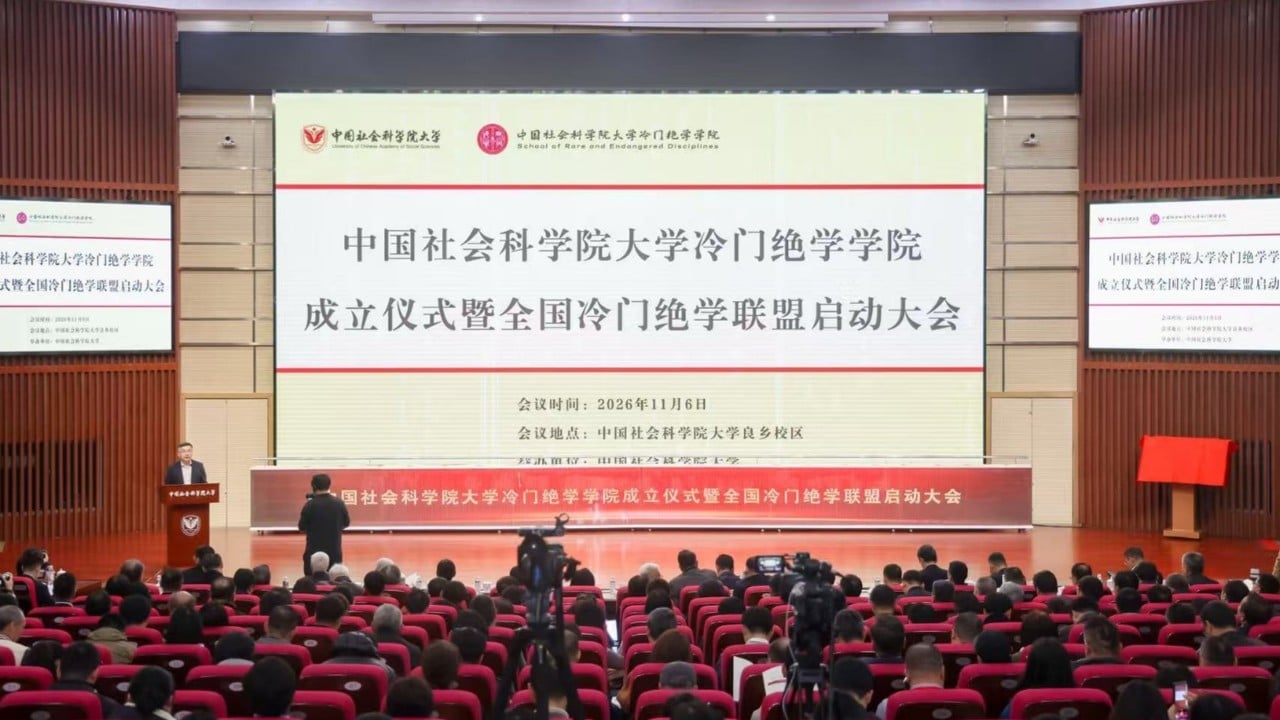
China has established an institute dedicated to preserving rare and endangered historical disciplines, advancing Beijing’s push to elevate traditional culture as a pillar of its soft power and national narrative.
The institute was inaugurated at the University of Chinese Academy of Social Sciences (UCASS) in Beijing on Friday, alongside the launch of an association to consolidate nationwide resources involving the studies.
The institute includes a dozen ancient ethnic minority scripts such as Tangut and Old Tibetan, whose surviving texts provide insights into the histories of northwestern China border regions, as well as oracle bone inscriptions dating back more than 3,000 years and representing the country’s earliest known fully developed writing system.
Holding unique cultural value, these vulnerable research areas require highly specialised expertise but have long been plagued with a lack of specialists.
Many ancient ethnic minority scripts “are at risk of being lost”, Zhan Long, the new institute’s dean, told state broadcaster CCTV in a report aired on Monday.
Some scripts were already “on the verge of disappearing”, while the documents were “scattered around the world and have not yet been brought together”, he said.
Developing the expertise to decipher an ancient script could take more than a decade, Zhan added.
China has only about 500 researchers working on ancient Chinese writing, according to a rough estimate cited by Nanfang Daily, the Guangdong provincial Communist Party committee’s official newspaper.
Nearly two-thirds of the about 4,500 distinct oracle bone characters that have been discovered remain undeciphered, it reported on Tuesday.
Archives nationwide had slightly more than 30 specialists working on Manchu-language records, despite the existence of about five million such documents, according to a 2025 report by the National Archives Administration of China.
“We established this institute to train specialists, address gaps in and shortages of expertise, and ensure the continuity of our cultural heritage,” Zhan said.
The move follows a decade of efforts to support vulnerable areas of ancient culture, especially in recent years amid the revival of traditional culture and Beijing’s push to strengthen its own narrative on history to counter those of the West.
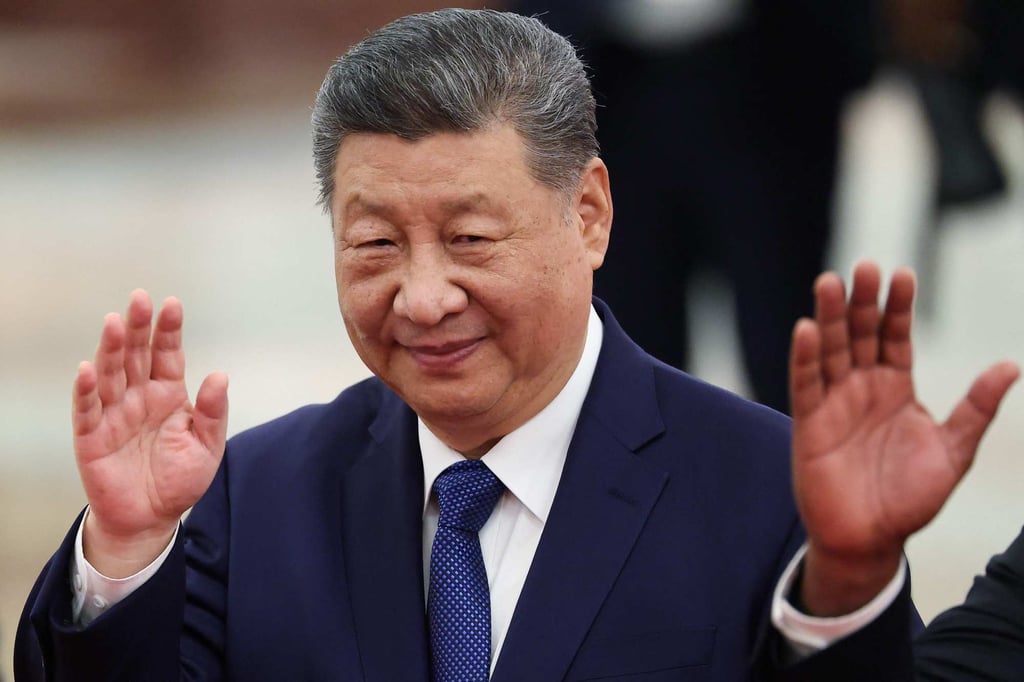
At a 2016 symposium on philosophy and social sciences, Chinese President Xi Jinping called for greater attention to “more marginal subjects that are of high cultural value or bear on Chinese heritage”.
01:51
Ancient ‘book doctors’ restore historical Chinese literature
“We should treat these subjects seriously and make sure that there are people working on them and carrying them on from one generation to the next,” Xi said.
Research into ancient scripts and texts can “provide historical evidence and legal support for territorial claims and boundary demarcation”, Du Yunhui, a Marxism scholar at Hebei Normal University, wrote in May in Study Times, the Central Party School’s newspaper.
Such research also helped defend China’s cultural voice against “Western narratives that distort and deconstruct the history of Chinese civilisation”, Du said.
“These disciplines serve a function of ‘cultural border defence’, helping China maintain the initiative and a leading voice on questions of national sovereignty and territorial integrity,” he wrote.
The institute sought to provide talent and academic support to “build China’s independent knowledge system, serve lasting peace and stability in border regions, and strengthen Chinese civilisation’s international voice”, it said on social media on Monday.
The specialised fields “concern the survival of the country’s cultural roots”, Huang Dekuan, director of Tsinghua University’s Research and Conservation Centre for Excavated Texts, told CCTV on Saturday.
The institute offers an integrated bachelor’s, master’s and doctoral programme to support students’ long-term research, following a model normally used in clinical medicine and programmes for outstanding students in basic disciplines such as mathematics.
It has also established a laboratory for digital research and will encourage students to use digital technologies in interdisciplinary studies, according to state-run Beijing Daily.
No tool could yet independently decipher ancient Chinese characters, but AI could classify already-deciphered oracle bone characters with an accuracy rate exceeding 80 per cent, according to Nanfang Daily.
KioskNews shows a cleaned-up reading view extracted from the publisher’s page — the original always lives on their site, not ours.