The Complete Evolution Of The Punisher's Live-Action On Screen Appearances

Richard Craig is a Senior Author at Screen Rant covering film and TV. Richard has also written extensively about horror and film soundtracks, contributing a chapter to the first major academic collection on the folk horror genre, The Routledge Companion to Folk Horror. Richard is also a performing musician and holds an MA in Music and Sound Art.
Few Marvel characters have undergone as many live-action reinventions as Frank Castle, better known as the Punisher. First introduced in The Amazing Spider-Man #129 in 1974, the character began life as a Spider-Man antagonist before evolving into one of Marvel's most popular antiheroes. Unlike traditional superheroes, Castle is driven not by idealism or responsibility but by an unrelenting war on crime following the murder of his family. That premise has remained remarkably consistent across five decades of comics, even as different creators have interpreted the character in wildly different ways.
The same can be said of Punisher's screen history. Across movies, streaming series, and television appearances, the Punisher has shifted from a generic 1980s action hero to a psychologically complex vigilante. Different actors have emphasized different aspects of Frank Castle, whether it be his military precision, his grief, his brutality, or the dark humor that occasionally surfaces beneath the violence.
The character's visual evolution has been just as dramatic. Audiences have seen everything from the infamous skull-less version of the late 1980s to comic-accurate tactical armor and heavily militarized modern interpretations. Along the way, each actor brought something unique to Marvel's most dangerous vigilante.
From Dolph Lundgren's straightforward action-movie avenger to Jon Bernthal's emotionally layered interpretation that eventually crossed paths with Spider-Man in Brand New Day, the Punisher's live-action journey reflects changing attitudes toward comic book adaptations and action heroes themselves.
Dolph Lundgren's Punisher

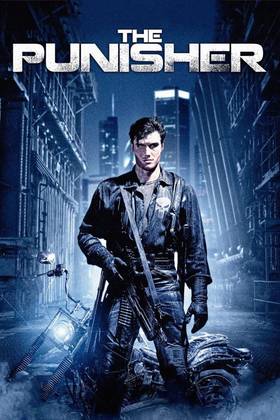
The first live-action Punisher was in 1989 with The Punisher, starring Dolph Lundgren, and feels very much like a product of late-1980s action cinema. Perhaps the most famous characteristic is that it lacks the Punisher's iconic skull emblem. For years, many believed the skull was omitted because of rights complications. Director Mark Goldblatt later clarified during the DVD commentary that the decision was entirely creative.
As a result, this version of Frank Castle often feels visually disconnected from the comic book character. The Punisher (1989) also avoids using the supporting cast and mythology associated with the comics. Outside of Frank Castle himself, very few recognizable elements make the transition to the screen.
Lundgren's portrayal emphasizes physicality above all else. He is an unstoppable one-man army, mowing through criminals with the same relentless efficiency that defined many action heroes of the era. He's stoic, imposing, and rarely allows emotion to surface.
Rather than a distinctive comic-inspired costume, Castle spends most of The Punisher (1989) dressed in generic black clothing that could easily belong to any action protagonist from the decade. While The Punisher (1989) lacks much of the comic's identity, it established the core idea of Frank Castle as a relentless force of vengeance that every adaptation afterward would build upon.
Thomas Jane's Punisher

Marvel's next attempt was 2004’s The Punisher, starring Thomas Jane. Unlike the Lundgren version, this adaptation made a much greater effort to embrace the source material, drawing heavily from The Punisher: Year One and Garth Ennis' acclaimed Welcome Back, Frank storyline.
The Punisher (2004) spends considerable time exploring the man beneath the vigilante persona. Castle's grief, isolation, and trauma become central parts of the story. Jane’s performance captures the emotional devastation that drives Frank's crusade while still maintaining enough menace to make his eventual transformation believable.
Jane may not possess the towering physical build associated with some comic versions of the character, but he successfully conveys the intensity and determination that define Frank Castle. Castle's black skull shirt became a central part of the design, paired with a black trench coat that reflected popular comic depictions from the 1990s and early 2000s. As the story progresses, the look evolves into something more tactical while retaining the recognizable skull imagery.
The Punisher (2004) isn't without flaws. Its middle section occasionally slows the momentum, and some tonal choices remain divisive. However, Jane's portrayal brought a level of humanity to the character that had previously been absent. For the first time, audiences weren't simply watching a killing machine. They were watching a broken man attempting to give purpose to unimaginable loss.
Ray Stevenson's Punisher

By 2007, Marvel opted for a fresh start, hiring Lexi Alexander to direct Punisher: War Zone and casting Ray Stevenson as Frank Castle. The result was perhaps the most comic-book-accurate Punisher adaptation up to that point.
Unlike its predecessor, Punisher: War Zone embraced the exaggerated brutality of the comics. The violence is extreme, the villains are larger than life, and the entire narrative operates with a heightened energy that feels ripped directly from a graphic novel.
Stevenson proved perfectly suited to this approach. Physically, he closely resembled many classic comic depictions of Frank Castle. His Punisher feels intimidating from the moment he appears, yet Stevenson also understands the darkly comedic edge that often exists in Punisher stories.
War Zone adopted a more tactical appearance that resembled a realistic interpretation of Frank's traditional comic costume. The body armor, black clothing, and high-neck protection created one of the character's most recognizable screen looks, though the skull emblem could have been more prominent. With over-the-top action and a knowing wink, Stevensen is the closest to the Punisher from the comics.
Jon Bernthal's Punisher

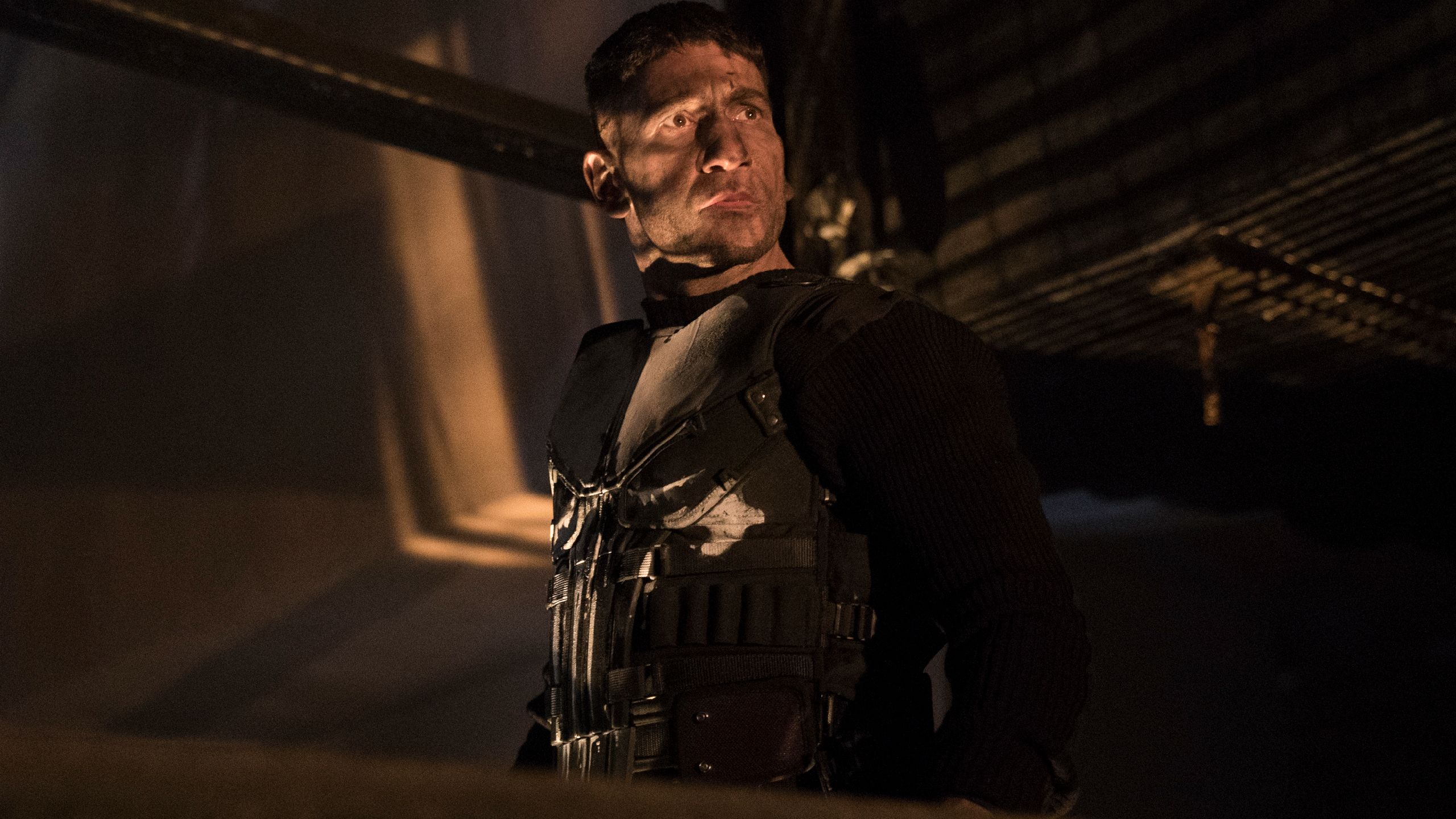
Jon Bernthal's Frank Castle in Daredevil season 2 marked the beginning of the most expansive and influential live-action Punisher interpretation to date. Unlike previous versions, Bernthal benefited from long-form television storytelling. Rather than condensing Frank's journey into a two-hour film, Marvel's Netflix era allowed audiences to spend dozens of hours exploring every aspect of the character. The result was a version of Castle defined as much by emotional complexity as by violence.
Bernthal immediately established himself with an intensity that felt different from his predecessors. His Punisher is fueled by rage, grief, and trauma, but those emotions are constantly visible beneath the surface. Every conversation feels like it could explode into violence at any moment, creating a sense of unpredictability that perfectly suits the character.
The philosophical conflict between Matt Murdock and Frank Castle allowed Daredevil to explore the morality of vigilantism in a way no previous adaptation had attempted. Rather than presenting Castle simply as a hero or villain, the series examined the consequences of his methods and the pain driving them.
Bernthal's own The Punisher series expanded on these ideas by focusing heavily on Frank's PTSD and military background. Previous adaptations touched on trauma, but this version explored it in far greater depth. The character's struggles with loss, guilt, and identity became central to the narrative, creating the most psychologically detailed Punisher portrayal ever seen on screen.
The trade-off was that Frank frequently moved in and out of the Punisher identity. By the time of One Last Kill, audiences had become familiar with a recurring pattern in which Castle repeatedly questioned whether he should continue his war on crime. While these internal conflicts added depth, they also became a recurring talking point among fans.
Visually, Bernthal's Punisher evolved constantly. His original Netflix skull design quickly became iconic, balancing realism with comic-book accuracy. Throughout subsequent appearances, the costumes incorporated increasingly tactical elements, including heavier body armor and military-inspired gear that reflected modern comic interpretations from the 2010s onward.
Bernthal's Castle gradually learned to trust others, forming meaningful relationships throughout the Netflix era. While still fundamentally a loner, he became more willing to work alongside allies when necessary. That development ultimately paid off when the character transitioned into Spider-Man: Brand New Day.
Moving a notoriously violent antihero into a PG-13 Spider-Man story could have been a difficult balancing act, yet the adaptation reportedly found effective ways to preserve Frank's edge without overwhelming the film's tone. By that point, audiences were finally seeing a Punisher capable of functioning alongside other heroes rather than existing entirely outside their world.
The Punisher
- TV Show(s)
- The Punisher
- Video Game(s)
- The Punisher (1990), The Punisher: The Ultimate Payback!, The Punisher (1993), The Punisher, The Punisher: No Mercy
- First Film
- The Punisher
- First TV Show
- The Punisher
- Cast
- Jon Bernthal, Ebon Moss-Bachrach, Ben Barnes, Amber Rose Revah, Deborah Ann Woll, Jason R. Moore, Paul Schulze, Daniel Webber, Michael Nathanson, Jaime Ray Newman, Josh Stewart, Floriana Lima, Giorgia Whigham, Shohreh Aghdashloo, Rob Morgan, Dolph Lundgren, Thomas Jane, Ray Stevenson
- Created by
- Gerry Conway, John Romita Sr., Ross Andru
KioskNews shows a cleaned-up reading view extracted from the publisher’s page — the original always lives on their site, not ours.