China stockpiles ASML lithography tools, spurring US calls for complete export ban
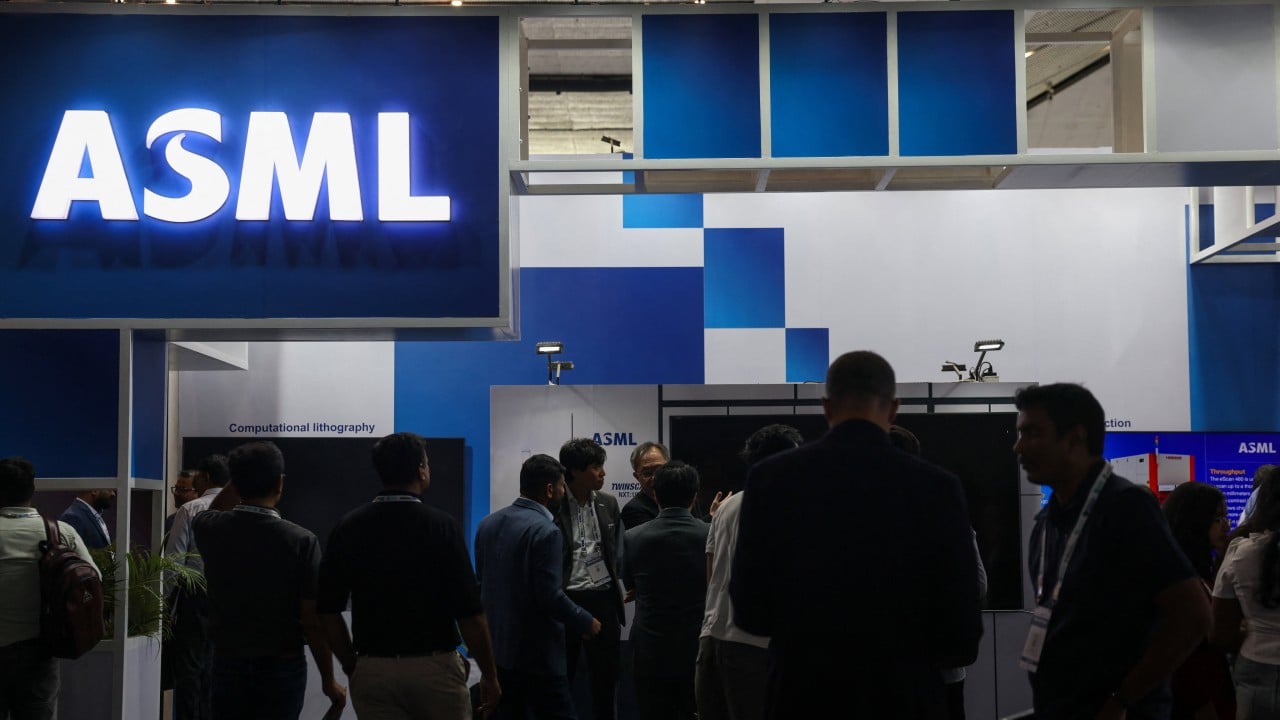
Chinese semiconductor plants amassed hundreds of immersion lithography machines worth billions of dollars in recent years, according to former US officials, who urged Washington and its allies to shut down further exports.
Chinese-owned fabs had acquired an estimated 343 immersion deep ultraviolet (DUV) lithography systems by early 2026, said a report published in late September by the Centre for Technology & Statecraft (CTS), a Washington research group established in August.
Co-authored by former US export control official Nicholas Brown and Saif Khan, a former White House and commerce department technology policy adviser, the study adds fresh data to the debate in Washington over whether Western allies should impose a total blockade on immersion DUV tools bound for China.
Blocked from buying Dutch toolmaker ASML’s most advanced extreme ultraviolet (EUV) lithography tools, Chinese chipmakers have leaned heavily on immersion DUV systems – some models of which remain exempt from Western export bans – to produce sophisticated semiconductors.
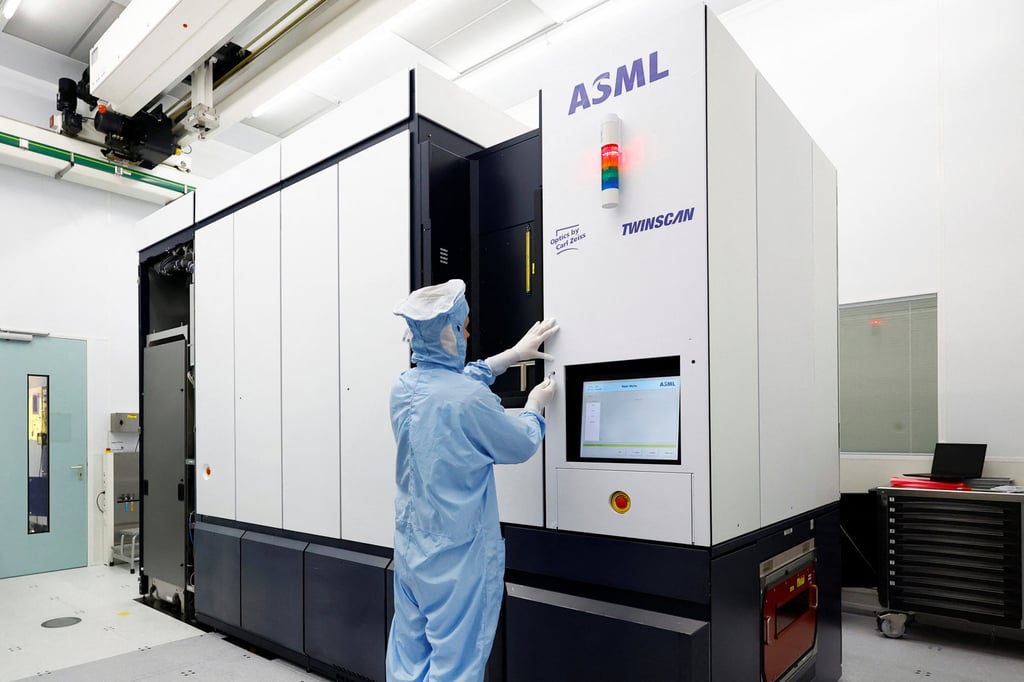
The report estimated that about 270 of the machines acquired by Chinese-owned plants were ASML’s Twinscan NXT:1980i immersion DUV systems.
Though technically behind EUV, these tools can be adapted to manufacture 7-nanometre-class logic chips and advanced memory for artificial intelligence processors, including Huawei Technologies’ Ascend series, the authors said.
Chinese fabs spent over US$13 billion acquiring about 90 NXT:1980i machines in 2024 and another 89 in 2025, according to the report.
The purported buying spree is reflected in ASML’s financial disclosures. China accounted for 41 per cent of the Dutch firm’s net system sales by shipment destination in 2024 and 33 per cent in 2025.
Sales to China have since moderated, dropping to 19 per cent of ASML’s total in the first quarter of 2026 and 14 per cent in the second. ASML previously said that its high level of 2024 shipments was partly driven by fulfilling backlogged orders delayed by earlier supply chain constraints.
The Netherlands began requiring export licences for ASML’s NXT:2000i and more advanced immersion DUV systems in September 2023. Those models have since been effectively barred from China. It extended the licence requirement to the NXT:1980i a year later, but shipments of that model can still be approved case by case.
The report argued that this approach left a major loophole, warning that even tools sold for mature chipmaking nodes can be repurposed or relocated to advanced production lines.
To close the loophole, the authors recommended a complete China-wide ban on all immersion DUV equipment, alongside restrictions on replacement parts and servicing at advanced facilities. They suggested Washington coordinate with the Netherlands or unilaterally extend American export rules to foreign-made systems using US tech.
The push aligns with growing pressure in US Congress.
The bipartisan Match Act, introduced in April, seeks China-wide restrictions on sales and servicing for chipmaking equipment that China cannot easily manufacture at home – explicitly targeting immersion DUV tools. Senators renewed calls for its passage in September, and Khan publicly endorsed the bill earlier this year.
While cut-offs would have little immediate impact because Chinese fabs have already built up an inventory of imported tools, the authors argued that the long-term difference would be substantial.
Under the study’s most expansive theoretical projection, if China overcame other chipmaking bottlenecks and continued importing about 90 NXT:1980i systems a year, its DUV fleet could support an annual output of up to 434 million AI chips equivalent to Nvidia’s H100 by 2035. Halting new imports in 2027 would cap that ceiling at 153 million units, it said.
KioskNews shows a cleaned-up reading view extracted from the publisher’s page — the original always lives on their site, not ours.