Florida turns Hurricane Ian pier wreckage into 300-ton underwater reef
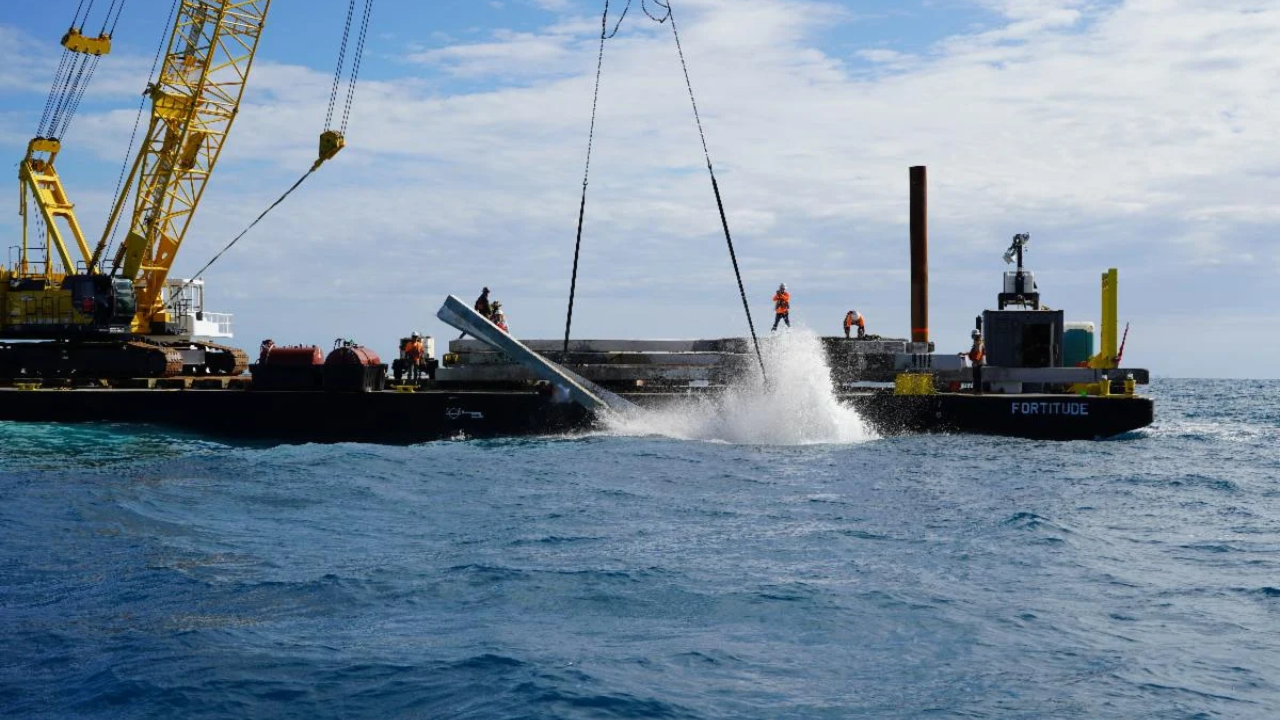
Pieces of a historic Florida pier damaged by Hurricane Ian have found a second life beneath the Gulf of Mexico, where they are being repurposed to support marine life. The City of Naples completed the deployment of 59 concrete pilings at Wasmer Reef on April 24, 2026, as part of efforts to rebuild the landmark Naples Pier.
According to the city’s announcement, the project was carried out with construction contractor Shoreline Foundation, Inc., and marine and environmental engineers Turrell, Hall & Associates. Local broadcaster Gulf Coast News also reported on the reef deployment. The initiative not only gives the historic pier materials a new purpose but also helps create habitats for marine organisms and supports the Gulf of Mexico’s underwater ecosystem.
From hurricane damage to marine habitat
The transformation follows the extensive damage Hurricane Ian inflicted on Naples Pier on September 28, 2022. The powerful storm destroyed a substantial section of the waterfront structure, leaving parts of the pier collapsed into the Gulf and prompting plans for a complete reconstruction.Originally built in 1888, the pier has long been a popular destination for residents and visitors, known for fishing, wildlife watching and views of the Gulf.
The city determined that much of the remaining structure had been compromised and needed replacement to improve safety and resilience.Rather than treating all the demolished concrete as construction waste, officials opted to redirect some of it towards marine habitat restoration. The 59 pilings, weighing more than 300 tons combined, were placed at Wasmer Reef, around 10 miles offshore from Gordon Pass. The deployment was completed under a permit from the US Army Corps of Engineers and overseen by Turrell, Hall & Associates, according to the city.
An established reef gets an expansion
The new material has been added to an existing artificial reef system that was first established in 2015 through a collaboration involving multiple agencies, with funding from BP oil spill grants and private donations. The Naples deployment marks the eighth reef created within the Wasmer site.Artificial reefs can provide hard surfaces and sheltered spaces for marine organisms in areas where suitable natural structures may be limited.
Over time, these surfaces can attract organisms that form the base of a wider underwater food web. The city says Wasmer Reef already supports corals, aquatic vegetation, invertebrates, bivalves and tunicates. These organisms help provide food and shelter for fish at different stages of their lives.The old pier pilings will become part of this existing underwater environment, offering additional surfaces for marine organisms to colonise.
Dive teams checked conditions at the site before and after the deployment to ensure that the work complied with permit requirements. While artificial reef structures can create habitat, their ecological benefits depend on factors such as water conditions, material suitability and the species able to establish themselves.
The newly placed concrete is therefore an addition to an established habitat, rather than an instant replacement for a mature natural reef.
The remaining concrete will also be recycled
The reef deployment is part of a wider effort to reduce waste generated by the pier reconstruction. According to the City of Naples, pilings not selected for the reef have been sent to a recycling facility, where they will be processed into recycled concrete aggregate for use in road construction.This approach gives the removed material two potential uses: some of it will contribute to underwater habitat, while the rest will be converted into a construction resource. The rebuilding project is continuing at the original pier site. The city’s project information describes plans to replace the damaged structure with a stronger, more resilient pier designed to withstand future storms more effectively. The repurposing of the old pilings offers a separate environmental outcome from the reconstruction itself.
Material that once supported a popular public landmark will now lie on the Gulf seabed, where it can become part of an evolving marine ecosystem.
KioskNews shows a cleaned-up reading view extracted from the publisher’s page — the original always lives on their site, not ours.