7 Most Hopeless War Books of All Time, Ranked

Remus is a writer, editor, journalist, and author with an eye for detail and an extremely active imagination. He is an enthusiast of everything to do with the graphic medium, whether it's Western comics and their adaptations or manga and anime. Remus is also the author of the sci-fantasy novel Once Upon a Time in Hyperspace and several works of short fiction in the mystery, comedy, and horror genres.
Sign in to your Collider account
Whether they’re on a screen or on a page, great war stories play a key role in educating the wider public about the horrific realities of armed conflict. Particularly in the 20th and 21st centuries, the lived experiences of the World Wars, the Vietnam War, and more have inspired some brilliant and bleak novels, many of which rank among the greatest works of literature ever written.
These novels span many genres, from tragicomedy to drama to science fiction, but what they all share is a grounded emotional and psychological realism that makes for a truly devastating read. They’re not easy, but they are inventive, intelligent, visceral, and above all honest, which is the quality that you want most of all in a story about humanity’s darkest chapters. So, without further ado, here’s our ranked selection of some of the most hopeless war books of all time.
7 ‘Catch-22’ (1961)

Joseph Heller’s debut novel, which has been adapted multiple times, Catch-22 is a satirical war story set during World War II. The book uses a non-linear third-person narrative, exploring events from 1942 to 1944 from the perspectives of multiple characters. Primarily, it’s the story of Captain John Yossarian, a U.S. Army Air Forces bombardier based on the Mediterranean island of Pianosa who desperately tries to cling to his sanity while dealing with the relentless absurdities of war and military life.
Primarily a satire of military bureaucracy, Catch-22 derives its title from a bureaucratic fallacy: an insane person should not fly missions, but anyone who asks not to fly on grounds of insanity must be sane enough to fly them. The book explores how this rule, and other equally counterintuitive military reasoning, slowly grind away at a soldier’s sanity. It’s easily one of the most important war novels of all time and a decidedly bleak narrative; the only reason it doesn’t rank higher on this list is that the hopelessness is balanced by Heller’s wit and dark sense of humor.
6 ‘The Things They Carried’ (1990)
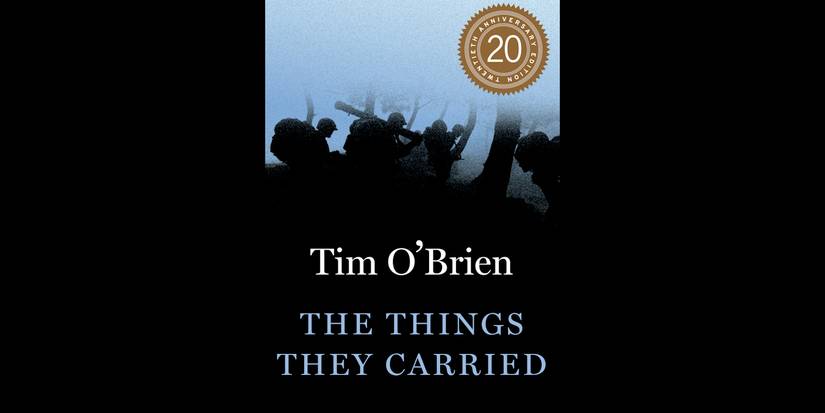
Written by novelist Tim O'Brien and based on his experiences as a soldier in the Vietnam War, The Things They Carried is a collection of linked short stories revolving around a fictional platoon of American soldiers fighting in the war. A semi-autobiographical work of metafiction, the book explores personal stories of love, loss, and trauma as well as the importance of storytelling, especially when it’s the stories of the people you love. Though fictionalized, the story is inspired by real people and events that O’Brien encountered during the war.
The Things They Carried is a powerful book that blurs the lines of fiction and non-fiction but ultimately delivers a deep truth about life and war. Since the time it was first published in 1990, the collection has received near-universal critical acclaim and become an international bestseller. The book has won several accolades as well and was a finalist for the Pulitzer Prize and the National Book Critics Circle Award.
5 ‘Slaughterhouse-Five’ (1969)
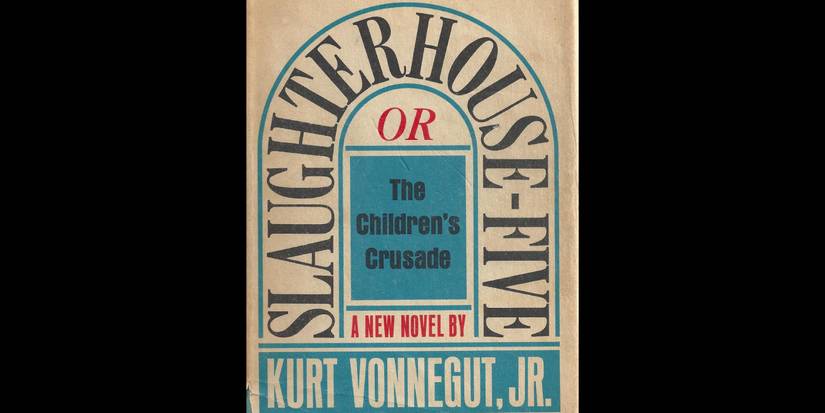
Kurt Vonnegut’s Slaughterhouse-Five, or, The Children's Crusade: A Duty-Dance with Death is a genre-blending anti-war novel partially inspired by Vonnegut’s own experiences and those of other people he knew who served in World War II. The narrative follows Billy Pilgrim, an American soldier who becomes unstuck in time and experiences his own life in a non-linear fashion after an encounter with fourth-dimensional aliens. Over the course of his life, Billy’s experiences, particularly the trauma of surviving the bombing of Dresden, drive him to adopt a fatalistic worldview as death loses all meaning for him.
One of the most acclaimed war novels and sci-fi books of all time, Slaughterhouse-Five is a highly original book that uses its metafictional narrative to process the author’s personal experiences. Like Billy Pilgrim, Vonnegut also survived the Dresden bombing, and the book is largely his attempt to finally put what he experienced into words. The novel was Vonnegut’s first bestseller when it came out in 1969 and has been highly acclaimed ever since. It’s also been banned in multiple places in the United States as recently as 2024.
COLLIDERInteractive
Ballot sealed
Movies/Academy Awards/Best Picture
Collider · Best Picture
Which Oscar Best Picture
Is Your Perfect Movie?
Five winners · ten questions · one envelope
Five Oscar Best Picture winners. Five completely different visions of what cinema can be and what it can do to you. One of them is the film made for the way your mind works, and ten questions will work out which. The nominees
2020Parasite
2023Everything Everywhere All at Once
2024Oppenheimer
2015Birdman
2008No Country for Old Men
Reel01 / 10
Question 01 of 10TONE
01 What kind of film experience are you really after? The best movies do not just entertain. They leave something behind.
Keys 1 to 5 or A to E · Enter to advance
Reel02 / 10
Question 02 of 10THEME
02 Which idea grabs you most in a film? Great films are driven by a central obsession. What is yours?
Keys 1 to 5 or A to E · Enter to advance
Reel03 / 10
Question 03 of 10STRUCTURE
03 How do you like your story told? Form is content. The way a story is shaped changes what it means.
Keys 1 to 5 or A to E · Enter to advance
Reel04 / 10
Question 04 of 10VILLAIN
04 What makes a truly great antagonist? The opposition defines the protagonist. What kind of opposition fascinates you?
Keys 1 to 5 or A to E · Enter to advance
Reel05 / 10
Question 05 of 10ENDING
05 What do you want from a film's ending? The final note is the one that lingers. What do you want it to sound like?
Keys 1 to 5 or A to E · Enter to advance
Reel06 / 10
Question 06 of 10WORLD
06 Which setting pulls you in most? Where a film takes place shapes everything: mood, stakes, what is even possible.
Keys 1 to 5 or A to E · Enter to advance
Reel07 / 10
Question 07 of 10CRAFT
07 What cinematic craft impresses you most? Every great film has a signature, the element that makes it unmistakable.
Keys 1 to 5 or A to E · Enter to advance
Reel08 / 10
Question 08 of 10PROTAGONIST
08 What kind of main character do you root for? The protagonist is the lens. Who you follow says something about you.
Keys 1 to 5 or A to E · Enter to advance
Reel09 / 10
Question 09 of 10PACE
09 How do you feel about a film that takes its time? Pace is a choice. Some films sprint. Others let tension accumulate slowly, deliberately.
Keys 1 to 5 or A to E · Enter to advance
Reel10 / 10
Question 10 of 10AFTERMATH
10 What do you want to feel walking out of the cinema? The best films leave a mark. What kind of mark do you want?
Keys 1 to 5 or A to E · Enter to advance
The envelope, pleaseAnd the Oscar goes to
★ Best Picture, 2020 Parasite Bong Joon-ho, 2019 A film that hides its true intentions until the moment it is ready to reveal them.
You are drawn to films that operate on several levels at once, that begin in one genre and quietly, brilliantly migrate into another. Bong Joon-ho's Parasite is a film about class, desire and the architecture of inequality that manages to be darkly funny, deeply suspenseful and genuinely shocking across a single extraordinary running time. Your instinct is for cinema that rewards close attention and punishes assumptions, right up to its devastating final image. From the Collider file
- The first film not in the English language to win Best Picture, in the Academy's 92-year history to that point.
- It took four Oscars in one night: Picture, Director, Original Screenplay and International Feature.
- It won the Palme d'Or at Cannes in 2019 by a unanimous jury vote, the first Korean film to do so.
- The Park family's modernist house was not a location. It was built from scratch on an outdoor lot.
Reads between the lines Loves a reveal Attention to detail
★ Best Picture, 2023 Everything Everywhere All at Once Daniel Kwan and Daniel Scheinert, 2022 A film that refuses to choose between being entertaining and being meaningful.
You want it all, and this one gives you all of it. The Daniels' Everything Everywhere All at Once is among the most maximalist films ever made: action comedy, multiverse science fiction, family drama, existential crisis, and an emotional core that sneaks up on you in the middle of the chaos. You respond to ambition. Being overwhelmed is the design, not the side effect, because the feeling of being crushed by infinite possibility is exactly what the film is about. From the Collider file
- Seven Oscars, including three acting wins for Michelle Yeoh, Ke Huy Quan and Jamie Lee Curtis.
- Michelle Yeoh became the first Asian woman to win Best Actress.
- The visual effects were handled by a team of fewer than ten people, most of them self-taught.
- Ke Huy Quan had all but left acting for two decades before this role brought him back.
Wants everything Big swings Soft center
★ Best Picture, 2024 Oppenheimer Christopher Nolan, 2023 A film about the gap between what we can do and what we should do.
You are drawn to cinema on a grand scale, films that treat history not as a backdrop but as a force, then place their characters inside that force and watch what happens. Christopher Nolan's Oppenheimer sits inside one of the most consequential moments in human history and refuses to look away from it. You want your films to feel important without being self-important, earning their ambition through craft and the gravity of the subject. This one is enormous, complicated, and offers no easy comfort. From the Collider file
- Seven Oscars, including Nolan's first wins for directing and for Best Picture.
- Cillian Murphy and Robert Downey Jr. both took their first Academy Awards for it.
- Kodak engineered a black-and-white 65mm stock that did not previously exist so Nolan could shoot those sequences on IMAX.
- A three-hour, R-rated drama about theoretical physics that passed 950 million dollars worldwide.
Thinks in decades Scale and weight No easy comfort
★ Best Picture, 2015 Birdman Alejandro G. Iñárritu, 2014 A film doing something that probably should not be possible.
You are drawn to films that foreground their own construction, where the how of the filmmaking becomes part of the what it is about. Alejandro G. Iñárritu's Birdman, stitched to appear as one continuous take, is cinema examining itself through the cracked mirror of a fading actor's ego. You respond to formal daring. Michael Keaton's performance and Emmanuel Lubezki's restless camera make something unlike anything else: a film about creativity, relevance, self-destruction and never quite knowing whether your work means anything at all. From the Collider file
- Four Oscars, among them Best Picture and Best Director for Iñárritu.
- Emmanuel Lubezki's win here was the middle of three consecutive cinematography Oscars, after Gravity and before The Revenant.
- Antonio Sánchez's improvised drum score was ruled ineligible for the score category, which caused a minor uproar.
- The long-take illusion was built from a handful of extended shots joined by hidden cuts.
Formally daring Camera as character Ego and art
★ Best Picture, 2008 No Country for Old Men Joel and Ethan Coen, 2007 A film that treats dread as a form of meaning.
You are drawn to cinema that trusts silence, refuses to explain itself, and lets unease do the talking. The Coen Brothers' No Country for Old Men is about the arrival of a new kind of evil: implacable, arbitrary, and indifferent to the moral frameworks we use to make sense of things. It is one of the most tightly controlled films ever made, and that control is the source of the terror. You want your films to haunt you rather than comfort you, and you have no interest in a resolution that would be a lie. From the Collider file
- Four Oscars: Picture, Director, Adapted Screenplay, and Supporting Actor for Javier Bardem.
- Adapted from Cormac McCarthy's 2005 novel, with much of his dialogue carried over intact.
- Carter Burwell's score runs about sixteen minutes and is nearly inaudible by design.
- Roger Deakins was nominated twice that year, for this and The Assassination of Jesse James, and won for neither.
Trusts silence Dread over answers No tidy endings
Ballot tally · your top three
1
2
3
Copied to your clipboard
Ballot counted byCOLLIDERCollider.com · The Awards Desk
4 ‘A Farewell to Arms’ (1929)

Ernest Hemingway’s A Farewell to Arms is a novel set during World War I that follows the story of an American medic, Frederic Henry, who serves in the Italian Army. The book primarily explores Frederic’s romance with English nurse Catherine Barkley, which provides the sole light in his life as the war turns bloodier and more brutal than ever. Eventually, he leaves the army and seeks out Catherine, hoping to start a new life in Switzerland.
A Farewell to Arms is a truly tragic war romance, mainly because, unlike in many war novels, there is some hope to be found in the book: the hope of love and family that Frederic feels thanks to Catherine. However, by the end of the novel, that hope is cruelly taken away, not in a high-stakes battle but in a painfully normal, everyday manner that is all the more heartbreaking for its simplicity. A Farewell to Arms has been widely hailed as one of Hemingway’s greatest novels, and it has been adapted as films, a play, and a TV miniseries. In 2025, the novel entered the public domain and is now freely available online.
3 ‘The Forever War’ (1974)

Written by Joe Haldeman, The Forever War isn’t a war book in the traditional sense: it’s a military science fiction novel that explores an interstellar war between humans and an alien civilization known as the Taurans. The book follows William Mandella, a physics student drafted into an elite task force to fight in the war using advanced weapons and near-lightspeed technology. Due to the relativistic nature of time, every time William returns to Earth, he finds a world that’s drastically different in its culture, language, and even biology, leading to an ever-increasing sense of alienation.
Published in 1974, The Forever War was highly acclaimed by critics and won multiple accolades, including the Nebula, Hugo, and Locus Awards. Despite its science fiction narrative, the book is inspired by Haldeman’s real experiences serving in the Vietnam War and is arguably more realistic than most historical books. It’s also unique in the sense that, while the story has what you could call a happy ending, it also delivers a bleak message about the inherent meaninglessness and alienation of war. The book was followed by three sequels: 1997’s Forever Peace, 1999’s Forever Free, and the 1999 novella, A Separate War.
2 ‘All Quiet on the Western Front’ (1928)

A German semi-autobiographical novel by Erich Maria Remarque, All Quiet on the Western Front is one of the most famous war books ever written. The novel follows Paul Bäumer, a young man who, along with his classmates, enthusiastically signs up to fight in World War I. Over the course of the war, Bäumer learns firsthand about the horrors of war, the pain of loss, the alienation from civilian life, and the utter meaninglessness of the patriotic fervor that led him to join military service.
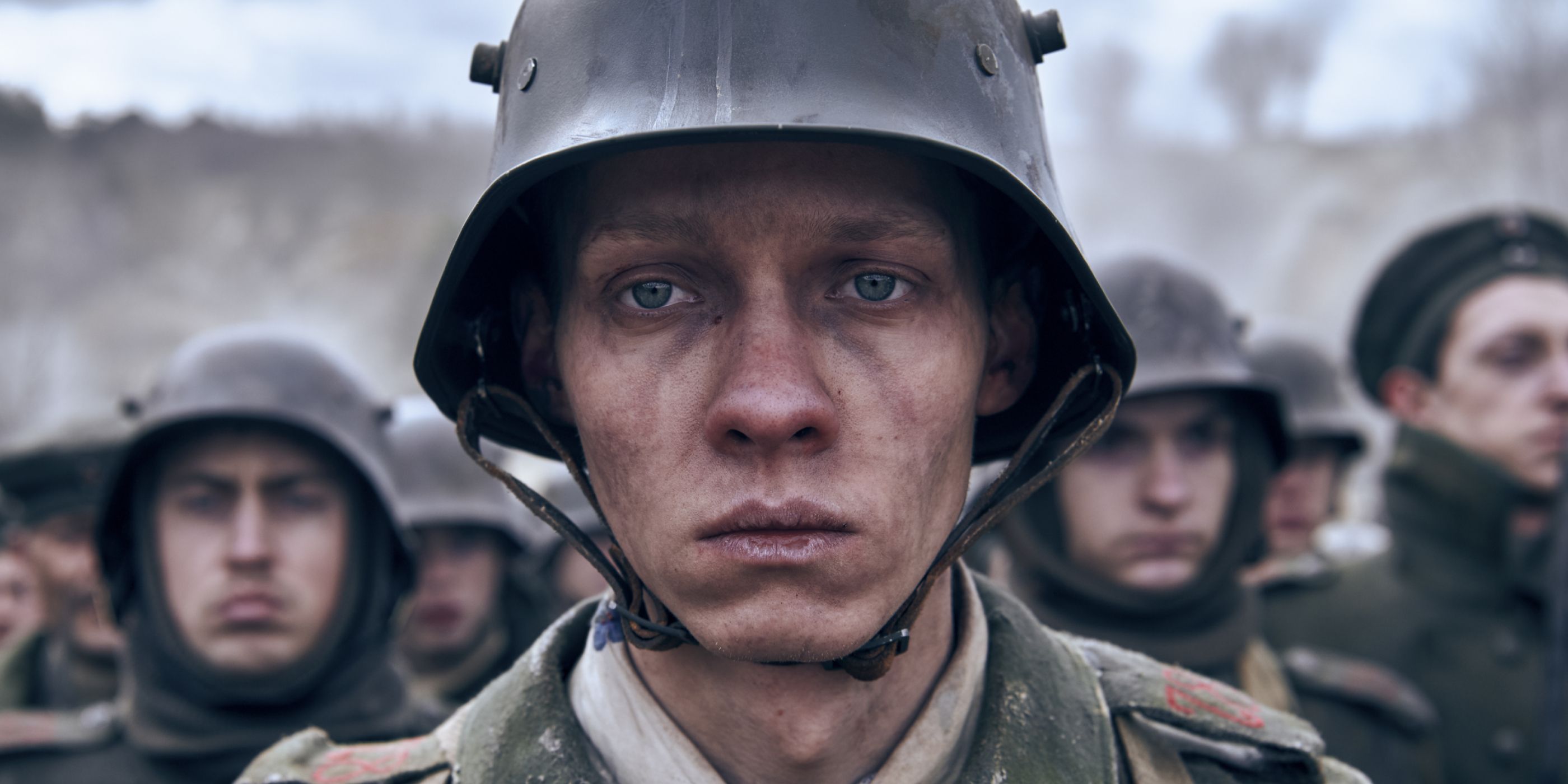
Since its publication in the late 1920s, All Quiet on the Western Front has been widely hailed as the greatest war novel of all time. The book is a bleak, painful, and necessary narrative that exposes the true cost of warfare on the individual psyche and soul — a message that got it banned and burned in Nazi Germany. Today, the novel is universally acknowledged as one of the greatest literary treasures of human civilization, and it has received multiple film adaptations, most recently Edward Berger's 2022 German adaptation, which won four Academy Awards.
1 ‘Johnny Got His Gun’ (1939)

Written by Dalton Trumbo, Johnny Got His Gun is a highly influential war novel that isn’t nearly as talked about as it ought to be. Set during World War I, the book is centered on Joe Bonham, a young American soldier who wakes up in a hospital bed and slowly realizes that he has lost all his limbs, eyes, ears, mouth, and nose. Trapped in his own body, his only hope is death, but even that is rendered impossible by military “regulations." All he can do is reminisce about his old life and hard-learned lessons about war.
Despite being an anti-war novel published during wartime, Johnny Got His Gun was quite acclaimed in 1939 and became a popular text among the American left of the time. The book has had a significant influence on American literature, shaping political discourse and literary craft with its stream-of-consciousness critique of war. Trumbo wrote and directed a film adaptation, released in 1971, which became a cult film, and the book has also inspired several other works of cinema and theatre, not to mention the Metallica song “One."
KioskNews shows a cleaned-up reading view extracted from the publisher’s page — the original always lives on their site, not ours.