Treasure Island: A Bland Adaptation That Strays Too Far From The Classic Pirate Tale | Review

Grant Hermanns is a TV News Editor, Interview Host and Reviewer for ScreenRant, having joined the team in early 2021. He got his start in the industry with Moviepilot, followed by working at ComingSoon.net. When not indulging in his love of film/TV, Grant is making his way through his gaming backlog and exploring the world of Dungeons & Dragons with friends.
With over 143 years gone since its full-novel publication, Robert Louis Stevenson's Treasure Island remains a landmark entry into the swashbuckling world of pirates, and also one of the most-adapted stories of its kind. From direct translations like Disney and Robert Newton's 1950 classic, as well as Charlton Heston's 1990 film, to broader inspirations like Joseph Gordon-Levitt's Treasure Planet and Starz's Emmy-winning prequel series Black Sails, the 1883 tale remains a favorite among storytellers.
Now, Robert Murphy is trying his hand at Stevenson's novel with the six-part Treasure Island series at MGM+ (US) and Paramount+ (UK), and while not the worst-ever translation of the pirate book to the screen, it's certainly one of them. The series initially begins in faithful fashion as Billy Bones comes ashore, albeit shipwrecked, and keeps a mysterious chest hidden while staying at the inn owned by Bess Hawkins, which she runs with her son Jim.
Shortly after arriving, the group is visited by the one-legged Long John Silver, seeking a map leading to the mythical treasure of famed pirate Captain J. Flint, with a scuffle resulting in the death of multiple soldiers and Bones, while Silver is initially arrested. With the map memorized thanks to his eidetic memory, Jim and his mother set sail aboard the ship of the charismatic Aaron Graham to venture to Jamaica in search of the treasure, only to find their quest challenged by Silver's hiring as a cook on the ship, and Graham's own questionable motives.
Given how extensively the book has been adapted to the screen, it's understandable Murphy would aim to take some liberties with Treasure Island for his series, and some of them do truly work in the show's favor. Even still, the creative team takes so many liberties with Stevenson's source material that it begs the question of why they didn't instead just aim for a completely original story, or an entirely different take on the story.
Treasure Island Loses All The Unique Character Nuance With Its Changes
From the show's opening moments, it's immediately made apparent that Murphy was not keen on giving Treasure Island a direct adaptation, but instead a much looser one. Initially, some of the changes actually prove somewhat welcome, particularly as Jim's unique sense of memory heightens the stakes around his safety as his mind becomes the sole way to find the eponymous fortune. Furthermore, Long John Silver's introduction as he washes upon the shore does a magnificent job of establishing how terrifying the iconic villain will be in the long run.
One early Treasure Island change that ultimately left me feeling somewhat divided was its depiction of Billy Bones, played in the series by The Boys alum Tomer Capone. In a notably drastic shift from both the book and most adaptations, Bones is not a brash pirate whose behavior often wards off the inn's customers, but is instead vibrant and charming, namely in how he wins over the heart of Jim's mother, the independent Bess.
Arguably the most frustrating change in Treasure Island is the fact that Long John Silver makes himself known to Jim and Bess so quickly...
Capone's performance absolutely elevates this portrayal of the character, giving him the same tragically lovable core as Frenchie in Prime Video's hit superhero satire series. And yet, with how quickly the show's opening episode moves to get Jim and Bess on their journey, this change also robs the slow-burning nature of the mystery that surrounded Bones in Stevenson's novel before his death, particularly as the affection Bess holds for him is hardly maintained as the series progresses.
Arguably the most frustrating change in Treasure Island is the fact that Long John Silver makes himself known to Jim and Bess so quickly in the show. Part of the intrigue of Stevenson's book and other adaptations is that the pair develop a complicated father-son bond in their journey to find Flint's fortune, stemming in part from the fact that, while Jim always suspects the one-legged figure of being the villain Bones was scared of, they find a mutual respect and Silver often takes the young protagonist under his wing as a mentor.
And yet, the Treasure Island series does away with this entirely, with the pair occasionally stepping up in defense of each other, but no real sense of respect or admiration felt between them. Instead, Silver is clearly so driven to find Flint's treasure that the only reasons for keeping Jim alive are clearly to keep the hope alive of getting the map that lies in his head, thus stripping the morally complex relationship of any of its intrigue.
The Series Can Never Decide Who The Real Main Character Is

Another thing that has remained true across nearly every Treasure Island adaptation is that Jim is the true main character of the story, with Long John Silver being a decidedly close second, but still not quite as prevalent as the young adventurer. In yet another effort to shake things up, Murphy and his writing team give some characters more screentime and agency than what was in the book, which both evolves and complicates the proceedings.
The casting of Marvel Cinematic Universe vet Hayley Atwell made it very clear that Bess would not be a mere one-episode character, but instead one of Treasure Island's central figures. The series does a somewhat decent job of establishing what makes her a fiercely independent woman, particularly with the lessons she tries to impart upon her son as they begin their journey.
...it's not until over halfway through the Treasure Island series that Jim finally starts to feel like a genuinely central character.
Furthermore, while her brief relationship with Billy Bones offers a nice initial kick for her emotional drive to find Flint's treasure, her dynamic with ship captain Aaron Graham proves more layered, even if underwritten. As they draw closer to Jamaica, though, Graham's involvement becomes much bigger, with his own reasons exposed for growing close to Jim and Bess, and a separate mission from the treasure hunt.
With so much time dedicated to fleshing out characters that are otherwise generally overlooked in other adaptations, as well as giving Oyelowo so much time to chew up the scenery as Long John Silver in his mutiny-based machinations, it's not until over halfway through the Treasure Island series that Jim finally starts to feel like a genuinely central character. But even then, it feels like so little work had been put into developing his journey of growth and courage that it was hard to fully engage with him for the final couple of episodes.
Treasure Island's Production Values Feel Appropriately Grand

Given its swashbuckling source material, one of the most important things that Treasure Island needed to get right was making its set pieces and seafaring settings large. Thankfully, directors Jeremy Lovering (Slow Horses), Paul Norton Walker (Shameless) and William McGregor (His Dark Materials) clearly understood the assignment when developing the visual style and scale of the series to at least make the show a visually appealing time.
Much of the series is set aboard Graham's ship, as Bess, Silver and Graham all play their games of mental chess with one another, and those behind the camera find unique ways to keep things lively. From atmospheric camerawork and lighting to giving the more theatrical of performers plenty of leeway to play in their space, the trio rarely give a reason to look away from the screen.
One of the most notable sequences in the series is a tense stand-off between Graham, Silver, Jim and a couple of Silver's former compatriots during a stop on a French-occupied island in the Caribbean. The camera so swiftly and stylishly moves through the scene in a way in which we are truly left guessing whether one wrong move will result in a slew of gunfire, or an epic sword fight between everyone in the room.
The other most notable sequence comes shortly after the group arrives on Skeleton Island, in which a party spearheaded by Jim, Graham, and Long John Silver finds themselves hunted by an unseen figure with arrows in a forest. It, along with an attempted pirate siege aboard Graham's ship
The Show's Cast Do Their Best To Give Life To The Lackluster Writing

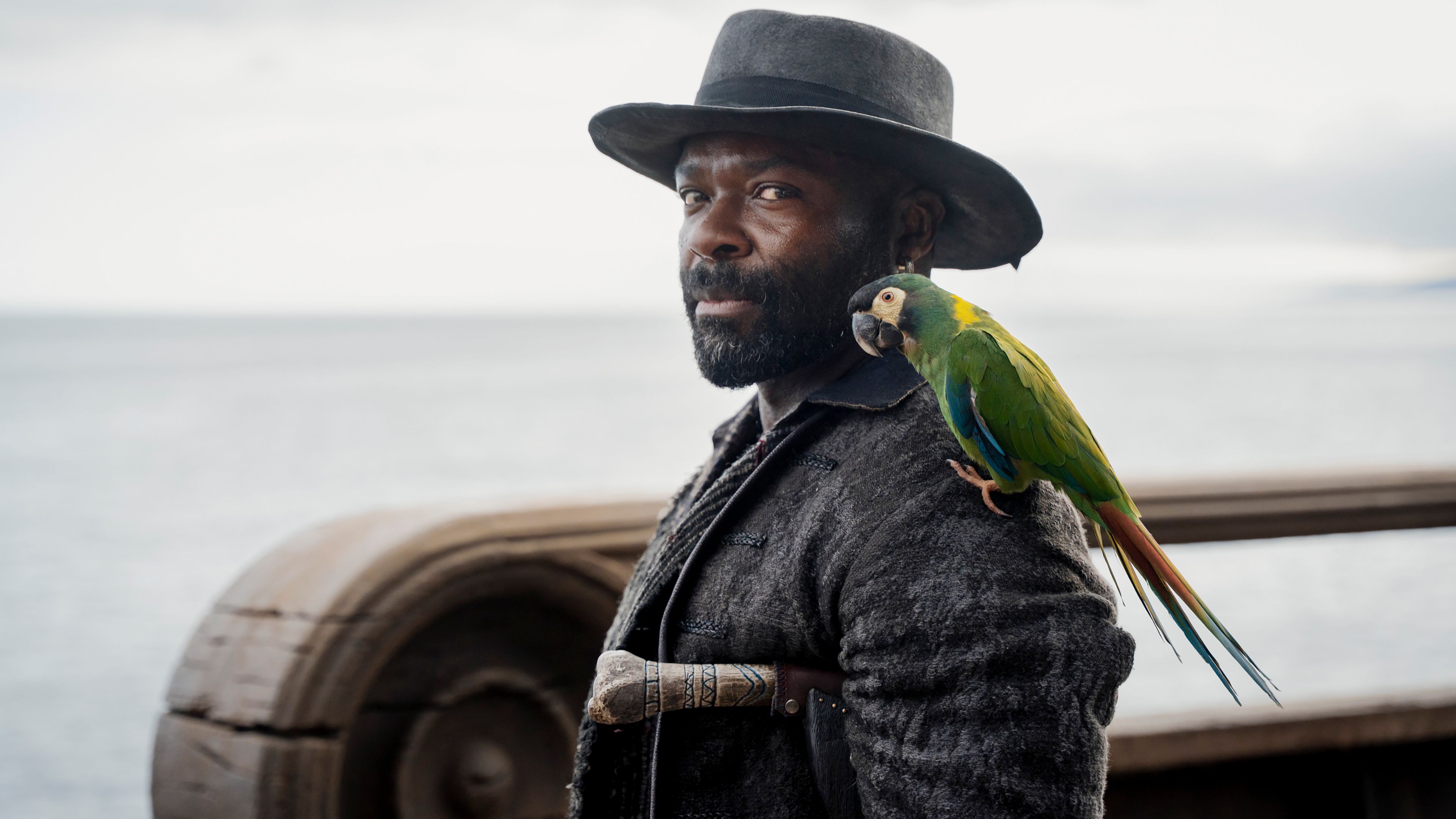
The other positive element that Murphy's Treasure Island series has going for it is that much of its star-studded cast deliver some excellent performances. Oyelowo so brilliantly embodies both the menace and over-the-top personality of Long John Silver that it's hard not to wish the show had shifted to telling Stevenson's novel from his perspective rather than Jim's, or its balance of the young Hawkins, his mother, and Graham.
Jack Huston, fresh off his wonderfully layered turn as Sandman in the short-lived Spider-Noir, nicely leaves audiences guessing as to his ultimate allegiances for the entirety of the series. More akin to Silver in the source novel than the show's depiction, Graham showcases more of a mentor-like, father-son bond with Jim that Huston so nicely slots his cool demeanor into.
Unfortunately, the biggest disappointment of Treasure Island's cast is that of Tom Sweet as Jim Hawkins. Be it a casualty of the show's underwhelming scripts, or a young actor still finding his footing, the star just never gets a shining moment to make his version of Jim feel like anything more than a broad-stroked innocent figure going on an adventure instead of a bright-eyed young character who grows into a courageous man.
It's truly a shame how much Treasure Island misses the mark in adapting its iconic material to the screen. Oyelowo is clearly having a blast with his character, while most of the show doesn't feel like expenses were spared to make the story feel as large and adventurous as Stevenson's novel. But with the majority of its changes proving less innovative and more like predictable padding to try and avoid anything too similar to what's come before, it left me wondering how much affection Murphy actually had for what came before.
Treasure Island premieres on MGM+ in the US on October 11, and on Paramount+ in the UK on October 12.

- Release Date
- October 11, 2026
- Network
- MGM+
- Directors
- Jeremy Lovering, Paul Walker, William McGregor
Cast
-

David Oyelowo
Long John Silver
-

Bess Hawkins
Treasure Island, released in 2026, follows Jim Hawkins and his mother Bess as they embark on a perilous journey after acquiring a legendary treasure map. Aboard The Hispaniola, they navigate threats from the pirate Long John Silver and British agent Aaron Graham amidst shifting alliances and dangerous secrets.
- Main Genre
- Adventure
- Creator(s)
- Robert Murphy
- Executive Producer(s)
- Colin Callender, Daniel Gratton, David A. Stern, Jeremy Lovering, Robert Murphy, Scott Huff
- Producers
- Mark Hedges
- Seasons
- 1
Pros & Cons
- The series is visually stylish and feels appropriately scaled for its oceanic setting.
- The cast do their best with the material they're given, particularly David Oyelowo.
- The writing so drastically deviates from the novel it hardly feels like a Treasure Island adaptation.
- The pacing is dreadfully slow for the bulk of its run.
- It can't ever decide who should actually be the main character.
KioskNews shows a cleaned-up reading view extracted from the publisher’s page — the original always lives on their site, not ours.