Why Japanese firms are shrugging off bilateral tensions, adjusting China sales strategies
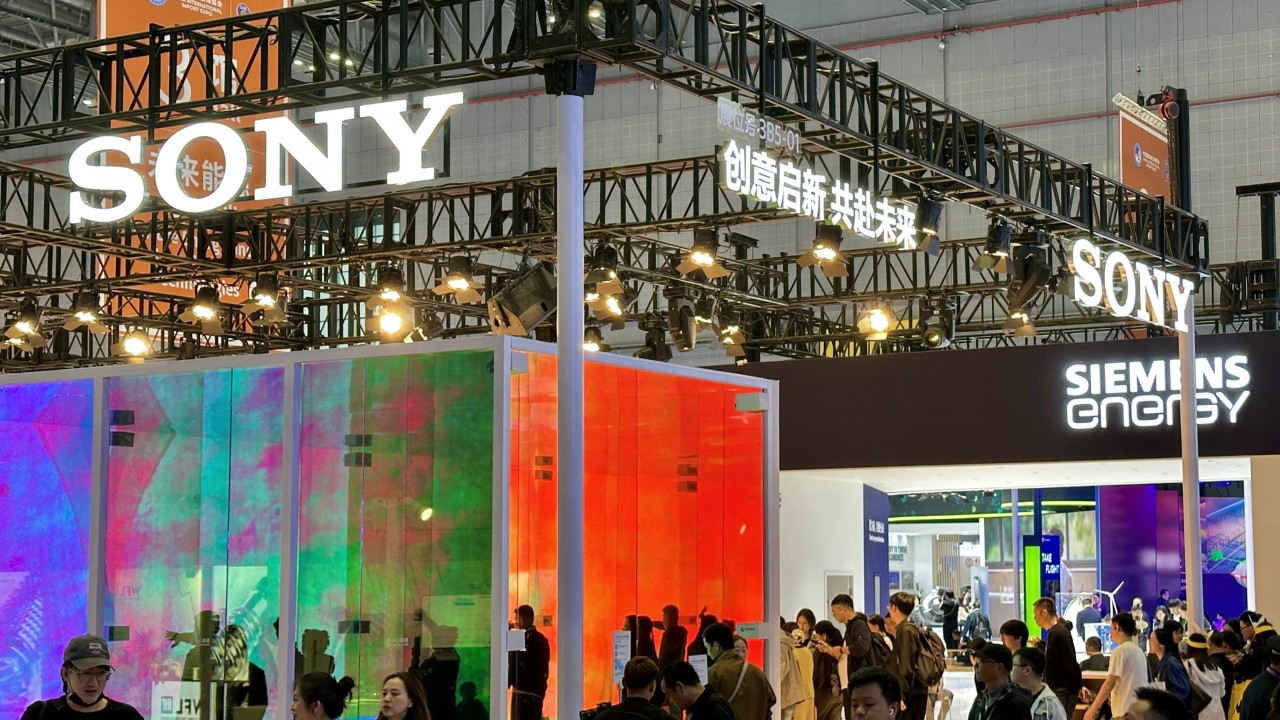
Macroeconomic issues are occupying the thoughts of leading Japanese multinationals as they adjust strategies in China, but few say they worry that diplomatic tensions will cost them opportunities in one of their largest overseas markets.
Big names, from Panasonic to Hitachi, used a major trade show in Shanghai this week to highlight their commitment to China and parade their offerings.
While nimbly navigating geopolitical headwinds, they are also looking forward to possible exchanges between leaders of the two countries in Shenzhen next week in the hope they may damp down tensions.
Panasonic, a household name in China, set up a flashy 1,000 square metre (10,764 square foot) booth at the annual China International Import Expo (CIIE), which concluded on Tuesday.
The company, which entered the mainland China market in 1978, is pivoting its sales efforts towards offering solutions to industries and businesses, including in artificial intelligence, but sought to assure Chinese consumers it was not abandoning the home appliance market.
“They can still buy Panasonic air conditioners, fridges and washing machines … we won’t pull the plug,” one marketing manager said as Panasonic’s group regional head for China and Northeast Asia, Masaharu Nakayama, unveiled a line-up of new electric bidet seat products at CIIE.
To emphasise Panasonic’s commitment to China, the manager drew a contrast with recent exits by other foreign brands, such as South Korea’s Samsung, from China’s white goods market.
However, he admitted that price wars led by “formidable” domestic brands were a challenge and that Chinese “were not spending as much as before” – all part of Panasonic’s rationale for seeking out more lucrative business-to-business deals.
The Chinese economy is getting more complex … Japanese firms need to work extra hard to achieve sales goals
Sony, Nikon, Mitsubishi Electric and other Japanese firms also well-known for consumer-facing products in China used CIIE to showcase their latest business-to-business products and strategies as they respond to China’s changing economic landscape.
A sales manager with Hitachi’s steel digital solutions group said China presented some macroeconomic challenges.
“The Chinese economy is getting more complex … Japanese firms need to work extra hard to achieve sales goals,” he said. “In the past, it was easier.”
Hitachi has also shifted focus to tapping government and corporate business in China, pinning hopes for growth on infrastructure, healthcare and green energy. At CIIE, Hitachi highlighted recent milestones in China, including taking part in multibillion dollar electricity transmission projects and supplying components to proton therapy centres, which are used to treat cancer, across the country.
The Chinese economy has picked up some steam, with year-on-year growth hitting 4.5 per cent in the third quarter of the year after coming in at 4.3 per cent in the second quarter. But retail sales grew at an annual pace of just 1.1 per cent between January and September.
SCMP Plus is a new premium news platform that gives you an
all-inclusive edge to stay ahead on China news.
To access our exclusive content you’ll need to subscribe.
Already a subscriber?
LOG IN
The number of Japanese companies with a presence in China has dropped by around one-fifth over the past two years, according to Tokyo-based business intelligence firm Teikoku Databank, with just 10,118 in June, the least since 2010.
The Hitachi manager said that had been driven by the economic situation and that major companies would stay. He also shrugged off any impact from the frosty diplomatic relationship between the two countries.
Japanese PM ‘open’ to talks with China
“Some left, some are still entering. Major Japanese companies have been in China for decades and have been through difficult periods … we feel no impact [from diplomatic tensions] in government procurement or when working with state-owned enterprises,” he said.
It has been a year since Japanese Prime Minister Sanae Takaichi made controversial remarks about the possibility of a Japanese response to armed conflict in the Taiwan Strait – comments that provoked a harsh backlash from Beijing and plunged ties to a new low.
As the CIIE drew to a close, the focus shifted to Shenzhen, where next week’s Asia-Pacific Economic Cooperation leaders’ summit could present a rare – but still unconfirmed – opportunity for Takaichi to meet President Xi Jinping.
Takaichi said last month that she planned to attend the summit, but Japanese media reported on Tuesday that a more realistic objective might be to seek a handshake or informal interaction with Xi, rather than a diplomatic reset.
Still, Japanese businesses welcomed continued engagement.
In September, Vice-Premier He Lifeng and Foreign Minister Wang Yi met former Japanese foreign minister Takeshi Iwaya, along with a delegation of around 50 business chiefs.
Xu Weijun, a researcher at the Institute of Public Policy at South China University of Technology, said Japanese businesses were aware of and appreciated Beijing’s bid to insulate the economy from bilateral tensions.
“China has drawn distinctions between Takaichi’s security posture and the pragmatic interests of companies,” he said.
KioskNews shows a cleaned-up reading view extracted from the publisher’s page — the original always lives on their site, not ours.