The 10 Greatest Alfred Hitchcock Thriller Masterpieces, Ranked

Michael Block is a 14 time GLAM Award nominated writer, producer, and host of the podcast Block Talk. Throughout his time in the entertainment industry, he has worked on and off Broadway as a stage manager, written several produced plays, critiqued hundreds of theatrical performances, drag and cabaret shows, and has produced events randing from drag competitoons to variety concerts!
On Block Talk, he interviews nightlife personalities, covers the wide world of entertainment through features, ranking episodes, and recaps ALL of Drag Race, as well as Dragula and Survivor. He has interviewed hundreds of RuGirls that span the globe at DragCon NYC, DragCon LA, and DragCon UK.
In his free time, he makes one-of-a-kind jewelry and gift baskets with his mom. He is a proud member of the LGBTQ+ community.
Sign in to your Collider account
Perhaps we have one man to thank for today's brilliant thrillers, and it's Alfred Hitchcock. The Master of Suspense is celebrated for his prolific career, with more than 50 feature films over six decades. Spanning silent films, early talkies, black-and-white, and vibrant Technicolor, Hitchcock was a pioneer behind the camera. Known for subjective camera angles mimicking a character's gaze, innovative film advancements, suspense over jump scares, and groundbreaking creative decisions, Hitchcock reshaped the entire thriller genre.
With dozens of iconic films on his resume, we're here to celebrate Hitchcock's very best thrillers. From masterpiece adaptations to brazen narratives, Hitch's greatest entries into the genre continue to be cinephiles' favorites today. For this list, we'll consider storytelling and direction, as well as the film's overall impact on cinema and its popularity beyond its release.
10 'The Birds' (1963)

Supernatural horror thrillers depict the terrors of beings and entities from beyond this world. Natural horror thrillers tap into those same fears where nature poses a threat to human characters. Loosely based on the short story by Daphne du Maurier, the natural horror film The Birds follows wealthy socialite Melanie Daniels (Tippi Hedren), who follows Mitch Brenner (Rod Taylor) to a small coastal town in Bodega Bay, California. What starts as a romantic escapade turns into a terrifying siege as large flocks of ordinary birds suddenly and violently begin to attack the human population.
The film's tone shifts into an apocalyptic disaster story, where the characters fight a relentless enemy they see every day. To heighten the thrills, Hitchcock omits a conventional musical score in favor of an avant-garde electronic soundscape of shrieks, fluttering, and squawks. The most terrifying element is that there is no easy answer to the sudden ambush—in fact, there's no answer at all. It treats nature's rebellion as a mystery, leaving only helplessness. Thus, The Birds solidified itself as one of Hitchcock's greatest contributions to pop culture.
9 'Dial M for Murder' (1954)
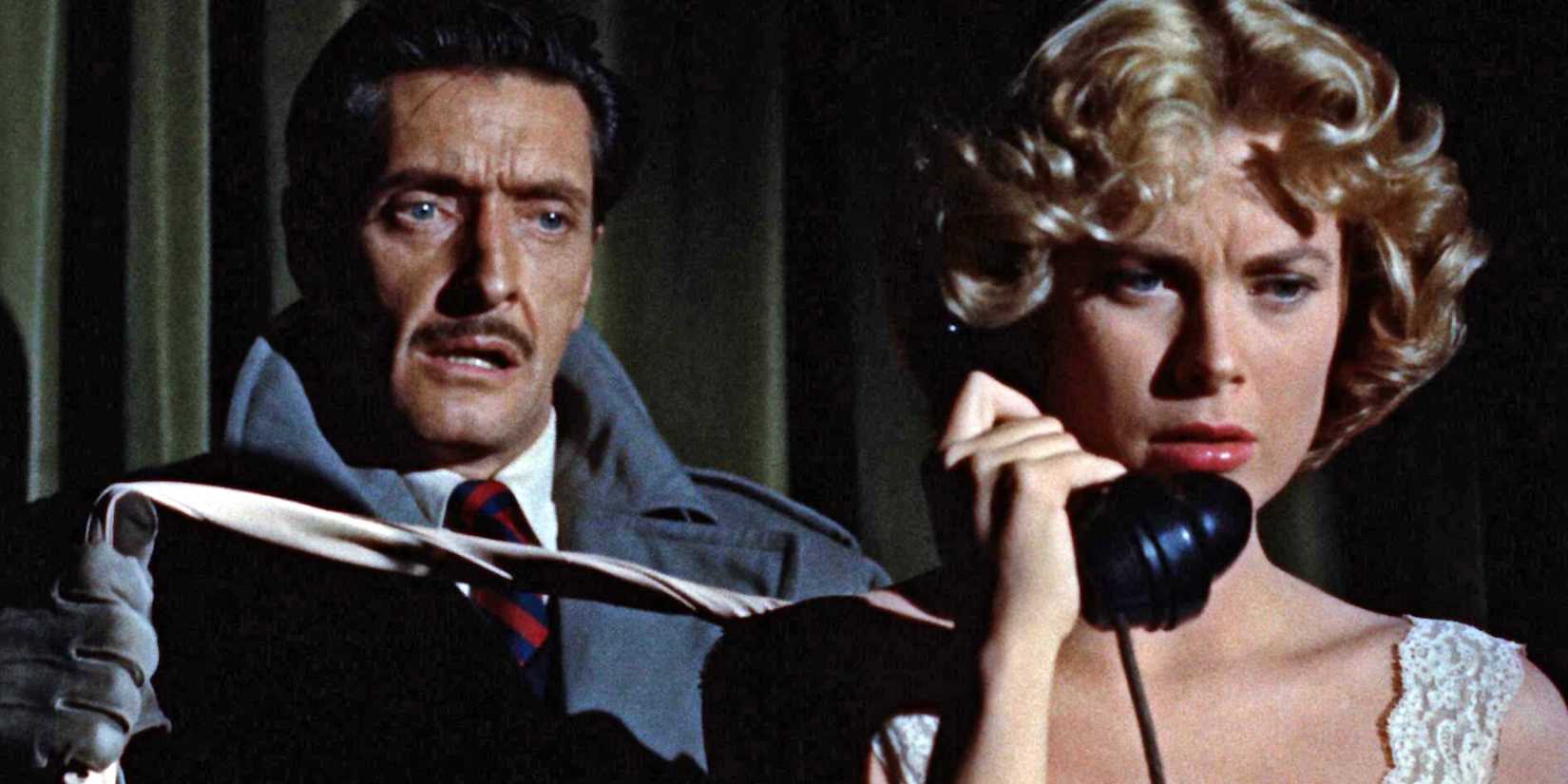
Tapping into the crime thriller realm, Dial M for Murder is all about a murder gone wrong. Tony Wendice (Ray Milland) discovers his wealthy wife, Margot (Grace Kelly), has been having an affair with crime novelist Mark Haliday (Robert Cummings). Rather than seeking a divorce, Tony plots to murder Margot to inherit her fortune. Blackmailing old acquaintance Charles Swann (Anthony Dawson) to do the crime, his plan backfires, causing an unraveling of twists and turns in the aftermath.
A chamber piece for the screen, Dial M for Murder inverts suspense. Hitchcock reveals the murder plot immediately, so it's no longer a whodunnit, but a howdunnit. By keeping the action almost entirely within a single London flat, Hitchcock uses clever camera blocking and low angles to turn the apartment into a claustrophobic trap. Milland is wonderful as the polite evil villain while Kelly, in her first of three Hitchcock collaborations, dazzles as the vulnerable target. Dial M for Murder is a must-watch for crime story lovers.
8 'Shadow of a Doubt' (1943)

Showcasing the terror in the mundane of small-town America, Shadow of a Doubt is a stroke of genius. No wonder it was one of Hitchcock's personal favorites. The psychological thriller follows Charlotte "Charlie" Newton (Teresa Wright) in Santa Rosa, California, who invites her wealthy Uncle Charlie Oakley (Joseph Cotten) from Philadelphia for a visit. At the same time, an investigation is underway for the nationwide "Merry Widow Murderer," a serial killer who preys on rich, elderly widows. Charlie begins to discover that the clues lead to her uncle as the killer, creating a brilliant, familiar struggle.
Shadow of a Doubt centers on duality. Co-written by Thornton Wilder, Sally Benson, and Alma Reville, the story isn't about a killer on the run, but about a claustrophobic dread creeping into the house from within. Uncle Charlie is a terrifying villain because he is coldly charismatic and completely contemptuous of the world. Setting him loose in sunny, bright California proves you never know what's lurking around the neighborhood. Many thrillers have adopted this theme in the years since.
7 'Rebecca' (1940)

Hitchcock's first American project and his sole Best Picture Academy Award winner, Rebecca is a masterpiece adaptation of Daphne du Maurier’s beloved novel. A shy, naive young woman (Joan Fontaine) works as a paid companion to the wealthy Mrs. Van Hopper (Florence Bates), before meeting and falling in love with the brooding, aristocratic widower Maxim de Winter (Laurence Olivier), whose first wife, Rebecca, drowned in a boating accident a year earlier. The new Mrs. de Winter moves into the grand estate of Manderley, where Rebecca’s devoted housekeeper, Mrs. Danvers (Judith Anderson), taunts her and the lingering memory of his first wife haunts her.
A story of insecurity, identity, and the inability to move on, Rebecca dazzles with its built-in psychological tension. The memory of Rebecca looms large; thus, her presence is greater than anything seen on screen. Cinematographer George Barnes used stark lighting, deep shadows, fog, and an oppressive ghostly mood to make Manderley an eerie presence. Fontaine and Olivier are great, but Anderson delivers a chillingly monstrous performance as Mrs. Danvers. Rebecca was a crucial stepping stone for every Hitchcockian masterpiece that followed, setting the stage for his visionary brilliance.
6 'The 39 Steps' (1935)

While many cinephiles point to the titles ahead, The 39 Steps remains an underrated Hitchcock thriller. Loosely based on John Buchan's 1915 novel of the same name, the spy thriller follows Richard Hannay (Robert Donat), a Canadian visitor in London who is falsely accused of murdering a female secret agent, Annabella Smith (Lucie Manheim), who warns him of “The 39 Steps.” Fearing that Scotland Yard will pin the murder on him, Hannay goes on the run to clear his name and stop a foreign espionage ring.
Establishing the “wrong man” blueprint, The 39 Steps remains a watermark of suspense films and a beacon of classic British cinema. It birthed the MacGuffin— an elusive plot device that drives the characters, even if its actual contents matter little to the audience. The titular conspiracy is less important than the action itself. The dialogue and clever scenarios are among the best in any Hitchcock film, and the dynamic between Hannay and Pamela (Madeleine Carroll), namely when they are handcuffed together against their will, paved the way for his future romantic-thriller pairings.
5 'Notorious' (1946)

In Hitchcock’s spy noir Notorious, T.R. Devlin (Cary Grant) approaches Alicia Huberman (Ingrid Bergman) to atone for her family name by infiltrating a group of exiled Nazi figures in Rio de Janeiro, only for the pair to fall deeply in love. Meanwhile, she’s tasked with infiltrating the mind of Alexander Sebastian (Claude Rains), who genuinely falls in love with her and proposes marriage. But when he discovers she is a spy, suddenly her life hangs in the balance.
A deliciously dangerous thriller, Notorious merges a high-stakes espionage plot with a painful psychological romance. The central focus of the thriller is the love triangle. It’s a perverse dynamic as Devlin coerces Alicia to seduce a man she truly doesn’t love, only for him to watch her destroy herself for the greater mission. From a technical standpoint, Hitch’s most iconic moment from the film is the infamous crane shot in the ballroom, diving into Alicia clutching the tiny house key, one of the many visually symbolic images within the film. Notorious captures the post-war anxiety of the time, where the lines between good guys and perceived enemies blur.
4 'North by Northwest' (1959)
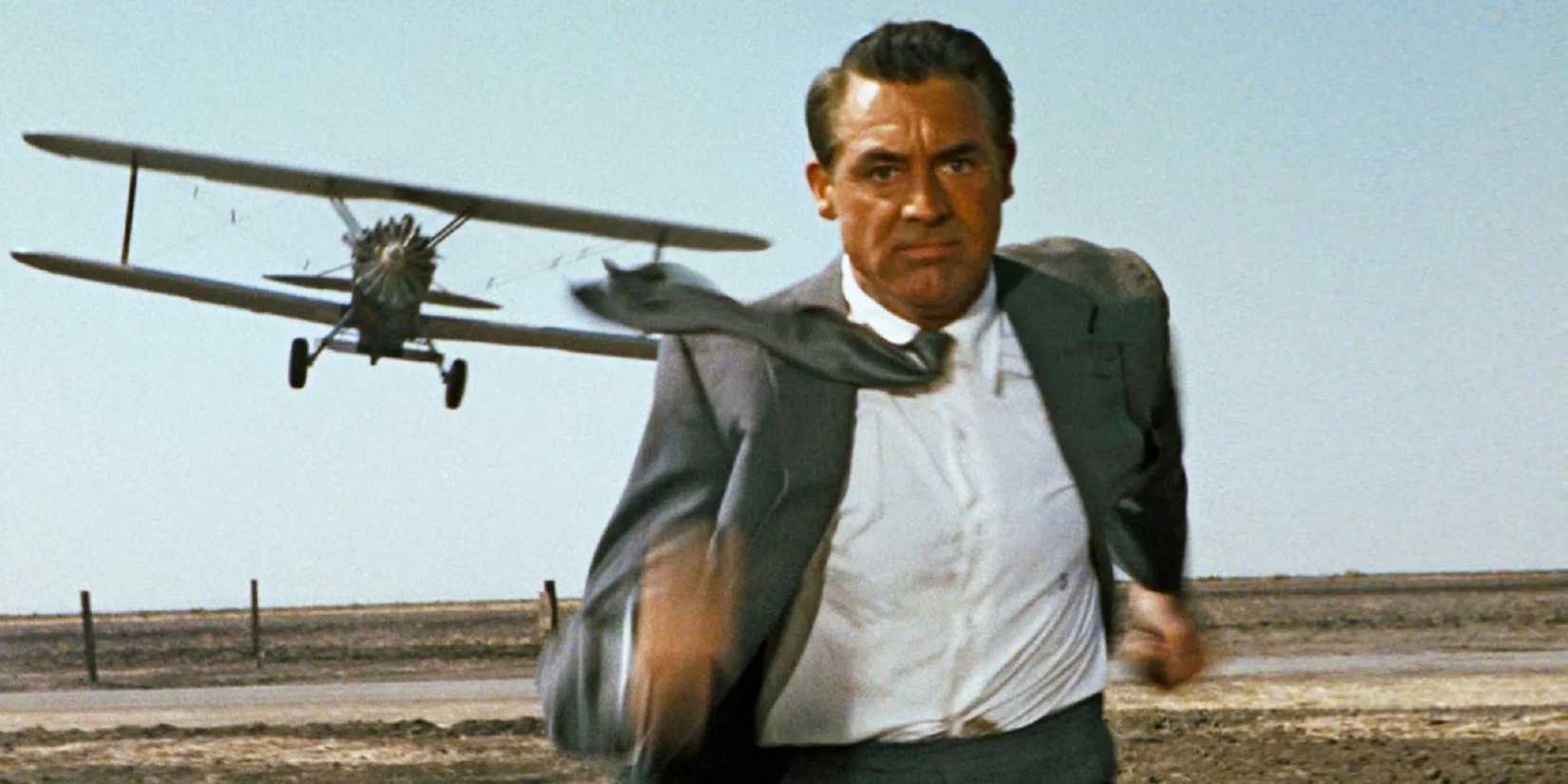
The greatest story of mistaken identity, North by Northwest is simply magnificent. The story follows Roger O. Thornhill (Cary Grant), a smooth-talking ad executive in New York City, who is abducted by men who think he is a secret agent named George Kaplan. On the run, Thornhill is framed by the villainous Phillip Vandamm (James Mason) and his henchmen for a murder at the UN. While fleeing by train, Thornhill meets Eve Kendall (Eva Marie Saint), a glamorous woman who helps hide him.
North by Northwest synthesizes everything that makes a Hitchcock film: a glamorous blonde, a chilling villain, an inexplicable MacGuffin, a pulsating score, and epic set pieces. A thriller of globe-trotting scale, North by Northwest is best remembered for the surreal open-country crop-duster attack and the vertigo-inducing climax at Mount Rushmore. Grant is phenomenal as Thornhill, reinventing the wrong-man trope as a high-wire act. Arriving just before the release of Dr. No, North by Northwest set the spy genre's tone in glorious fashion.
3 'Rear Window' (1954)

Voyeurism was never more terrifying until Rear Window. Based on Cornell Woolrich's 1942 short story, the mystery thriller centers on photographer L.B. "Jeff" Jeffries (James Stewart), confined to a wheelchair due to an injury, who passes time in his apartment by watching his courtyard neighbors through a telephoto camera lens. Jeff notices unsettling behavior from Lars Thorwald (Raymond Burr), which leads to his wife's disappearance. Jeff tasks his girlfriend, Lisa (Grace Kelly), and visiting nurse, Stella (Thelma Ritter), to help investigate, only to uncover a shocking truth.
Rear Window locks audiences in squarely into Jeff’s perspective. Restricted to only seeing what he sees, Hitchcock layers in immediate claustrophobic dread. There is no additional assistance to the narrative; it all relies on Jeff and what he sees and believes. It forces viewers to question the ethics of voyeurism and wonder whether Jeff is genuinely uncovering a murder or simply manufacturing entertainment out of boredom and obsession. A masterpiece of single-setting storytelling, Rear Window serves as a cautionary tale about the dangers of voyeurism, whether your suspicions are correct.
2 'Psycho' (1960)
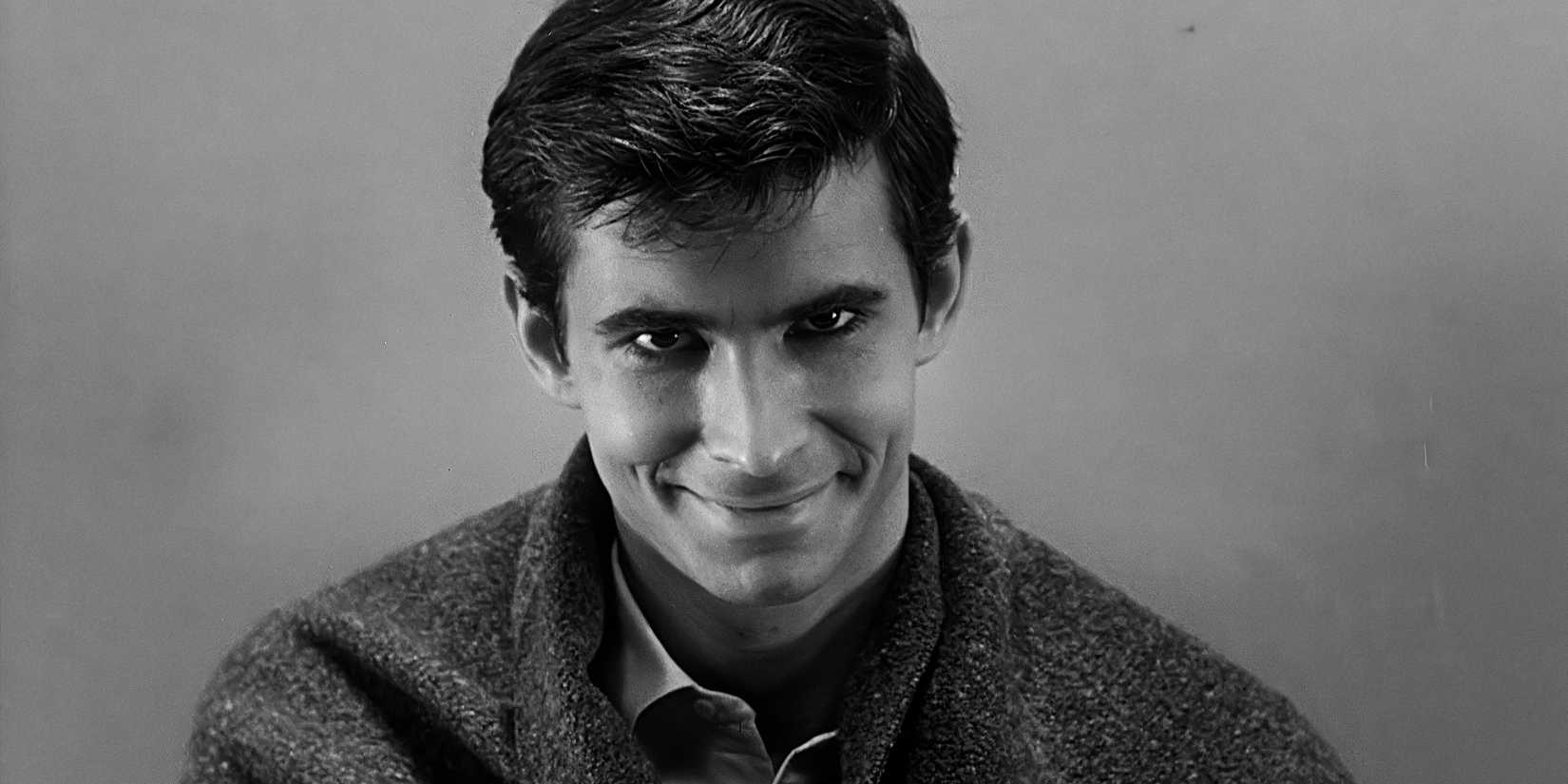
One of the greatest horror thrillers of all time, Psycho lifts Robert Bloch’s novel to new heights. The story begins as Marion Crane (Janet Leigh) goes on the run after stealing money from her boss and hiding out at the quiet roadside Bates Motel, run by a shy, polite young man named Norman Bates (Anthony Perkins). After Marion is killed, her sister Lila (Vera Miles), her boyfriend Sam (John Gavin), and a private investigator named Milton Arbogast (Martin Balsam) launch a search, only to discover the disturbing truth about the motel’s owner.
Breaking censorship rules regarding violence, sexuality, and deviancy to create the poster child of slasher films, Hitch subverted audience expectations to prove how suspense and tension can be built. Psycho explored how no one is ever safe. Once Marion was killed off, it was fair game for what would and could happen next. The terror of the story is that the monster is a perceived ordinary, awkward, and seemingly harmless human. The iconic shower scene became a masterclass in editing and sound design. Hitchcock created a visceral sense of violence and panic while leaving the actual gore mostly to the viewer's imagination.
1 'Vertigo' (1958)
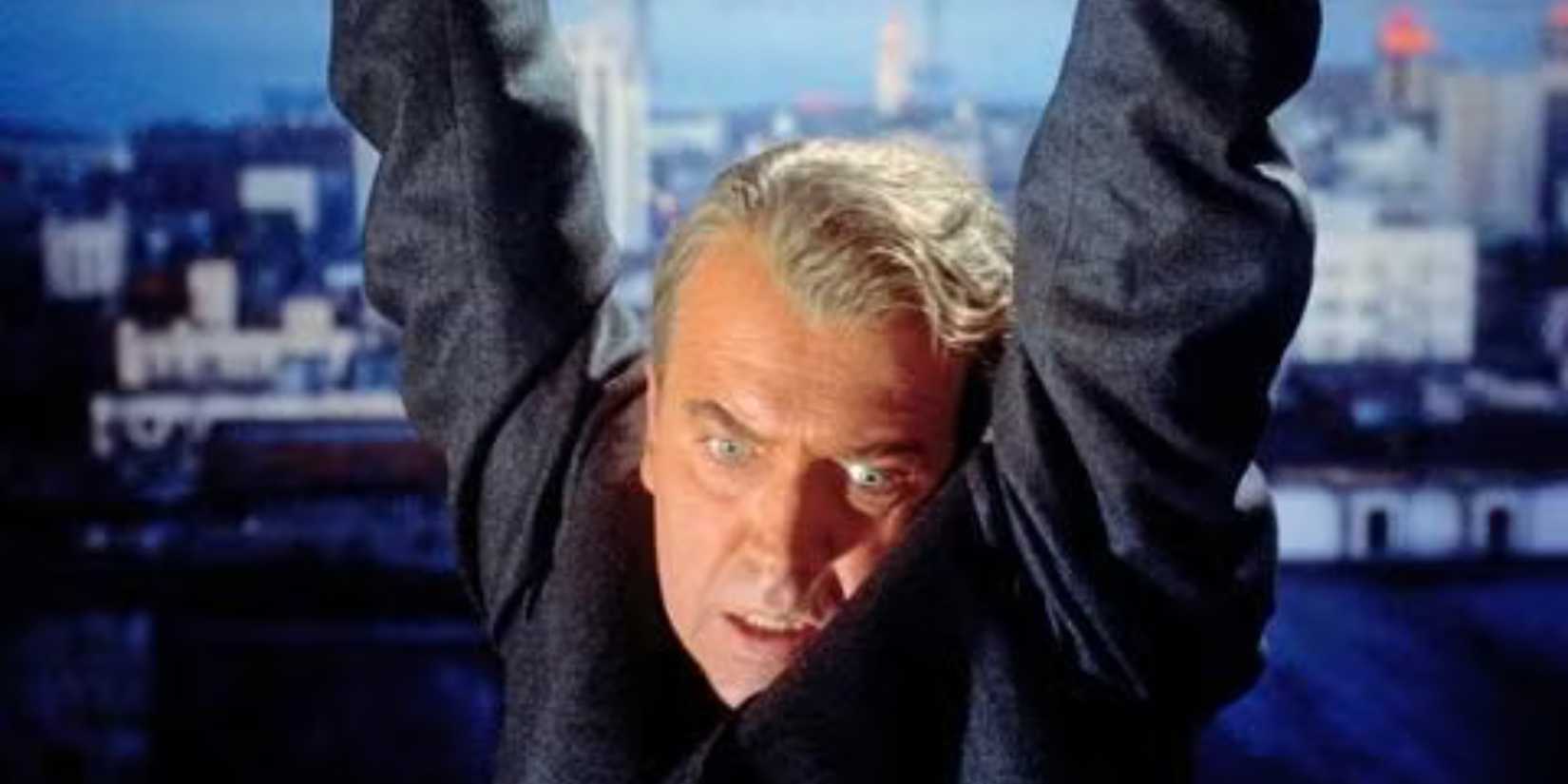
From masterful tension-building to game-changing directorial innovation, Vertigo is no doubt Hitchcock’s greatest achievement. The film centers on San Francisco detective John "Scottie" Ferguson (James Stewart), who retires after a rooftop chase leaves him with a severe fear of heights and vertigo. An old acquaintance, Gavin Elster (Tom Helmore), hires Scottie to trail his wife, Madeleine (Kim Novak), claiming she is possessed by the spirit of a dead ancestor, Carlotta Valdes. Scottie becomes infatuated and obsessed with Madeleine, but after an apparent suicide, it’s revealed there’s a larger plot afoot.
Hitchcock and cameraman Irmin Roberts invented the dolly zoom, better known as the Vertigo effect, to visually represent Scottie's acrophobia and psychological disorientation. The film establishes the big plot twist two-thirds of the way through, allowing the final act to shift from whodunnit to psychological ghost story. Bernard Herrmann’s lush, atmospheric soundtrack adds a dreamlike melancholy and ominous aura that pairs with the surreal, color-coded set pieces to heighten the psychological tension. Vertigo is a film that gets better with time, a groundbreaking achievement that forever altered how we see thrillers.
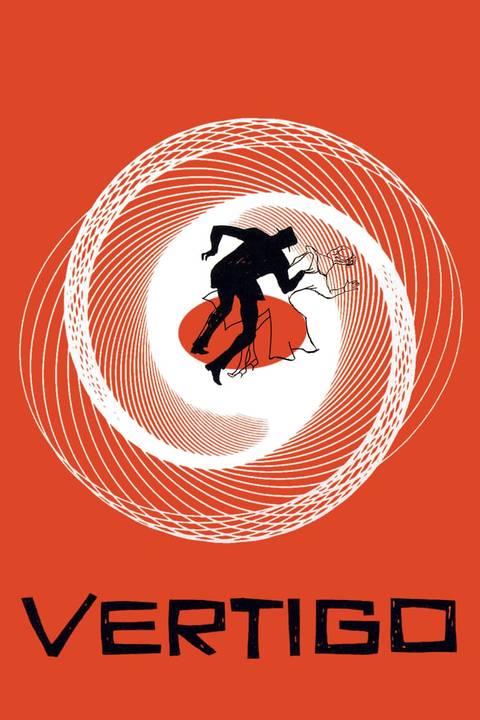
Vertigo
- Release Date
- May 28, 1958
- Cast
- James Stewart, Kim Novak, Barbara Bel Geddes, Tom Helmore, Henry Jones, Raymond Bailey, Ellen Corby, Konstantin Shayne, Lee Patrick, Bess Flowers, Alfred Hitchcock, David Ahdar, Sara Taft, Ezelle Poule, John Benson, Paul Bryar, Steve Conte, Fred Graham, Forbes Murray, Raoul Freeman
- Runtime
- 128 minutes
- Director
- Alfred Hitchcock
- Writers
- Alec Coppel, Samuel A. Taylor
KioskNews shows a cleaned-up reading view extracted from the publisher’s page — the original always lives on their site, not ours.