Opinion: Why (most of) Mexico’s elites dislike Sheinbaum
The elites went to the same schools, ate at the same restaurants and knew one another. Access to power came by birthright: through the private school you attended if you were in Mexico City, or through your last name if you were in Guadalajara or Monterrey. The pact went something like this: we may think a little differently, but as long as you’re one of us, you’re all right. It made it very hard for outsiders to rise into the elite, and even harder for insiders to fall out of it, no matter how incompetent, corrupt or reckless they were.
The pact guaranteed a kind of social cohesion. Most of Mexico’s recent presidents, from Miguel de la Madrid, Carlos Salinas de Gortari and Ernesto Zedillo to Felipe Calderón and Enrique Peña Nieto, came from these closed circles. Even the “outsider” Vicente Fox was really one of them, just from the geographic periphery.
The PRI (Institutional Revolutionary Party), which governed Mexico for 71 years until 2000, did not create this elite; it inherited it and adapted it to its revolutionary story. Because the PRI was, at its core, a pragmatic political machine that used the Mexican Revolution to legitimize itself, Mexico’s elite ended up different from the rest of Latin America’s. While most Latin American elites were overwhelmingly right-wing, Mexico’s, at least in the capital, tolerated some pluralism. You couldn’t be too far right or too far left, but you could lean a little either way.
How the 1985 Mexico City earthquake toppled Mexico’s decades-long ruling party
That broke down when Andrés Manuel López Obrador arrived on the scene. He hadn’t gone to a good private school, didn’t have a respected last name and wasn’t even from a major city. He was born in a small town in Tabasco, a place that looks more like Thailand and feels more like Costa Rica than the usual image of Mexico. He wasn’t exactly poor, but he was definitely not elite, and his political manners showed it. AMLO, as he is known, had not traveled the world, didn’t shop in Houston or spend summers in Spain. And whatever his politics (which are hard to pin down), moderation was not among them.

When he became mayor of Mexico City in 2000, the country’s main political goal was ending the PRI’s 71-year regime, and his freshness was welcome in a city that is huge, mostly progressive and the intellectual center of the country. He was audacious and, on balance, probably a good mayor: he changed the city’s political culture and paved the way for its later transformation. But when he ran for president, everything changed. The elites were alarmed to see an outsider so close to power. His razor-thin loss to Felipe Calderón in 2006, amid allegations of fraud, polarized the country, and his reaction, declaring himself the “legitimate president,” offended an elite that prized adherence to the unwritten rules of power.
By the time he won the presidency in 2018, López Obrador was more stubborn and polarizing than ever. But Mexico had also changed in the 18 years since he was elected mayor, and he understood that change better than almost anyone. Most Mexicans outside any elite were fed up. The “social mood” index of the Mexican polling firm Nodo showed alarming levels of anger. The Peña Nieto government had been so visibly corrupt and elitist that it finally woke up Mexico’s middle and lower classes.
AMLO used this to his advantage. He built a communication style based on constantly antagonizing the elite and its most visible figures, then waiting for them to lash back. What the elites didn’t understand was that every attack made him stronger. For his voters, AMLO was the legitimate voice of the people. The strategy also let him recreate the environment where he thrived most: the permanent campaign, fueled by friction.
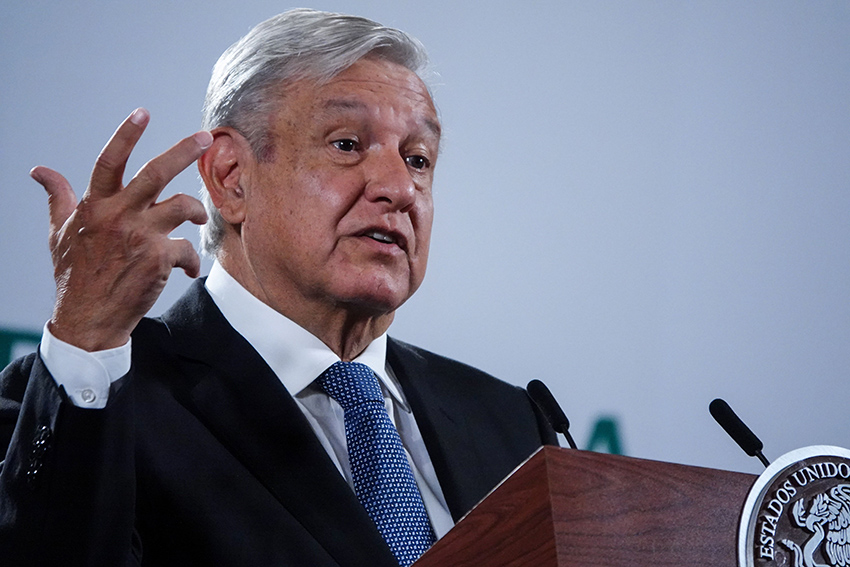
AMLO was not a great president. To his credit, he reduced poverty as no one had before, and he took control of the public narrative so completely that he built a nearly unbeatable electoral machine. But he governed like an eternal candidate rather than a president. He decided with his gut more than with the vision of a statesman, polarized society, dismantled valuable institutions and infrastructure projects because he didn’t like them, and championed others that have yet to prove their worth. In many ways, his government was a huge missed opportunity. In that sense, though, it was no different from those of Peña Nieto, Calderón or Fox, which were also deeply flawed but never seemed to bother the elites.
A famous Mexican writer once told me that AMLO’s greatest contribution to Mexico City was paving the way for the mayors who came after him. So when he chose Claudia Sheinbaum, a successful former mayor of the capital with a PhD in engineering, as his party’s candidate, there was a lot of hope.
Sheinbaum is not AMLO. She comes from an elite I haven’t mentioned yet, the cultural elite, and above all, she was an effective mayor. She won the 2024 election by nearly 19 million votes over the runner-up, Xóchitl Gálvez, and her approval rating has stayed above 70%. Still, the elites don’t like her.
Her government looks nothing like AMLO’s. She has grown close to the business community and is promoting investment as few of her predecessors have. She has been pragmatic with the United States and has brought Mexico back onto the world stage. Her security policy is the opposite of AMLO’s: she has gone after the cartels and violence has dropped. And her infrastructure projects, including passenger rail lines connecting Mexico’s main industrial hubs, make sense for the country’s needs.
Part of the elite’s rejection has to do with style. Although her policies are very different from AMLO’s, her rhetoric is very similar, and that is deliberate: she knows how to speak to her large political base. But the elites wouldn’t like her even if she spoke differently. They dislike her emphasis on social programs and social justice, but above all they dislike what she represents. She represents otherness: a Mexico that doesn’t move in their circles, that doesn’t solve problems over coffee in Polanco or through class pacts. She isn’t interested in money or in pleasing Mexico’s powerful men. They don’t like that she wears Indigenous clothing, and they don’t like that she is the heir of López Obrador, whom they see as an uneducated, ill-mannered, far-left provincial.
Mexico has at least two elites: the cultural one, which more or less accepts Sheinbaum, and the economic one, which deeply dislikes her. And the economic elite’s rejection has less to do with her policies than with the otherness it cannot accept. That elite wants a sort of White Mexico, one that mirrors its Americanized or Europeanized values and aspirations, its social codes, the primacy of its class and even of its skin color. Sheinbaum reminds it that it is no longer in power, and that is unbearable. Mexico’s elites will keep disliking Sheinbaum no matter what she does. How much of that comes from an actual analysis of her government, and how much from a view shaped by class, is a question with a mixed answer, though one that leans heavily in one direction.
Emilio Lezama is a Mexican writer, political analyst and communications strategist based in Mexico City. As founder and director of Los Hijos de la Malinche, a strategic communications agency, he advises international companies and institutions on navigating Mexico’s political landscape, managing reputation and crises, and building public support for their projects. He is a columnist for El Universal, has written for The New York Times and El País and has published several books.
KioskNews shows a cleaned-up reading view extracted from the publisher’s page — the original always lives on their site, not ours.