Deforestation puts Philippine food and water security at risk
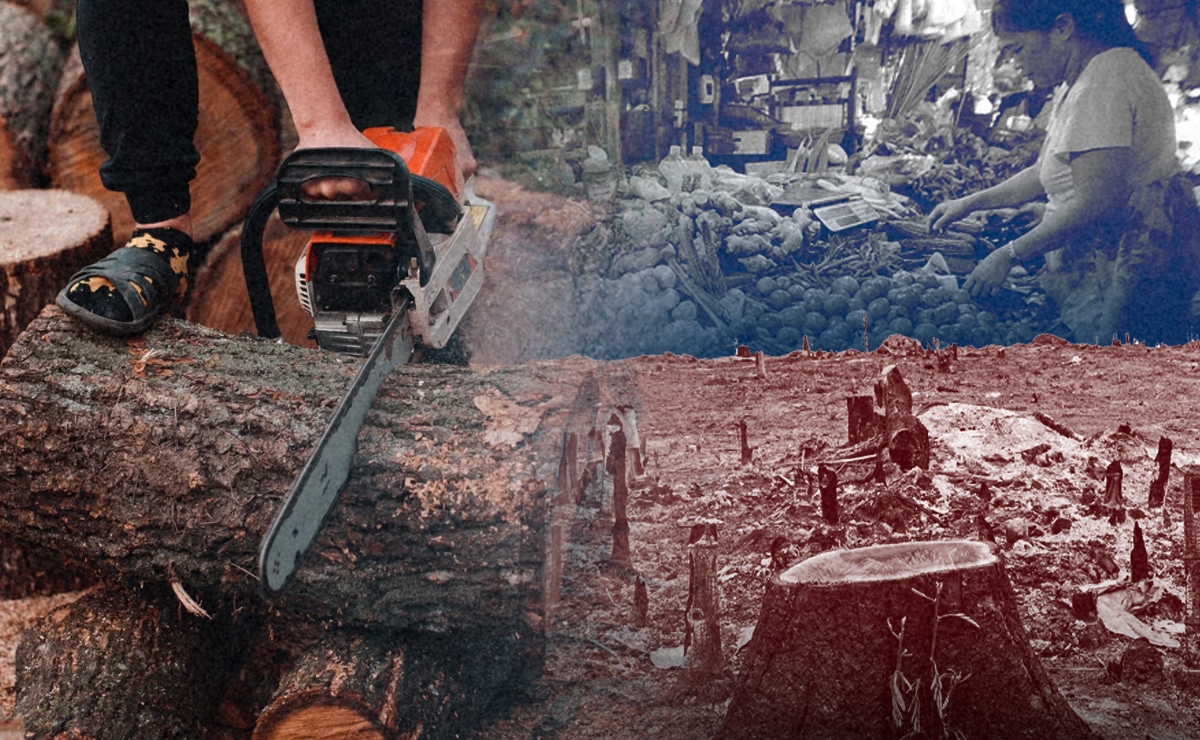
Deforestation in the Philippines is a systemic crisis conventionally framed as a forestry problem involving legal or illegal logging or slash-and-burn agriculture. But it can be described more accurately as a food systems crisis driven by interlocking pressures: direct clearing for food production for humans, grain-fed livestock and pets; demand for timber and palm oil; and infrastructure development.
Its consequences include heavy use of oil-based inputs to produce grains, the erosion of indigenous stewardship, massive soil erosion, siltation of riverbeds, flooding in Central Luzon and Metro Manila, and damage to infrastructure and crops.
Breaking the cycle of deforestation requires systemic solutions, including massive reforestation. Reforestation targets must be scaled up and enforced. A national reforestation program should aim to restore forest cover to at least 40%, adding 5 million hectares to the existing 6.9 million hectares, from the current forest cover of 23.3%, within the next two decades. It should prioritize critical watersheds such as the Sierra Madre, Palawan and Mindanao uplands.
Article continues after this advertisement
Slope cultivation limits, watershed rehabilitation, governance reform and dietary transition must also be pursued to restore ecological balance and protect communities. Shifting from chemical-intensive agriculture to agroecologically based farming can mitigate the cascading consequences of deforestation and restore watershed hydrology, providing pathways to break the deforestation cycle.
FEATURED STORIES
NEWSINFO
NEWSINFO
NEWSINFO
How deforestation became a food systems crisis
Forest cover in the Philippines was estimated at 27 million hectares in 1900, or 90% of the country’s total land area. By 2020, Philippine Statistics Authority and Department of Environment and Natural Resources data placed it at 7.22 million hectares, or 23.3% of land area (FAO, 2020).
Globally, 420 million hectares of forest were lost from 1990 to 2020, an area larger than India (FAO, 2020).
While poverty, illegal logging and land conversion for settlements are often cited as causes of deforestation, deeper drivers lie in agricultural expansion, monocropping and dietary preferences that shape demand.
The cultivation of cash crops such as sugarcane, coconut and, increasingly, oil palm has displaced biodiverse forest ecosystems, while livestock production contributes to the clearing of land for pasture.
Article continues after this advertisement
Deforestation is therefore fundamentally linked to what and how food is produced, as well as what people choose to consume. Examining the Philippine experience within this global dynamic highlights the dual challenge of ensuring food security while safeguarding ecological resilience.
Deforestation is both a local crisis and a systemic issue embedded in global food systems. This paper examines its causes and consequences, situating the Philippine experience within global dynamics.
Article continues after this advertisement
What drives forest loss
Clearing forests to produce food
Agriculture drives 80% of deforestation worldwide, with cropland expansion accounting for 49% and livestock grazing for 38% (FAO, 2022).
In the Philippines, population growth and shrinking farm sizes push farmers toward forest margins, as seen in corn expansion in Mindanao and kaingin practices in Palawan (Pulhin & Inoue, 2008).
A massive population surge is another major driver that often receives little attention. The Philippines has exceeded its estimated ideal carrying capacity of about 30 million people by four times, with the population reaching 120 million in 2026.
This surge has intensified demand for food and land, compelling households to expand cultivation into marginal areas. Philippine Statistics Authority data show that while the number of farms has increased, average farm size declined from 3.61 hectares in 1970 to 0.82 hectares in 2022, reflecting demographic fragmentation and land scarcity (PSA, 2026).
The population surge is not merely a statistic but a structural driver of deforestation. As land becomes scarce, farmers are pushed into ecologically fragile uplands, where unsustainable practices multiply the risks of soil depletion and forest loss. This dynamic links demographic growth directly to food insecurity and governance challenges in land management.
The ecological consequences include cultivation on slopes exceeding 18%, which are unsuitable for sustainable farming without soil-conserving measures. Practices such as terracing, contour farming and agroforestry remain minimal. Instead, slash-and-burn, or kaingin, and open-field corn expansion dominate upland agriculture.
These practices lead to erosion, fertility loss, landslide risks and long-term ecological decline, converting forests into grasslands and reducing biodiversity.
The demographic pressure created by population growth beyond the estimated carrying capacity multiplies pressure on fragile uplands, while the absence of soil-conserving practices compounds ecological deterioration.
Table 1. Demographic pressure and upland cultivation
| Dimension | Recommended/ideal standard | Actual situation, Philippines, 2023-2026 | Implications for deforestation and soil health |
|---|---|---|---|
| Population levels | About 30 million, estimated carrying capacity | About 120 million, four times the carrying capacity | Demographic pressure forces expansion into marginal uplands; food insecurity drives forest clearing. |
| Slope threshold for cultivation | 18% slope or less suitable for sustainable cultivation | Cultivation often occurs on slopes greater than 18%, including steep uplands | Accelerated erosion, fertility loss, landslide risk and irreversible forest degradation |
| Soil conservation practices | Terracing, contour farming, agroforestry, mulching | Minimal or absent; kaingin and open-field corn expansion dominate | Rapid nutrient depletion, shortened fallow cycles, declining yields and forest-to-grassland conversion |
Feeding livestock, clearing forests
Amplifying the need to clear more land for agricultural production are livestock and pets. In recent years, grains have also been processed into biofuel as renewable energy for vehicles.
Philippine corn and soybean imports for feed link local deforestation to global soy-driven forest loss in Brazil (World Bank, 2023). Domestically, 60% of Philippine corn production — grown on 2.5 million hectares of land formerly forested in Cagayan Valley and Central Mindanao — goes to animal feed (DA, 2023).
A dietary transition toward meat-heavy diets intensifies demand for land used to produce feed grains and directly links Philippine consumption to global deforestation hotspots.
Producing 1 kilogram of beef requires 7 to 8 kilograms of grain (Gerber et al., 2013), underscoring the inefficiency of feed conversion and the disproportionate land footprint of livestock compared with the direct human consumption of grains.
Historical data from the Philippine Statistics Authority show that per capita meat consumption rose from about 9 kilograms in 1980 to 30 kilograms by 2022, a tripling associated with urbanization, rising incomes and the spread of fast-food culture.
This dietary transition has profound ecological consequences. Tripling demand has driven feed imports and expanded upland corn cultivation, while rising soybean imports link Philippine diets to Amazon deforestation.
The feed-to-meat conversion ratio remains at 7 to 8 kilograms of grain per kilogram of beef, amplifying inefficient land use and the deforestation footprint. Rising meat demand directly connects Philippine consumption patterns to global deforestation chains, from Brazil’s soy frontier to local upland corn expansion.
With the population already four times the estimated ideal carrying capacity, meat-heavy diets multiply land pressure beyond sustainable thresholds. Livestock feed expansion undermines forest carbon sinks, worsening climate vulnerability.
Under current meat-heavy diets, the Philippines consumes about 25 million tons of grain annually for feed, enough to feed 124 million people directly if consumed as staple food.
A moderate dietary shift — halving meat intake to 15 kilograms per capita — would reduce grain demand to 12.6 million tons, spare 1.25 million hectares of cropland and free enough grain to feed 62 million people.
RELATED STORY: Deforestation worst where governance is weak, says data analyst
A stronger shift — cutting meat intake by 75% — would lower grain demand to 6.3 million tons, spare nearly 2 million hectares and provide grain sufficient to feed 31 million people directly.
A plant-based diet, with meat consumption reduced to less than 5 kilograms per capita, would redirect more than 20 million tons of grain to human food, spare more than 2 million hectares of land and enable forest regeneration while feeding the Philippine population sustainably.
These projections highlight dietary reform as a critical component, alongside population stabilization and soil conservation, in reducing deforestation pressures.
By shifting toward plant-based diets, the Philippines could relieve pressure on upland forests, reduce dependence on imported soy, strengthen food security and enhance climate resilience.
Promoting plant-based diets, investing in feed efficiency and enforcing slope cultivation thresholds are therefore presented as governance interventions to safeguard forests and ensure long-term sustainability.
Table 2. Scenarios of diet pathways
| Scenario | Per capita meat intake | Grain demand, million tons/year | Land spared, million hectares | People fed if grain is directly consumed |
|---|---|---|---|---|
| Baseline, current | About 30 kg | About 25.2 | 0 | About 124 million |
| Moderate shift, 50% | About 15 kg | About 12.6 | About 1.25 | About 62 million |
| Strong shift, 75% | About 7.5 kg | About 6.3 | About 1.9 | About 31 million |
| Plant-forward, less than 5 kg | Less than 5 kg | About 4.2 | More than 2.0 | About 21 million, plus the full population fed through redirected grain |
Oil-based inputs deepen pressure on forests
Synthetic nitrogen fertilizer production consumes 3% to 5% of global natural gas (IEA, 2021).
In the Philippines, fertilizer use has risen fiftyfold since 1960, creating a treadmill effect in which degraded soils push farmers to clear new forest land (Buresh et al., 2010). Diesel mechanization compounds this dependency.
This reliance on oil-based inputs is driven not only by staple crop production but increasingly by the need to produce grains for livestock feed.
Globally, 37% to 40% of all grain is fed to livestock rather than consumed directly by humans (International Grains Council, 2022; Pimentel, cited in EcoBuilderz, 2026). Feed grains, primarily corn and soy, constitute about 70% of total livestock feed volume (FAO, 2019).
This diversion of grain multiplies fossil fuel demand because fertilizer and mechanization are required at scale to sustain feed production.
Globally, nearly 80% of agricultural land is devoted to livestock, either as grazing pasture or cropland for animal feed (FAO, 2024; Our World in Data). Yet livestock contributes only about 17% of global calories and 38% of protein.
In the Philippines, the expansion of corn for feed on 2.5 million hectares of formerly forested land in Cagayan Valley and Central Mindanao illustrates how oil-based inputs, feed demand and deforestation are intertwined.
Rising livestock feed demand accelerates forest clearing both locally through corn expansion and globally through soy imports from Brazil. Fertilizer and mechanization also tie Philippine agriculture to volatile global energy markets.
Intensive fertilizer use depletes organic matter, forcing expansion into uplands and fragile ecosystems. Livestock-driven feed production undermines carbon sinks, worsening vulnerability to climate shocks.
The evidence presented shows that oil-based inputs are not merely a farm-level issue but a systemic driver of deforestation through livestock feed demand. The Philippines faces a dual challenge: reducing fossil fuel dependence while rethinking dietary and feed policies.
Shifting toward plant-based diets, enforcing slope cultivation limits and promoting agroecological practices could reduce oil-based input use, spare forests and strengthen food security.
Table 3. Comparative diet pathways and oil-based input use
| Scenario | Grain allocation, million tons/year | Fossil fuel use, fertilizer and diesel | Land footprint | Deforestation pressure |
|---|---|---|---|---|
| Livestock-heavy, current | About 25 diverted to feed | High: 3%-5% global natural gas plus 35-50 liters diesel/hectare | About 2.5 million hectares of corn plus soy imports | Severe: local upland clearing plus global soy frontier |
| Moderate shift, 50% meat | About 12.6 | Medium: reduced fertilizer and diesel demand | About 1.25 million hectares spared | Partial relief; slower forest loss |
| Strong shift, 75% meat | About 6.3 | Lower: fertilizer and diesel demand halved | About 1.9 million hectares spared | Significant forest recovery potential |
| Plant-forward, less than 5 kg meat | About 4.2 | Minimal: organic/minimum tillage feasible | More than 2 million hectares spared | Forest regeneration and climate resilience |
The water-food-forest nexus
Deforestation reduces water infiltration, contributing to floods and droughts. Forest soils can absorb 60% to 90% of rainfall, compared with only 10% to 20% for bare cropland (Bruijnzeel, 2004).
When forest cover is reduced, infiltration capacity collapses, leading to flash floods during heavy rains and prolonged droughts during dry seasons. This dual stress undermines agricultural productivity as croplands are alternately submerged or deprived of sufficient moisture.
Laguna de Bay demonstrates this dynamic. The lake receives about 2.7 million tons of sediment annually from deforested watersheds, reducing its depth from 3 meters to as little as 0.5 meter in certain areas (LLDA, 2022).
Siltation diminishes the lake’s flood-buffering capacity while impairing fisheries that provide food and income for millions of residents. Sediment loads originate from upland erosion, itself driven by forest clearing for agriculture and livestock feed.
Globally, the food-deforestation nexus is intensified by dietary transitions. More than one-third of grain production is diverted to livestock feed, while 70% to 80% of agricultural land is dedicated to grazing or forage crops for ruminants (FAO, 2019; Our World in Data, 2024).
This allocation accelerates forest loss, multiplies fossil fuel demand for fertilizer and mechanization, and undermines water security.
Maintaining forest cover above 50% is presented as critical to halving flood depth and duration compared with current degraded levels. Reforestation, soil conservation and dietary reform that reduces livestock feed demand are interventions aimed at restoring water balance, protecting food systems and reducing deforestation-related risks.
Forest cover scenarios and water-food outcomes
| Forest cover | Infiltration capacity | Flood risk, depth/duration | Food production outcomes |
|---|---|---|---|
| 90%, intact | 60%-90% of rainfall absorbed | Flood depth 0.5-1 meter; duration 2-3 days | Stable yields; minimal crop loss |
| 50%, partially degraded | About 40% of rainfall absorbed | Flood depth 2-3 meters; duration 5-7 days | Moderate damage; 10%-20% crop loss |
| 23%, severely degraded | 10%-20% of rainfall absorbed | Flood depth 4-6 meters; duration 10-14 days | Severe damage; 30%-50% crop loss; fisheries collapse |
Overlapping forces behind forest loss
Deforestation in the Philippines and Southeast Asia is shaped by overlapping forces that reinforce one another.
Commodity expansion through timber, paper and palm oil remains a major driver. Palm oil alone cleared 6.2 million hectares in Indonesia and Malaysia, while the Philippines imports 1.1 million metric tons annually, embedding itself in this global chain of forest loss (Global Forest Watch, 2021; PSA, 2024).
Paper and pulp demand similarly promotes monoculture plantations, reducing biodiversity by up to 80% compared with native forests (Lasco et al., 2013).
Infrastructure fragmentation compounds these pressures. Roads and mining concessions open forests to exploitation, as seen along the Marikina-Infanta highway, which fragmented the Sierra Madre, and in nickel mining in Palawan, which cleared 300,000 hectares (DENR, 2022).
Urban sprawl in Calabarzon further converts agricultural land, pushing farmers into upland areas where cultivation accelerates erosion and forest degradation.
Equally critical is the erosion of indigenous stewardship. Evidence shows that Community-Based Forest Management, or CBFM, reduces deforestation by 50%, yet coverage remains limited (Bowler et al., 2012).
Weak governance leaves forests vulnerable to open-access exploitation, with only 2,000 forest guards tasked with protecting 7.2 million hectares nationwide (DENR, 2022).
The absence of strong community rights and enforcement capacity undermines traditional custodianship, which historically maintained ecological balance.
Taken together, commodity expansion, infrastructure fragmentation and weakened indigenous governance form a systemic chain of deforestation requiring integrated policy responses.
Addressing deforestation requires coordinated interventions: regulating global commodity chains, enforcing land-use planning to prevent fragmentation, and scaling up community-based forest management to restore indigenous stewardship.
Table 4. Consolidated drivers of deforestation
| Driver | Quantitative impact | Biodiversity decline | Governance/enforcement gap |
|---|---|---|---|
| Commodities: timber, paper, palm oil | Palm oil cleared 6.2 million hectares in Indonesia and Malaysia; Philippines imports 1.1 million metric tons annually | Up to 80% loss in monoculture plantations | Weak regulation of imports and plantation expansion |
| Infrastructure fragmentation | Sierra Madre fragmented by Marikina-Infanta highway; 300,000 hectares cleared in Palawan mining | Habitat fragmentation and species displacement | Land-use planning undermined by concessions and sprawl |
| Loss of indigenous stewardship | CBFM reduces deforestation by 50% but has limited coverage; 2,000 guards for 7.2 million hectares | Traditional biodiversity protection weakened | Severe enforcement gap; open-access exploitation |
The cascading costs of deforestation
Deforestation in the Philippines has unleashed a chain of interrelated consequences that undermine ecological stability, food security and infrastructure resilience.
The removal of forest cover accelerates soil erosion, clogs waterways with sediment, intensifies flooding and damages both agricultural productivity and built infrastructure. These impacts are interconnected, forming a cycle that perpetuates vulnerability across communities and ecosystems.
One of the most direct consequences is soil erosion. Forest soils, rich in organic matter and root systems, can absorb 60% to 90% of rainfall, stabilizing slopes and minimizing runoff (Bruijnzeel, 2004).
Bare cropland, by contrast, absorbs only 10% to 20% of rainfall, leading to rapid runoff and erosion.
Historical data illustrate this correlation. When forest cover was at 90% in 1900, soil erosion rates were below 5 tons per hectare per year, resulting in stable rivers and minimal siltation.
By 1970, with forest cover reduced to 50%, erosion rates had risen to 20 to 30 tons per hectare annually, marking the onset of upland erosion.
By 2020, with only 23.3% forest cover remaining, erosion rates had reached 60 to 120 tons per hectare, producing brown floodwaters and heavily silted lakes (FAO, 2020; DENR, 2022).
The erosion of upland soils leads to riverbed siltation, reducing waterway depth and capacity. Sediment washed down from deforested slopes accumulates in rivers, diminishing their ability to accommodate floodwaters.
The Pampanga River, once 10 to 12 meters deep, has been reduced to 3 to 5 meters in many sections because of siltation from the Sierra Madre slopes (DENR, 2022).
Similarly, Laguna de Bay receives 2.7 million tons of sediment annually, reducing its depth from 3 meters to as little as 0.5 meter in some areas (LLDA, 2022).
This siltation not only diminishes flood-buffering capacity but also disrupts fisheries and aquatic ecosystems, undermining food security for communities dependent on these water bodies.
As rivers lose depth and lakes lose buffering capacity, flooding becomes more frequent and severe. Central Luzon, with its extensive floodplains, is particularly vulnerable.
Typhoon Ondoy in 2009 submerged 80% of Metro Manila, with damage worsened by silted rivers and degraded watersheds (Pulhin & Inoue, 2008).
The absence of forest buffers means rainfall flows directly into rivers, raising water levels quickly and overwhelming flood-control systems.
Provinces such as Bulacan and Pampanga face recurrent inundation, destroying homes, displacing families and eroding livelihoods. Metro Manila, downstream of the Sierra Madre, suffers flash floods that paralyze transportation and economic activity, highlighting the urban consequences of upland deforestation.
Flooding also causes infrastructure and crop damage, compounding socioeconomic costs. Roads, bridges and irrigation canals are destroyed or clogged by sediment, requiring costly repairs that divert government resources from development projects.
Agricultural land is buried under silt, reducing rice yields by 30% to 50% in affected areas (DA, 2023). Irrigation systems essential for food production become dysfunctional when sediment blocks canals, forcing farmers to rely on costly pumping systems.
The cumulative effect is a cycle of poverty and vulnerability in which farmers lose productivity, governments spend heavily on repairs and communities remain exposed to disasters.
These consequences are deeply interrelated. Soil erosion feeds siltation; siltation reduces river depth; reduced depth intensifies flooding; and flooding destroys infrastructure and crops.
Each consequence amplifies the next, creating a systemic crisis that undermines ecological and socioeconomic resilience.
Conversely, maintaining forest cover can help break this cycle by supporting stable soils, healthy rivers, reduced flooding and more resilient communities.
The evidence presented underscores that deforestation is not merely a forestry issue but a systemic threat to water security, food systems and national development.
Breaking the cycle of forest loss
The cascading consequences of deforestation in the Philippines — soil erosion, river siltation, flooding and infrastructure damage — demonstrate that forest loss is not simply an environmental issue but a systemic crisis that undermines food security, water management and national development.
The evidence presented shows that degraded watersheds and reduced forest cover correlate with rising erosion rates, declining river depths and intensified flooding. These impacts, in turn, destroy crops, damage infrastructure and divert scarce government resources toward disaster response rather than long-term development.
Breaking this cycle requires integrated interventions addressing ecological restoration and governance reform.
First, reforestation targets must be scaled up and enforced. Current forest cover of 23.3% is far below the ecological threshold identified as necessary to stabilize watersheds.
A national reforestation program should aim to restore forest cover to at least 40% by adding 5 million hectares to the existing 6.9 million hectares within the next two decades, prioritizing critical watersheds such as the Sierra Madre, Palawan and Mindanao uplands.
Reforestation should emphasize native species and agroforestry systems that combine tree cover with food production, enhancing biodiversity and farmer livelihoods (FAO, 2020; DENR, 2022).
Second, slope cultivation limits must be strictly enforced. Scientific evidence shows that slopes above 18% are unsuitable for conventional farming without soil-conserving practices (Bruijnzeel, 2004).
Yet upland farmers, pressured by shrinking farm sizes and population growth, continue to cultivate fragile slopes, accelerating erosion.
Policies must prohibit cultivation on steep slopes unless supported by terracing, contour farming or agroforestry. Enforcement should be paired with incentives, such as subsidies for soil-conserving practices and access to alternative livelihoods, to encourage compliance without penalizing vulnerable farmers.
Third, watershed rehabilitation must become a national priority.
Sedimentation in Laguna de Bay and the Pampanga River illustrates how degraded watersheds undermine rural and urban resilience. Rehabilitation programs should integrate reforestation, riverbank stabilization and community-based monitoring.
Investments in watershed rehabilitation can reduce sediment loads, restore river depth and improve flood-buffering capacity, thereby protecting Metro Manila and Central Luzon from recurrent inundation (LLDA, 2022; Pulhin & Inoue, 2008).
Fourth, governance and community stewardship must be strengthened.
Evidence shows that CBFM reduces deforestation by 50% (Bowler et al., 2012), yet coverage remains limited. Expanding CBFM programs and empowering indigenous communities with legal rights to manage forests can restore traditional custodianship and ecological balance.
Enforcement capacity must also be expanded. With only 2,000 forest guards for 6.9 million hectares, the current system is grossly inadequate (DENR, 2022). Increasing personnel, funding and transparency in forest governance is essential to prevent open-access exploitation.
Fifth, agroecologically based agriculture can mitigate the cascading consequences of deforestation.
Agroecologically based SRI organic rice systems reduce irrigation demand by as much as 50% and increase soil organic matter (Mendoza, 2024). Agroforestry in Catanduanes restored watersheds, reducing erosion by 60% (ICRAF, 2021).
Policy must redirect subsidies from chemical fertilizers toward soil-building practices and prioritize watershed reforestation.
Finally, dietary and energy reforms must complement ecological interventions.
More than one-third of global grain is diverted to livestock feed, while 70% to 80% of agricultural land is dedicated to grazing and forage crops (FAO, 2019; Our World in Data, 2024).
In the Philippines, rising meat consumption drives corn expansion into uplands, linking local deforestation to global soy-driven forest loss.
Promoting plant-based diets, reducing dependence on oil-based inputs and incentivizing sustainable food systems can reduce pressure on forests while improving public health and climate resilience.
Restoring ecological balance
Deforestation is a systemic crisis requiring systemic solutions.
Reforestation, slope cultivation limits, watershed rehabilitation, governance reform and dietary transition must be pursued together to restore ecological balance and protect communities from cascading risks.
Agroecologically based agriculture can help mitigate the cascading consequences of deforestation.
Policymakers must recognize that forests are not just ecological assets but the foundation of water security, food production and national resilience.
Breaking the cycle of deforestation is therefore a national imperative for sustainable development. /dm
Your subscription could not be saved. Please try again.
Your subscription has been successful.
(Teodoro C. Mendoza is a retired professor and scientist of the Institute of Crop Science, College of Agriculture and Food Sciences, UP Los Baños, Laguna)
KioskNews shows a cleaned-up reading view extracted from the publisher’s page — the original always lives on their site, not ours.