8 Hard Sci-Fi Books To Read Before Kicking the Bucket

Dyah (pronounced Dee-yah) is a Senior Author at Collider, responsible for both writing and transcription duties. She joined the website in 2022 as a Resource Writer before stepping into her current role in April 2023. As a Senior Author, she writes Features and Lists covering TV, music, and movies, making her a true Jill of all trades. In addition to her writing, Dyah also serves as an interview transcriber, primarily for events such as San Diego Comic-Con, the Toronto International Film Festival, and the Sundance Film Festival.
Dyah graduated from Satya Wacana Christian University in October 2019 with a Bachelor's degree in English Literature, concentrating on Creative Writing. On March 2026, Dyah graduated with Master's degree in English Literature Studies, with a thesis on intersectionality in postcolonial-feminist studies in Asian literary works.
Born and raised between Indonesia and Singapore, Dyah is no stranger to different cultures. She now resides in the small town of Kendal with her husband and four cats, where she spends her free time cooking or cycling.
Sign in to your Collider account
No matter how much science fiction branches out, the genre will always be rooted in one thing: science. Hard sci-fi books come in varying degrees of difficulty. Some build their worlds around established scientific theories, while others dare to challenge existing scientific laws. Although the subgenre emphasizes scientific accuracy, fiction also pushes the boundaries of speculative science through imaginative hypothetical scenarios.
Some explore what might happen if real theories became reality, while others examine how far humanity could go when faced with extraordinary scientific challenges. From exploring the limits of quantum physics to demonstrating the extensive knowledge required to survive alone in space, here are hard sci-fi books to read before kicking the bucket.
'Blindsight' (2006)
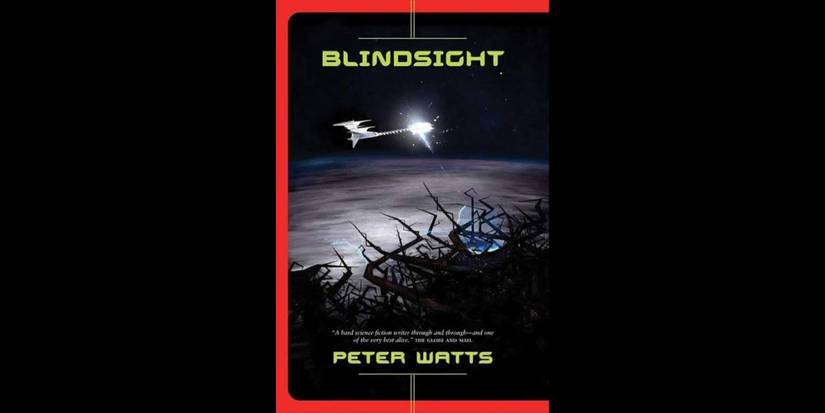
Inspired by a real-life neurological phenomenon, Peter Watts' Blindsight gets heavily philosophical about whether intelligence really needs consciousness. In 2082, humanity gets its first sign of alien life when mysterious objects burn through Earth's atmosphere. A crew of five transhuman specialists aboard the antimatter-powered spaceship Theseus is sent to investigate a strange signal near the edge of the solar system.
Blindsight looks at how the creatures they meet, a.k.a. Scramblers, can process information without being self-aware. It's one thing to operate on pure, unfiltered data, but the novel also questions whether human consciousness is actually necessary for building a functioning society. Blindsight argues whether emotions, rather than helping us survive, might make humans less equipped to deal with threats that demand nothing but logic and objective thinking.
'The Martian' (2011)
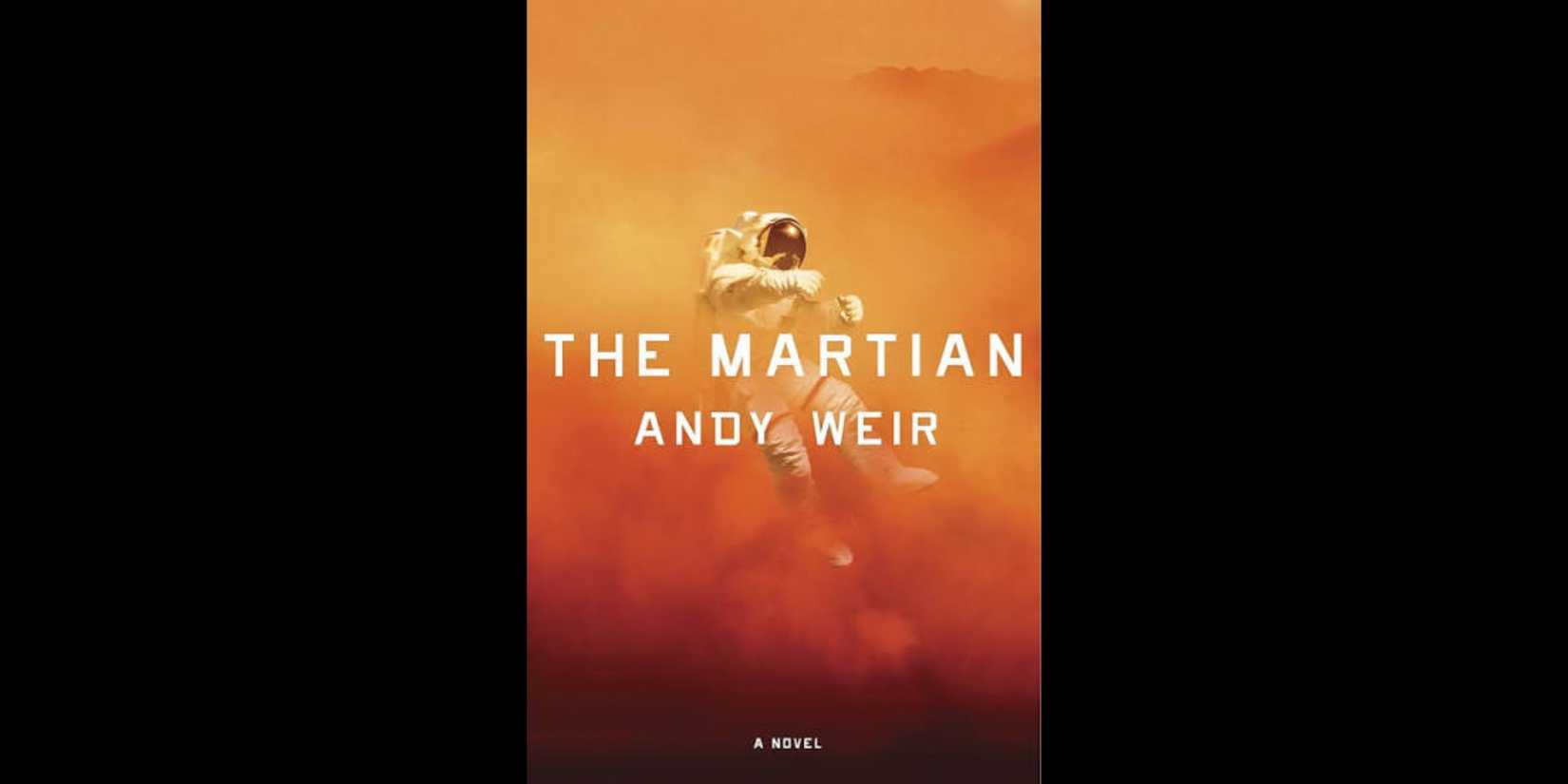
Andy Weir's The Martian hits the sweet spot for sci-fi readers who want an easy-to-digest, character-driven story without compromising its hard sci-fi elements. When a dust storm forces NASA's Ares 3 crew to abandon Mars, an accident leaves Mark Watney injured and stranded. Presumed dead, he must survive alone with limited supplies, a damaged spacesuit, and no way to contact Earth.
Mark's only chance is to use his scientific knowledge to find a way home, which is where the hard sci-fi comes in. From growing food through closed-ecosystem farming to producing water from hydrazine and using ion propulsion, Weir draws on various scientific fields to show just how much knowledge it takes to survive in an environment where no human should be able to survive. For all of The Martian's conversational tone thanks to its candid lead character, the novel makes these scientific challenges accessible without oversimplifying the problems Mark faces.
'Diaspora' (1997)

By the 30th century, biological existence in Diaspora is no longer the only way to be human. Artificial intelligences and digitally created minds coexist with humans in virtual societies known as polises. However, this technologically advanced civilization faces an unprecedented threat when astronomers detect a cosmic event capable of destroying Earth. A research team led by Yatima, a mathematically gifted digital intelligence, sets out to investigate, uncovering realities that stretch beyond the limits of familiar space and time.
Diaspora takes hard sci-fi to an extreme, delivering a reading experience that is technical, mentally demanding, and often challenging to follow. Greg Egan pushes theoretical physics into unfamiliar territory, questioning concepts that readers might otherwise take for granted. This isn't the kind of novel you can breeze through without doing some additional reading. Understanding its scientific ideas may require looking up the theories behind them, particularly Egan's introduction of Kozuch Theory.
'Children of Time' (2015)

With Earth no longer habitable, humanity's last survivors in Children of Time embark on a desperate search for a new planet to call home. Meanwhile, a scientific experiment gone wrong on a distant terraformed world sets an unexpected evolutionary process in motion, giving rise to an intelligent species of spiders. As both civilizations develop independently, their paths gradually converge.
In a genre often dominated by time travel, alternate worlds, and complex equations, Children of Time takes a different approach by focusing on animal cognition and evolutionary biology. This shouldn't come as a surprise, considering Adrian Tchaikovsky's background in zoology and psychology. Even if hard sci-fi purists might question some of its scientific ideas, the novel makes for an interesting read about Portia labiata jumping spiders, particularly their intelligence, social behavior, and the development of their own society.
COLLIDERInteractive
Long-range scan active
Movies/Science Fiction/Survival Assessment
Collider Survival Assessment
Which Sci-Fi World
Would You Survive?
8 questions · 5 worlds · one honest verdict
Five of the great screen futures, and not one of them is built for comfort. Answer eight questions about instinct, loyalty and the line you would cross, and the scan will tell you which one you would still be standing in. Worlds in range
▦︎The Matrix
◈︎Mad Max
◑︎Blade Runner
▲︎Dune
✦︎Star Wars
Signal lock01 / 08
Question 01 of 08INSTINCT
The world as you know it ends overnight. What is your first move? No wrong answer. There is a wrong hesitation.
Keys 1 to 5 or A to E · Enter to advance
Signal lock02 / 08
Question 02 of 08RESOURCE
You can stockpile exactly one thing. What is it? Choose carefully. You are not getting a second run.
Keys 1 to 5 or A to E · Enter to advance
Signal lock03 / 08
Question 03 of 08THREAT
Which kind of enemy scares you the most? Be honest about what keeps you up.
Keys 1 to 5 or A to E · Enter to advance
Signal lock04 / 08
Question 04 of 08AUTHORITY
How do you handle the people in charge? Every world has them. Even the ones that pretend otherwise.
Keys 1 to 5 or A to E · Enter to advance
Signal lock05 / 08
Question 05 of 08ENVIRONMENT
Pick the place you would rather wake up in: You will be there a while.
Keys 1 to 5 or A to E · Enter to advance
Signal lock06 / 08
Question 06 of 08ALLIANCE
Who do you want standing next to you? Pick one. You only get one.
Keys 1 to 5 or A to E · Enter to advance
Signal lock07 / 08
Question 07 of 08MORALITY
Which line would you cross to survive? Everybody crosses one.
Keys 1 to 5 or A to E · Enter to advance
Signal lock08 / 08
Question 08 of 08PURPOSE
What are you really fighting for? Last question. Make it count.
Keys 1 to 5 or A to E · Enter to advance
Scan completeYou would survive
▦︎ The Matrix The Resistance, Zion You take the red pill, you stay in Wonderland, and I show you how deep the rabbit hole goes.
You would survive The Matrix because you were never fully sold on the version of reality you were handed. You notice the seams. You ask the second question. In a world built to keep people comfortable and incurious, that instinct is the whole fight, and it is why Morpheus would have found you long before you found him. From the Collider file
- The Wachowskis' 1999 film won four Academy Awards, including Visual Effects and Film Editing.
- Bullet time was shot with a rig of roughly 120 still cameras firing in sequence around the actors.
- Keanu Reeves trained in martial arts for about four months before a frame was shot, recovering from neck surgery the whole time.
- It opened the same year as Fight Club and eXistenZ, in a run of films about not trusting the world in front of you.
Red pill energy Pattern spotter Built to question
◈︎ Mad Max The Wasteland Oh, what a day. What a lovely day.
You would survive the Wasteland because you do not waste energy mourning the world that ended. You move, you improvise, and you are very good with whatever is bolted to the thing in front of you. Furiosa would let you drive. That is not a compliment anybody earns easily. From the Collider file
- Mad Max: Fury Road won six Academy Awards in 2016, more than any other film that year.
- George Miller storyboarded the entire film as roughly 3,500 panels before there was a script.
- The chase was shot almost entirely practical in the Namib Desert, with real vehicles and real stunt performers.
- Anya Taylor-Joy and Chris Hemsworth carried the prequel, Furiosa: A Mad Max Saga, in 2024.
Keeps moving Improviser Good with engines
◑︎ Blade Runner Los Angeles, 2049 All those moments will be lost in time, like tears in rain.
You would survive 2049 because you know how to be small in a very loud city. You keep your head down, you do the job, and you hold onto one private thing that belongs only to you. That quiet stubbornness is exactly what both Deckard and K run on, and it is what keeps either of them going when the case stops making sense. From the Collider file
- Blade Runner 2049 won Roger Deakins his first Oscar for cinematography, on his fourteenth nomination.
- The film also took Best Visual Effects, 35 years after Ridley Scott's 1982 original.
- Villeneuve shot it on large-format film and kept the fog and rain practical on set wherever he could.
- Three short films by Luke Scott and Shinichiro Watanabe bridge the 30-year gap between the two movies.
Keeps her head down Private Noir soul
▲︎ Dune Arrakis Fear is the mind-killer. Fear is the little-death that brings total obliteration.
You would survive Arrakis because you think in decades while everyone around you thinks in weeks. You read the room, you learn the customs, you wait. The desert does not reward speed. It rewards people who understand that patience is a weapon, which is the one lesson the Fremen never had to be taught. From the Collider file
- Denis Villeneuve's Dune won six Academy Awards in 2022, including Cinematography and Original Score.
- Hans Zimmer turned down Christopher Nolan's Tenet so he could score Dune instead.
- Dune: Part Two arrived in 2024 and brought in Austin Butler, Florence Pugh and Christopher Walken.
- David Lynch's 1984 version and Alejandro Jodorowsky's unmade one are both their own legends by now.
Plays the long game Reads the room Patient
✦︎ Star Wars A Galaxy Far, Far Away Rebellions are built on hope.
You would survive the galaxy because you never try to survive it alone. You collect people. You end up in the middle of other folks' problems and you stay anyway. Every version of this story, from the Falcon's crew to the Ghost's, runs on somebody exactly like that holding the group together. From the Collider file
- The 1977 original won six Academy Awards plus a special achievement award for sound effects.
- John Williams' score was recorded by the London Symphony Orchestra and became the best-selling symphonic film soundtrack ever.
- Andor took the galaxy somewhere colder and earned Emmy nominations for drama series in both seasons.
- The saga now runs across eleven feature films and a growing shelf of series on Disney+.
Collects people Shows up Hope merchant
Compatibility readout · top three
1
2
3
Copied to your clipboard
Scan filed byCOLLIDERCollider.com · The Sci-Fi Desk
'Leviathan Wakes' (2011)

In Leviathan Wakes, humanity has turned the Solar System into its new home, but spreading across space hasn't made life any less complicated. Set in 2350, James S. A. Corey's novel introduces a divided society where Earth and Mars compete for power while the Belters struggle to survive on the fringes, supplying both planets with the resources they need.
While the space opera explores human behavior and society in an age of space colonization, much of its world-building also draws on real science. Life in space comes with physical consequences, from the effects of low gravity on the human body to the limitations of spacecraft. Even combat feels grounded, with ships relying on railguns, guided missiles, and point-defense systems instead of the flashy space battles often seen in science fiction.
'The Gods Themselves' (1972)

Isaac Asimov's The Gods Themselves follows scientists who develop the Electron Pump, a device that transfers matter between parallel universes to produce energy. Initially celebrated as a scientific breakthrough, the technology eventually reveals a catastrophic side effect that threatens Earth's existence. Meanwhile, an alien civilization faces a similar dilemma in its own universe.
What if humanity discovered a way to generate virtually unlimited energy, only to find out that it could destroy the Sun? Asimov takes this far-fetched premise and grounds it in nuclear physics, exploring concepts such as isotope stability, nuclear forces, and energy exchange between universes. For fans of astrophysics, The Gods Themselves dabbles much in the field, examining how manipulating matter across dimensions could interfere with stellar evolution and upset the delicate balance that keeps a sun from burning out.
'Dark Matter' (2016)
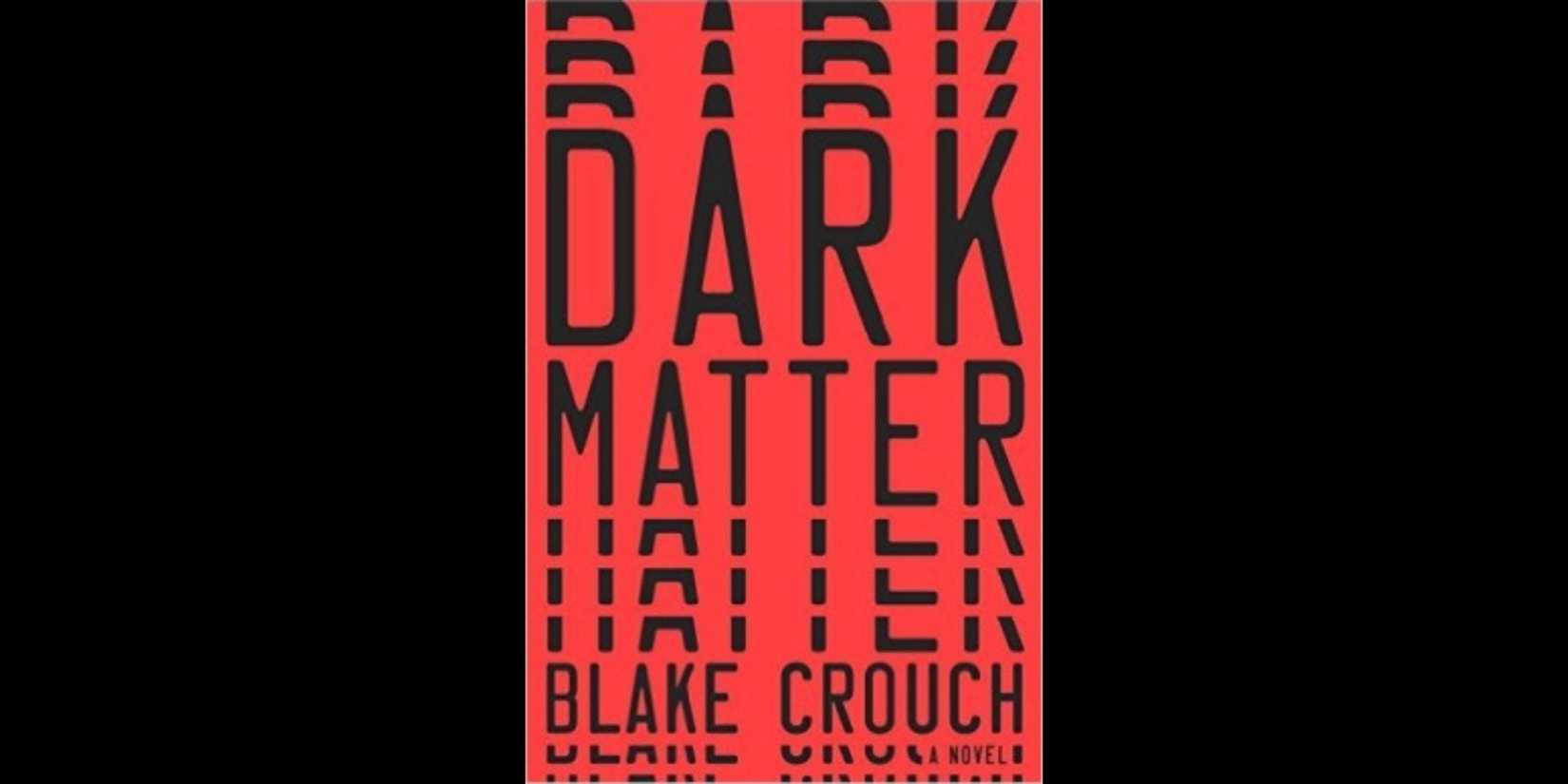
Dark Matter introduces Chicago physics professor Jason Dessen, who seems content with his ordinary life, sharing a home with his wife and teenage son. But everything changes when he's kidnapped and wakes up in a reality where he's a successful scientist who never built a family. Trapped in an alternate version of his life, Jason must escape from an endless web of parallel worlds to find his way back home.
When a physics professor gets caught up in the consequences of an abandoned project, you can expect some hard sci-fi. Instead of conventional teleportation portals, Dark Matter uses a Cube to access parallel worlds. Powered by superposition, a real scientific theory fictionalized to explain how someone can exist across multiple realities simultaneously, the Cube connects countless alternate universes. However, changing one reality can have drastic consequences for another.
'The Three-Body Problem' (2008)
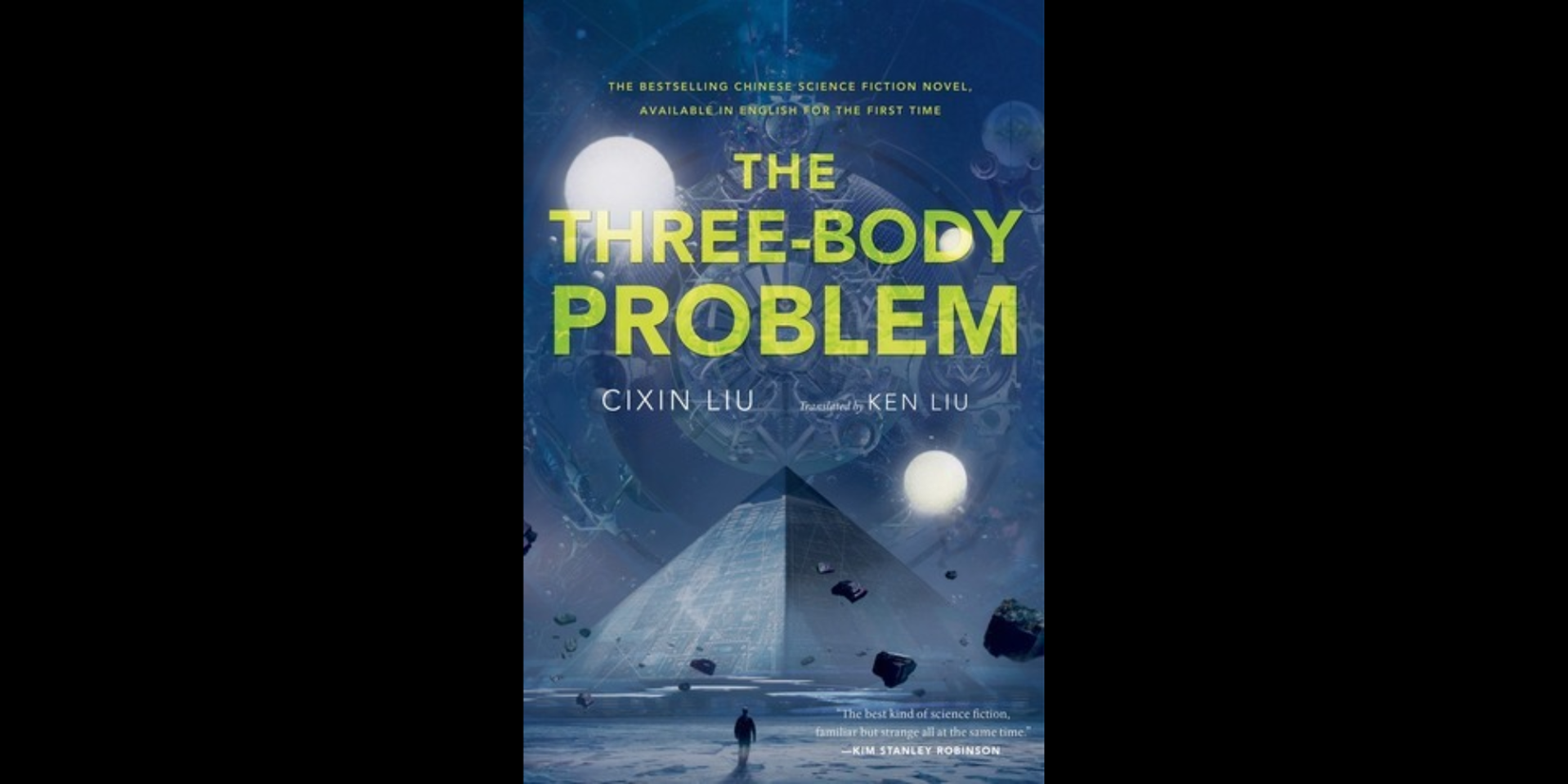
During China's Cultural Revolution, physicist Ye Wenjie becomes involved in a secret military project designed to establish contact with extraterrestrial life. Years later, her actions catch up with humanity when scientists begin investigating a series of unexplained events affecting scientific research. Their discoveries eventually reveal that an alien civilization from Trisolaris is preparing to invade Earth, while a mysterious force is actively preventing human science from advancing enough to fight back.
The Three-Body Problem comes from a physics problem involving the gravitational interactions of three celestial bodies. Liu Cixin builds on this concept through Trisolaris, a planet caught between three suns. Their unpredictable gravitational movements create extreme climate changes, making a stable civilization difficult to maintain. Unlike Earth, which orbits one sun, Trisolaris faces recurring periods of scorching heat and freezing cold, shaping the fate of its inhabitants.
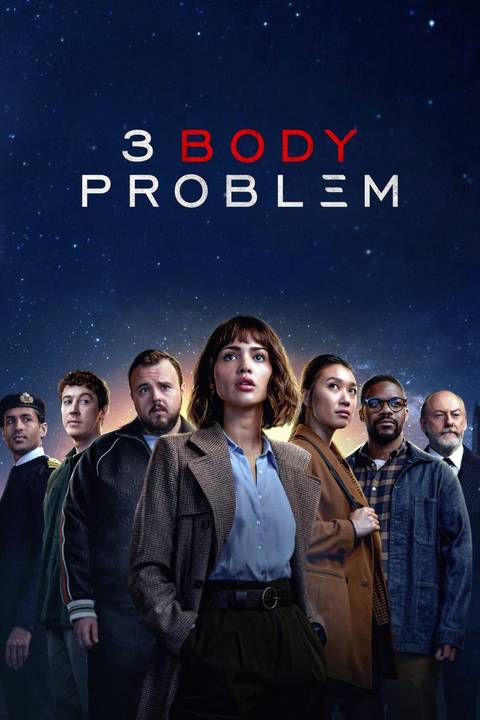
3 Body Problem
8 10
- Release Date
- March 21, 2024
- Network
- Netflix
- Directors
- Minkie Spiro, Jeremy Podeswa, Derek Tsang Kwok-Cheung, Andrew Stanton
- Writers
- David Benioff, D.B. Weiss, Alexander Woo, Madhuri Shekar, Rose Cartwright
-

Mike Evans
-

Rosalind Chao
Ye Wenjie
- Main Genre
- Sci-Fi
- Seasons
- 1
- Producers
- Steve Kullback, Hameed Shaukat
- Creator(s)
- David Benioff, D.B. Weiss, Alexander Woo
- Where To Watch
- Netflix
- Executive Producer(s)
- Alexander Woo, Brad Pitt, D.B. Weiss, David Benioff, Dede Gardner, Gao Xiaosong, Jeremy Kleiner, Lauren Ma, Lin Qi, Nena Rodrigue, Ram Bergman, Rian Johnson, Robie Uniacke, Rosamund Pike, Zhao Jilong, Bernadette Caulfield
KioskNews shows a cleaned-up reading view extracted from the publisher’s page — the original always lives on their site, not ours.