How has Apple's Mac Studio changed over the years?
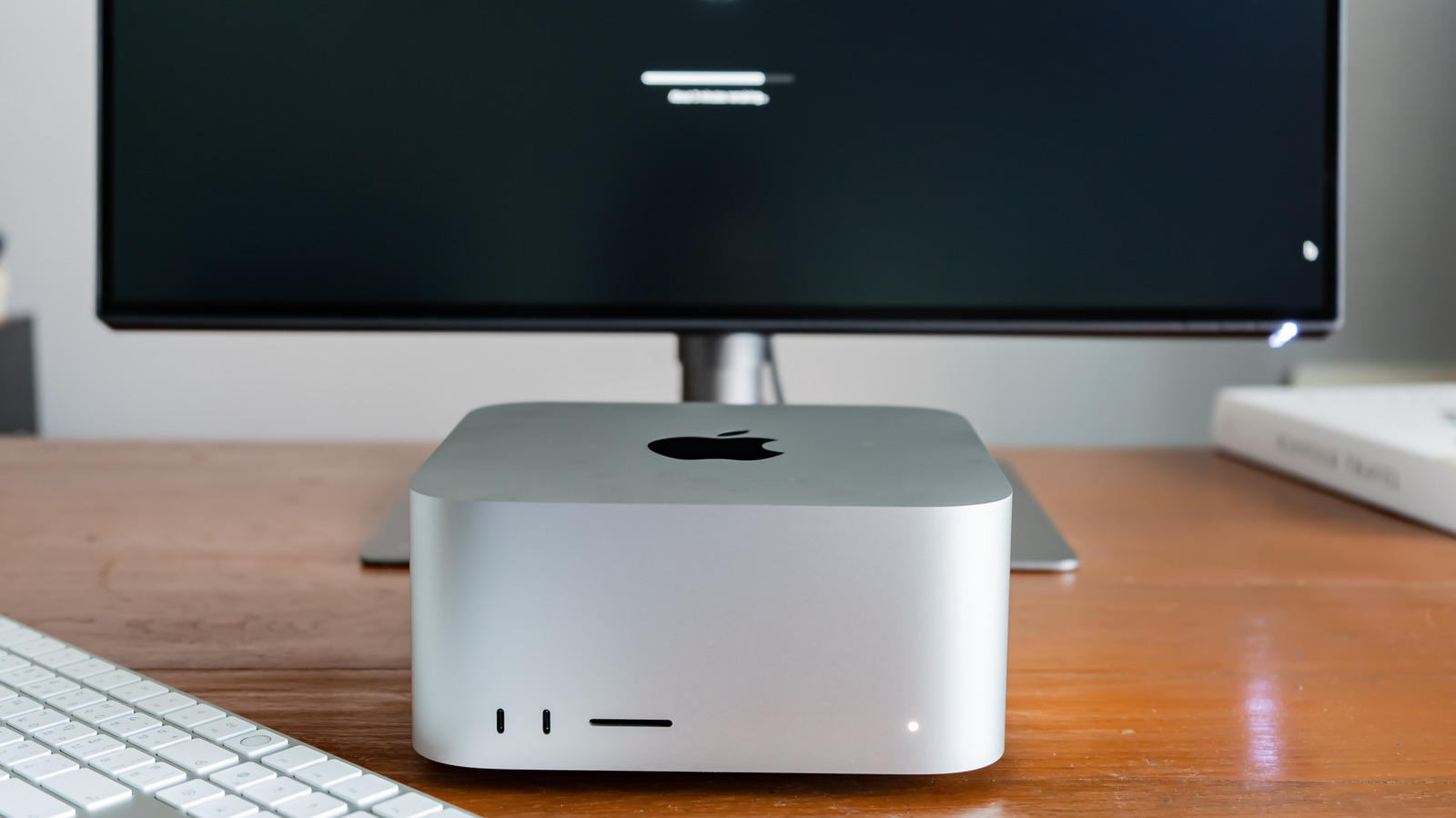
The same aluminum block has seen four different generations of silicon.
Wachiwit/Getty Images
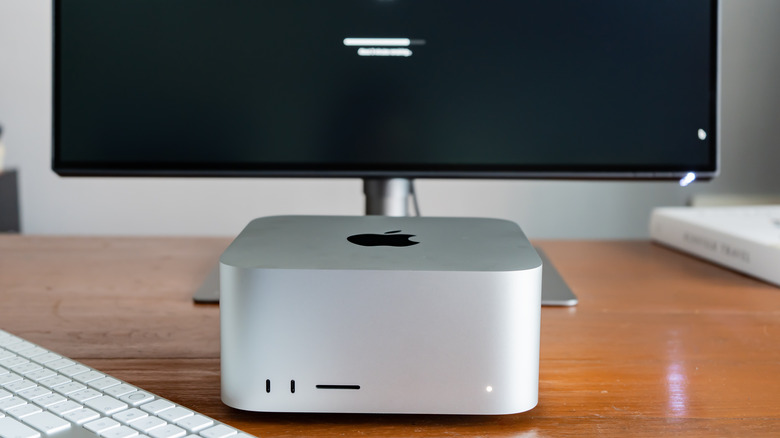
Put the first-gen Apple Mac Studio next to the newly released M5 Ultra, and you'd struggle to tell them apart on looks alone. Apple has stuck with the same 7.7-inch square of aluminum, standing at 3.7 inches tall, for the fourth generation in a row. But what's inside has changed fundamentally since the Studio's 2022 inception.
That first-gen M1 Ultra topped out at a paltry-by-comparison 128GB versus the M5 Ultra's 512GB, which also moves data at 1.2TB/s, nearly 50 percent higher than what the M3 Ultra managed. Apple skipped the M4 Ultra due to hardware limitations. If you're in the market for a new Mac Studio, though, you'll be paying more for the privilege: Apple hiked the prices for most of its hardware back in June, with the entry-level Mac Studio M4 Max going from $1,999 to $2,499 due to rising memory costs.
2022: The Mac mini that ate the Mac Pro
The original Mac Studio launched in March 2022 with Max and Ultra variants, the latter featuring a neat party trick with its chip. Apple had glued two M1 Max dies together via an interconnect it called "UltraFusion," selling the result as the M1 Ultra, 114 billion transistors behaving as one processor. The M1 Max, meanwhile, had a 10-core CPU, 32GB of memory and a 512GB SSD for $1,999.
Starting at an eye-watering $3,999, the M1 Ultra came with 20 cores and 64GB, stretching to 128GB if you were willing to part with even more cash. Around the back sat four Thunderbolt ports, 10Gb Ethernet, HDMI, two USB-A ports, two more USB-C ports and an SD slot. Apple hasn't touched that design or layout since.
2023: Same box, double the memory
AS photo family/Shutterstock
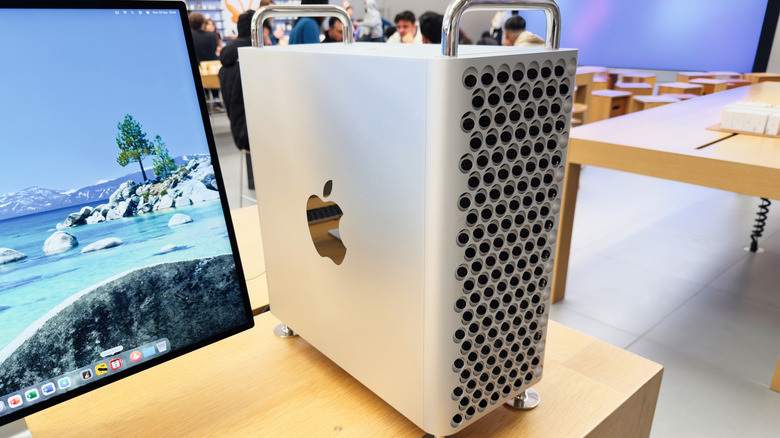
Apple announced the refreshed second-gen Mac Studio lineup at WWDC in June 2023, with the overall design not gaining so much as a single port. The M2 Max launched with a 12-core CPU, up to a 38-core GPU and 96GB of memory, with the M2 Ultra doubling all of that to 24 cores, a 76-core GPU and 192GB at 800GB/s memory bandwidth, powered by more than 134 billion transistors. Apple also (awkwardly) at the same time announced its Apple silicon Mac Pro with the same M2 Ultra chip, the same 192GB memory capacity and an insane $6,999 starting price.
2025: Mismatched chips and a price shock
Apple left the Studio lineup alone for nearly two years after the M2. But when the update finally dropped in March 2025, it paired chips from two different generations of Apple silicon: an M4 Max as the newer chip and an M3 Ultra as the bigger one, with a 32-core CPU, an 80-core GPU, up to 512GB of unified memory and 16TB of storage, plus Thunderbolt 5 at 120Gb/s across both models.
Twelve months later, Apple discontinued the Mac Pro and told reporters that there were no plans for another, leaving the odd little square as the biggest Mac money could buy. Then along came the AI-fueled memory shortage to screw the market, leading Apple to raise M4 Max pricing from $1,999 to $2,499 and the M3 Ultra from $3,999 to $5,299. That was and still is the steepest price rise of any Mac in history, with Apple taking to the Wall Street Journal to say that it had never seen a component price rise this much, this quickly.
2026: Two new M5 products
jackpress/Shutterstock
The new fourth-gen Mac Studio unexpectedly dropped with a bang in August 2026. That's a pretty odd month for a Mac-related product announcement, but per The Information, enterprise customers demanding more capable machines for running local AI models forced Apple's hand.
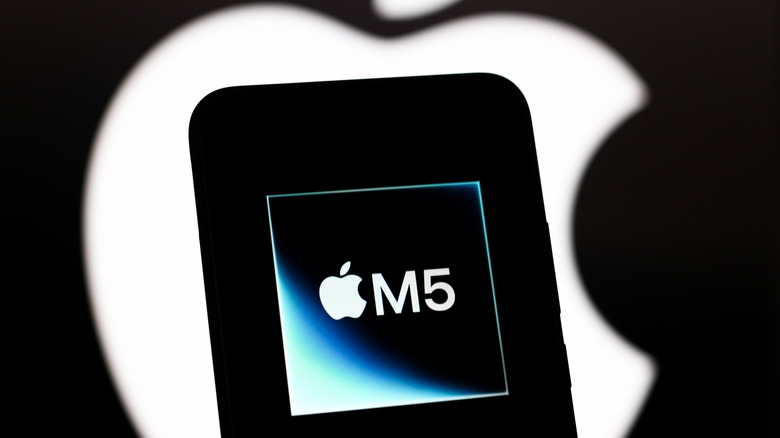
Both the Max and Ultra share the same generation of Apple silicon for the first time since 2023, with the M5 Max carrying an 18-core CPU, a 32- or 40-core GPU with a Neural Accelerator in every core and up to 128GB of memory from $2,499. Meanwhile, the M5 Ultra runs to 36 CPU cores, an 80-core GPU and up to 512GB of memory from $5,499, though that build isn't due to release until late October.
Against the M3 Ultra, Apple is pitching the M5 Ultra as a chip with up to 4.3 times the AI performance, 1.8 times the graphics, and 1.3 times the CPU, along with storage up to twice as fast and Wi-Fi 7 from Apple's N1 networking chip. The cores have changed shape, too, with the usual performance-efficiency split giving way to so-called "super" cores running alongside performance cores. Line up all the Mac Studio generations and you've ultimately got yourself an Apple chip roadmap that killed the Mac Pro, taking pole position as Apple's most powerful computer.
KioskNews shows a cleaned-up reading view extracted from the publisher’s page — the original always lives on their site, not ours.