83pc of maternal deaths reviewed linked to delays in hospital care
NAIROBI,Kenya Nov 24 – Delays in receiving medical attention at health facilities were identified in 83 per cent of maternal deaths reviewed in a Ministry of Health surveillance dataset, exposing persistent gaps in staffing, essential medicines and emergency response in Kenya’s healthcare system.
The findings, presented by University of Nairobi researcher Dr Njoki Kimani during a Kenya Editors Guild forum in Nairobi on November 19, point to weaknesses in the quality and timeliness of care even as more women deliver in health facilities.
The analysis also found that 71 per cent of the maternal deaths involved delays in deciding to seek medical attention, highlighting challenges that begin before women reach hospitals.
“We know that 71 per cent of deaths were due to the first delay and 83 per cent were due to delay within the facility,” Kimani said.
The findings examined three categories of delays: deciding to seek medical care, reaching a health facility and receiving appropriate treatment after arrival. Some deaths involved more than one category of delay.
Kimani said postpartum haemorrhage, or excessive bleeding after childbirth, remained the leading cause of maternal deaths in the records examined.
She further revealed that health facilities reporting staff shortages had more than four times the risk of maternal mortality, while shortages of medicines, blood and blood products were also associated with increased risks.
Garissa and Nairobi were among the counties facing significant challenges linked to delays in maternal healthcare. Kimani noted that Nairobi’s facilities also serve patients from neighbouring counties, placing additional pressure on available services.
The findings point to a gap between access to healthcare and the ability of facilities to provide timely, quality emergency treatment.
Medical Services Principal Secretary Dr Ouma Oluga said only 37 per cent of health facilities offering delivery services could provide all seven basic emergency obstetric care functions, raising concerns about their preparedness to manage complications during childbirth.
He urged journalists to investigate weaknesses in maternal healthcare and increase public awareness of preventable deaths.
“Every morning, one minute awareness. It will speak louder than the headlines,” Oluga said, calling on radio and television stations to dedicate daily airtime to maternal and newborn health education.
The Principal Secretary said the government was implementing interventions under the Every Woman Every Newborn Everywhere (EWENE) Acceleration Plan to strengthen maternal and newborn healthcare services.
The measures include providing essential medical supplies and obstetric and neonatal equipment to 635 health facilities, establishing training and simulation centres and recruiting an additional 5,000 midwives to address workforce shortages.
Oluga also highlighted the expansion of healthcare coverage under the Social Health Authority (SHA), saying 33.7 million Kenyans had registered under the scheme.
He said the registration data would help improve healthcare planning and resource allocation, while urging expectant mothers to begin antenatal care early, complete the recommended eight visits and attend postnatal appointments.
Kenya Editors Guild President Zubeidah Kananu challenged journalists to sustain coverage of maternal and newborn health beyond individual tragedies, calling for closer scrutiny of government commitments and their implementation.
“We must follow up on promises made, investigate systemic gaps, examine whether interventions are working, and establish whether lessons from previous tragedies are informing better healthcare decisions,” Kananu said.
She cited the September case of Mercy Kanini, a mother from Juja who lost all five of her babies after giving birth prematurely, saying the tragedy raised questions about the management of high-risk pregnancies, access to specialised newborn care and the effectiveness of referral systems.
Kananu said journalists should examine whether lessons from maternal and newborn deaths were being translated into measures that prevent similar tragedies.
She also urged the media to monitor healthcare funding, staffing and the implementation of government programmes to establish whether services promised to expectant mothers were actually available in hospitals.
Dr Wangui Muthigani, Director and Programme Lead for Women’s Health at Savannah Global Health Institute, said maternal mortality statistics should be examined beyond the numbers to understand the circumstances surrounding individual deaths.
She observed that although many pregnant women make initial contact with healthcare facilities, some fail to complete the recommended antenatal visits, resulting in missed opportunities for early diagnosis and intervention.
Muthigani said examining where women drop out of the healthcare system could help identify communities requiring additional support.
“So once we see a mother has died, do we sit and cry? I mean, we should. We should sit and cry, but we should act so that we don’t have a situation like this arising tomorrow,” she said.
Dr Hellen Barsosio, Assistant Principal Clinical Research Scientist at the Kenya Medical Research Institute’s Centre for Global Health Research, said Kenya had generated substantial evidence on interventions capable of preventing maternal and newborn deaths, but translating that knowledge into practice remained a challenge.
She said preventive services, including malaria protection, vaccinations, anaemia prevention and antenatal screening, could significantly reduce pregnancy-related risks.
“The truest gap is delivery, meaning that the proven tools, the proven interventions are not reaching all the women, and if they are, they’re reaching women a bit too late,” Barsosio said.
She called for increased investment in healthcare workers, improved availability of essential medicines and greater support for counties, which are responsible for delivering most health services.
Dr Hussein Elias, a family physician and faculty member at Moi University working with AMPATH Kenya, highlighted the difficulties faced by pregnant women in rural areas, particularly those who must travel long distances to access medical services.
He said inadequate transport, financial constraints and limited medical equipment at lower-level health facilities contributed to delays in identifying pregnancy complications and referring patients for specialised care.
Elias said a point-of-care ultrasound project being implemented in lower-level facilities was helping healthcare workers identify complications earlier and refer women for further treatment.
He cited a referral study in which facility records showed that only about 35 per cent of patients with abnormal ultrasound findings had completed their referrals.
However, follow-up interviews with the women indicated that approximately 70 per cent had actually completed the referrals, exposing gaps in hospital documentation and patient tracking.
“One thing I would like to mention is that technology itself is not the solution to all the problems. Bringing technology closer to the community is not the only solution,” Elias said.
He called for stronger referral coordination between health facilities and county governments to ensure women requiring specialised treatment reach the appropriate hospitals.
The concerns come against a backdrop of improving maternal healthcare indicators, although Kenya remains far from its global commitments on reducing maternal deaths.
The 2025/2026 Kenya Mini Demographic and Health Survey reported a maternal mortality ratio of 263 deaths per 100,000 live births, significantly above the Sustainable Development Goal target of fewer than 70 deaths per 100,000 live births by 2030.
The survey also showed that deliveries in health facilities had increased to 91 per cent from 88 per cent in 2022, while the proportion of women attending at least four antenatal care visits rose from 66 per cent to 72 per cent.
The figures suggest that while more women are accessing maternity services, gaps in the quality and timeliness of care continue to put lives at risk.
Kenya is implementing the EWENE Acceleration Plan 2026–2028, which seeks to reduce preventable maternal and newborn deaths through improvements in staffing, emergency obstetric services, essential medical supplies and accountability.
The plan targets reducing maternal mortality to 140 or fewer deaths per 100,000 live births by 2028.
Kimani said researchers were supporting the Ministry of Health’s Rapid Results Initiative under the plan by analysing county-level data and developing an accountability dashboard to track progress in addressing maternal mortality.
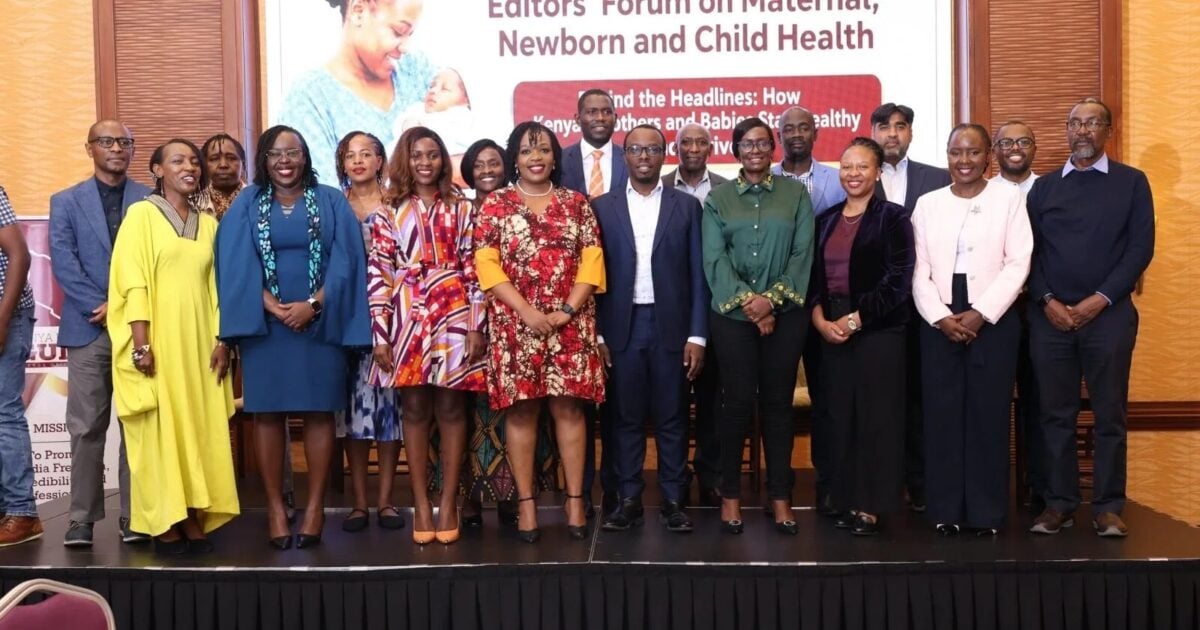
The forum brought together government officials, researchers, healthcare professionals, development partners and editors to examine challenges affecting maternal and newborn healthcare.
Kananu urged journalists to continue scrutinising national and county healthcare investments to establish whether they were translating into better services at health facilities and whether interventions introduced following maternal and newborn deaths were preventing similar tragedies.
KioskNews shows a cleaned-up reading view extracted from the publisher’s page — the original always lives on their site, not ours.