Haines attack is rare but not without a precedent
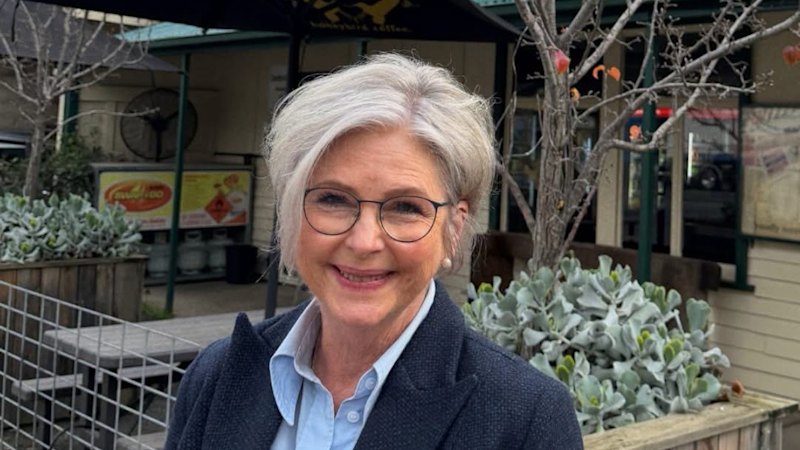
The attack on Helen Haines was not totally unheard of in Australia (‴Unfathomable‴ , October 21). I recall the assassination attempt on Labor leader Arthur Calwell years ago, and the killing of Fairfield Labor politician John Newman. Public figures are always at risk. However, it has been rare to see a woman in a country town attacked in this very public way. It seems to be difficult for women generally to come out in public and take an active political stance. It isn’t easy to be involved in political comment, whether in the mainstream media or social media, and vicious putdowns by men are common. I was called a “zio bootlicker” by one charming man online, and another stole my photos shared with friends for Anzac Day, using them to attack me politically over the war in Gaza. The photos were from my father’s war service in World War II. I now share nothing much online. If you have a point of view deemed to be worthy only of cancelling and abuse, it is easier not to join the conversation – something I have tried not to give in to. Vivienne Parsons, Thornleigh
The incident in Wangaratta has brought into sharp focus the dangers elected public officials face daily as they seek to engage with those they represent. In the corporate world, the term ″tone from the top″, is often used, yet in the political arena those at the top often descend into megaphone vilification, risking the empowerment of aggressive actions. On Tuesday, many politicians across the divide spoke and wrote of Dr Haines’ compassion and the respect she demonstrated in her professional and political life. This incident must serve as a moment of truth for political and public leaders to not only set the right tone but to call out behaviours that are contrary to the beliefs and values we treasure. It’s to redefine our national compass where the true north is compassion. Allan Gibson, Cherrybrook
The horrific attack on Helen Haines illustrates the woeful lack of security our politicians receive. The likes of Pauline Hanson not having a security detail is astounding to me, along with state premiers having no official residence and minimal to no bodyguards. We seem to have a much more carefree attitude towards politicians’ safety than other countries. At the least, electorate offices facing the street should have bollards out the front. Colin Douglas, St Kilda (Vic)
It is time for all Australian politicians to set examples of kindness. The attack on Helen Haines, plus the electronic attack on Jacqui Lambie are two examples of unkind and baseless behaviour. Kindness is free and works well with good intentions – something we may need to be reminded of. Karen Eldridge, Leichhardt
A watershed moment has been reached with the attack on Helen Haines. The media, politicians and the public need to be careful with their language ongoing. Perhaps a good place to start would be in parliament? Some of the language and ideas spruiked under parliamentary privilege are not conducive to mature sensible political debate. Mike Keene, Mollymook Beach
The assassination of Caesar, the violence of the Weimar Republic, Nazism, fascism, the Spanish Civil War, Trump’s America. Politics has always been a nasty, violent business. In Australia today, right-wing politicians flirt with neo-Nazis, a Liberal politician calls for the stoning of a Labor Muslim, minister over the actions of her portfolio, One Nation videos nastily attack individuals rather than policies. We can see surely where this is heading. It’s time to act against the root cause of this problem: inequality. As inequality worsens, so too will frustration, hopelessness, dangerous ideologies and violence. Wayne Duncombe, Lilyfield
When we lived in Mudgee in the late 1990s, we can remember John Anderson, who was our local member, and deputy prime minister at the time, walking along Church St with only an assistant accompanying him as he talked to anyone and everyone. At the end of the opening ceremony of the Sydney Olympics, we were in the multitude heading for the train station with Tim Fischer (then ex-deputy prime minister but still an MP). He had, it seemed, no close protection. How the world has changed. John Brown, Kianga
The dreadful attack on Helen Haines is not ″unfathomable″, as though Australia is some global child unused to any hint of such treatment of the innocent. Potential mental instability, as raised by the alleged perpetrator’s lawyer, adds to the deep human distress of the whole situation. However, I cannot fathom the treatment of Daniel Duggan, an Australian since 2012, who has been in jail for four years without having broken a single Australian law. He is accused by the US of training Chinese pilots. No evidence is provided, statements are riddled with errors and silence greets requests for explanations. He is on the cusp of being sent to the USA at the behest of the present administration under one Donald Trump, the state of whose mind and the worth of whose advisers will provide industrial-scale commentary for decades. Sister Susan Connelly, North Sydney
And it all started with “Ditch the Witch!” Ken Pares, Forster
Divided we fall
Australians are still trying to understand the terrible attack on the widely respected and loved Helen Haines, and Paul Sakkal provides perspective (“Political class must bridge the divide or face fractures”, October21). Following this event, our politicians could resolve, now, to create the toughest legislation and penalties to restore order and decency in the online world, as it affects Australians. No ifs or buts, and no ineffective “opt-ins”, “opt-outs” or “carve-outs” to appease the social media and tech giants. Just plain, world-leading rules to drastically wind down the “political temperature”. Our political representatives deserve nothing less. Rob Firth, Red Hill (ACT)
I attended question time at Federal Parliament House in Canberra many years ago – once and only once, never again. I came away disgusted at the childish bad manners displayed by MPs on both sides of the political spectrum. Rational answers to questions asked? No. Civilised comment or debate? No. I was left wondering what we, the taxpayers, were paying this rabble for. I doubt much has improved in the intervening years despite appeals from the current PM to turn down the temperature. Stephanie Edwards, Leichhardt
Violence from hatred
Whether the meme cited by Jacqueline Maley (“The sinister meme that appeared just hours before the attack on Helen Haines”, October 21) is connected to the sickening attack on Helen Haines, it is synonymous with the problem. Violence begets violence, personal attacks are unacceptable. Misogyny and antisemitism or any sort of racial hatred if unchecked tend to normalise the abnormal, often encouraging the radicalised to act. Politicians carry a responsibility to engage in constructive dialogue, not descend to the rabble-rousing invective that saw Trump’s mob attack the US Capitol building. We are a civilised society and our political representatives need to reflect that reality. Malcolm Turnbull was right, all political violence starts with hatred. To peddle hatred, in all its forms, is unacceptable. Politicians should not cross the line from “Please explain” to “Let’s make fun of our political enemies”. Once unleashed, you cannot control the mob, or the lone wolf. Geoff Nilon, Mascot
Tax evasion undermines GST revenue
Ross Gittins gives readers a logical, plain English outline of the problems with our taxation system (“Nobody wants to pay more tax, except me”, October 21). However, there’s a problem with the GST that needs to be set right before thinking about increasing the percentage; tax evasion.
Most Australians will be familiar with the suggestion that it’s “less for cash” when conducting a transaction. Some even take advantage of the offer. The loss in taxation revenue would be substantial and needs to be quantified. Effective collection of taxes, both the GST and income tax, needs to be first addressed by government as it considers what to do about the shortfall in revenue needed to balance the budget. Glenn Johnson, Leura
As usual, Ross Gittins educates us with practical solutions that you can never get from pollies. It is, however, challenging to increase the GST to, say, 15 per cent without bipartisan support, as any party that tries to unilaterally increase the GST will face political backlash. The Greens probably wouldn’t support it in the Senate if food is included. Although not legally required in the Constitution, there is a binding political agreement between the Commonwealth and all states/territories: GST changes cannot occur without unanimous support from all state and territory governments. Again, this is a political problem for a federal government of any stripe if its political opponents are running states and territories, as we often see. Also, all GST revenue has to go to states and territories, so using it for different purposes wouldn’t go down well with the voters. In a nutshell, GST increase is no goer. But the government can go after big companies that haven’t paid taxes in decades, including tech companies. This will have political support from voters and provides desperately needed revenue that is just currently paid by ordinary people with their income tax. Mukul Desai, Hunters Hill
Ross Gittins notes that GST revenue has “failed to grow as fast as the economy is growing”. When the GST was introduced, the amount of revenue far exceeded expectations, largely because of the significant cash economy that existed 25 years ago. It was common practice to offer cash for a discount to tradies, service providers and retailers. Don’t tell the ATO, but they were missing out on a lot of income tax from undeclared revenue. Thousands could be spent in cash without attracting the attention of authorities. Eventually, all that cash was caught up by the GST, thus boosting revenue. Over the last 25 years cash has mostly vanished due to the use of traceable card transactions and bank transfers; therefore the GST represents a far more accurate picture of spending. It is not that GST revenue has failed to grow as fast as the economy, it is just the realistic level of GST revenue that exists. Peter Cooper-Southam, Frenchs Forest
Why do economists and others always think that going up is the only way to raise money? I have always argued that we don’t really have a GST, only a partial one. Consumer research shows, as indicated by multiple articles in the Herald, that fresh food and vegetables are purchased by greater numbers of those financially well off rather than those not well off who rely more on processed and canned foods. Why not ask Treasury to model a GST on everything, no exemptions, or, heaven forbid, even lower the GST by 1 per cent and see how much revenue that would raise? There could even be a small rise for those on benefits to compensate. John Gelling, Merimbula
Bankspeak
In an apparent humorous mode (“Fears at other banks as NAB slashes 2500 jobs”, October 21), the NAB chief executive claimed that the “reduction of corporate functions”, bankspeak for the removal of hundreds of employees, would have no “material impact on customer-facing roles”. Those roles would be the ones usually filled by the odd ATM or one’s own phone and computer; after all, humans haven’t faced customers in big banks for years. Donald Hawes, Peel
I wonder how many of those doomed 2500 NAB staff are currently attending to other customers and won’t be with me shortly? Adrian Connelly, Springwood
After Chris Minns rode successfully into the Hunter Valley to save those coal miners jobs, should we now expect him to Uber up to the NAB head office to save those bank employees’ Christmas? I’m sure they’ll be expecting the same vote winning treatment. Ian Ferrier, Long Jetty
Perhaps NAB should publish, along with the list of sackings, how many Australian jobs have been out sourced recently? Richard Harman, Banora Point
Minns the miner
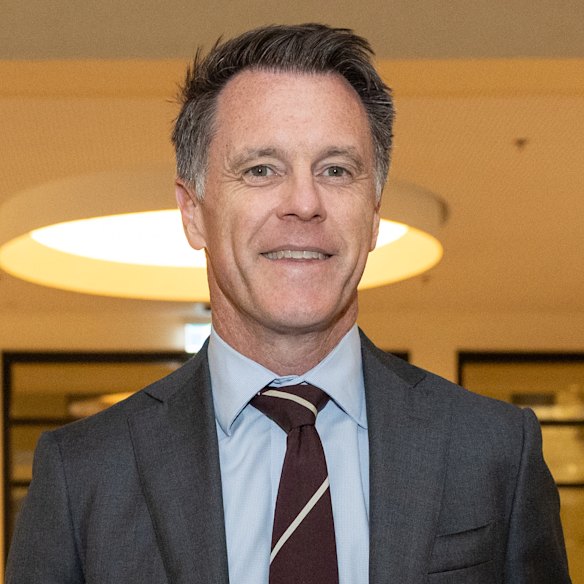
Premier Chris Minns’ latest move to change the law and allow hugely more climate pollution is one of the most cynical and mendacious imaginable (Letters, October 21). It strips away any pretence of concern he has for future generations, let alone those concerns the community has expressed in opposing this mine extension. It contradicts any notion of responsible risk management in the face of the approaching El Nino. How long will our children and grandchildren be paying for those 400 jobs, Mr Minns? James Vicars, Nymboida
Tasteful toon?
The One Nation cartoon mocking Jacqui Lambie (Letters, October 21) wasn’t “as tastefully done as it could have been”, according to Pauline Hanson. I cannot imagine how the cartoon could have been “tastefully done”. Pauline Hanson, Please explain. Carole Baker, North Sydney
- To submit a letter to the Sydney Morning Herald, email letters@smh.com.au. Click here for tips on how to submit letters.
- The Opinion newsletter is a weekly wrap of views that will challenge, champion and inform. Sign up here.
KioskNews shows a cleaned-up reading view extracted from the publisher’s page — the original always lives on their site, not ours.