Why China’s reusable rocket breakthrough matters for the PLA’s ‘kill chain’
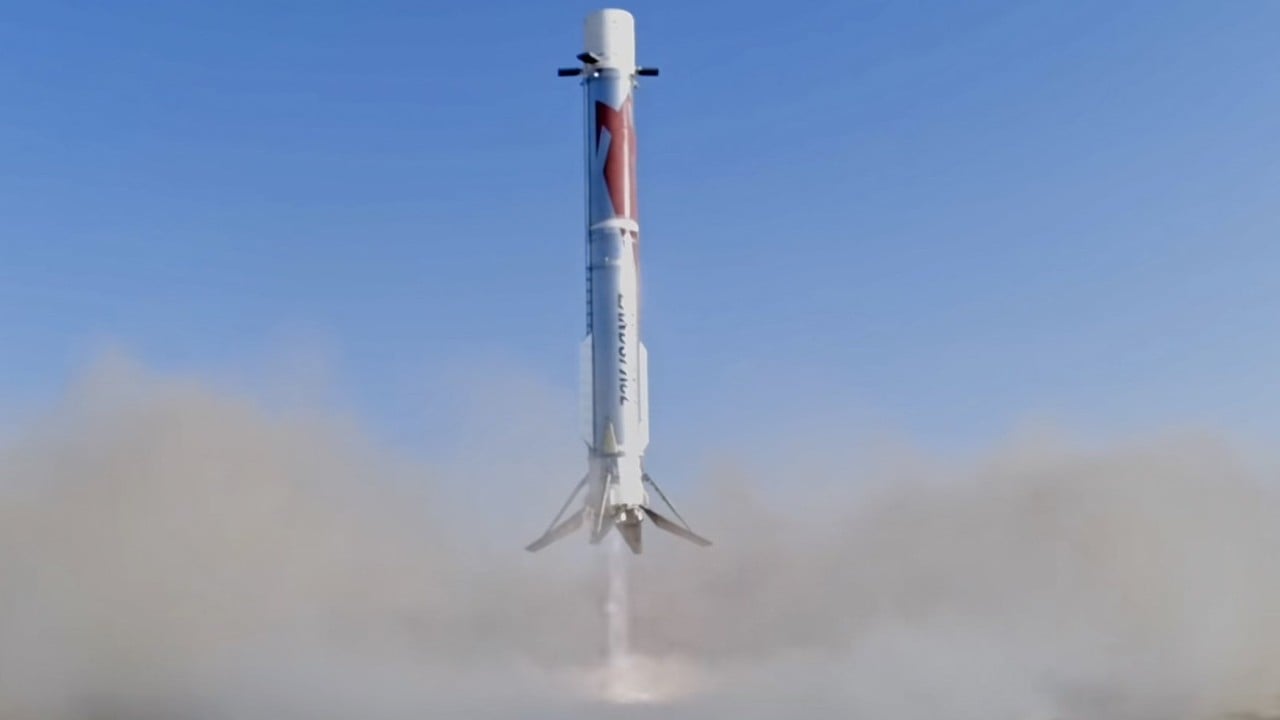
A pair of landmark rocket recoveries in recent weeks has brought China a step closer to mastering reusable launch technology – a breakthrough analysts said could give the People’s Liberation Army an advantage in combat by increasing the resilience of its satellite-supported “kill chain”, the process of identifying, tracking and engaging a target.
In a first for China, commercial rocket company LandSpace recovered a stainless-steel booster using deployable legs after an orbital flight earlier this week. This followed a successful launch last month by state-owned China Aerospace Science and Technology Corporation (CASC), which achieved the world’s first recovery of an orbital-class booster at sea using a net-capture system.
Defence experts said the technology would dramatically lower the cost of putting satellites into space and increase the frequency of launches. Mastering reusability will enhance the PLA’s space capabilities – including communication, navigation and surveillance – much like how SpaceX supports the US military.
Malcolm Davis, a senior analyst with the Canberra-based Australian Strategic Policy Institute’s defence strategy programme, said space was the most crucial operational domain in modern warfare.
He said modern militaries relied heavily on space for everything from communications and battlespace awareness to positioning, navigation and timing using systems such as GPS.
Without those abilities, militaries could be left “effectively deaf, dumb and blind”, severely degrading their ability to communicate, understand what is happening on the battlefield and conduct operations, Davis added.
KioskNews shows a cleaned-up reading view extracted from the publisher’s page — the original always lives on their site, not ours.