Politics, punditry, and parenthood: Living life and through country music - opinion
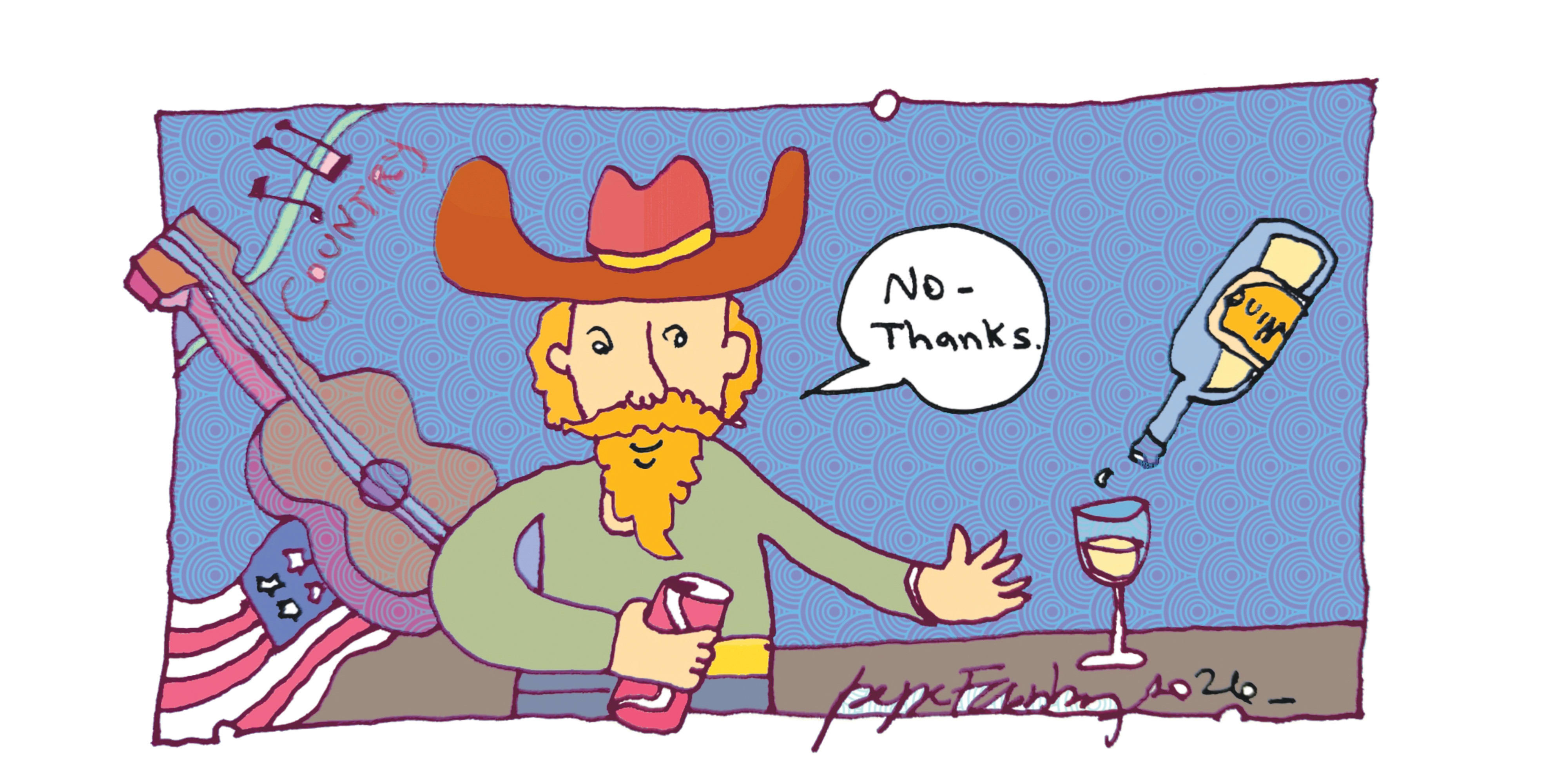
When I was a younger man, I harbored the illusion that as I grew older, my tastes would become more refined: I would prefer classical music to pop, documentaries to rom-coms, and financial news to sports scores.
I was wrong. To this day, I still prefer cold Coke to white wine. And as far as music is concerned, I have fallen deeply in love with the country song, which some would say – with its emphasis on cold beer, hot girls, and country roads – is even less refined than pop.
But I don’t care. I like the simple instrumentation. The sentimentality. The down-home lyrics.
A country song it takes the everyday and makes it sing
Like the song “Chicken Fried” by the Zac Brown Band:
“You know I like my chicken fried; a cold beer on a Friday night; a pair of jeans that fit just right; and the radio up.”

Or Chris Stapleton’s “Millionaire”:
“They say love is more precious than gold; it can’t be bought and it can’t be sold; I got love, enough to spare; that made me a millionaire.”
Doofy? Maybe. Syrupy? Perhaps. But when I’m sitting bumper-to-bumper on the Ayalon, nothing relieves the tension like turning up songs about life’s simple pleasures.
IN FACT, in my next life, I want to write me some country songs.
The beauty of the country song is that it takes the everyday and makes it sing.
My everyday has for quite some time been dominated by three things: politics, punditry, and parenthood. With Tuesday’s election, the first two have been getting more than their usual share of attention.
It suddenly occurred to me that all three belong in the same country song. It would go something like this:
She wore cutoff jeans and we shared a beer
On the tailgate of my pickup truck.
I said, “Dumplin’, 20 years of good
Don’t erase one screwup.”
Politicians, pundits and parents –
One bad moment’s all it takes;
They forget all the roads you traveled
But remember your mistakes.
The girl, the beer, and the pickup truck are there to meet the genre’s requirements. The rest is grounded in real life.
What politics, punditry, and parenthood have in common is the tendency to be judged by what you got wrong. That’s what’s remembered, rather than all that you got right.
Take the just-concluded elections. Elections are an exercise in judging people by their records. The candidates want us to remember their best moments. Their opponents spend considerable time and money making sure we remember their worst.
In punditry, you can make the right call nine times out of 10, but the only one people remember will be the 10th.
I know from experience.
Back in 2016, I was talking with a friend outside my synagogue when the discussion turned to the US presidential primaries. Then-candidate Donald Trump was making all kinds of outrageous comments in the debates. My friend asked what I thought would happen, and I said Trump could never win the nomination.
I never wrote it; I just said it offhand after davening. My friend, an insurance agent, never let me live it down.
One lesson I learned from this was to just walk straight home after shul, because for years, literally, every time I saw him, he reminded me of my prediction: “Do you remember that time when...”
Of course I remember, I thought; you bring it up every time we meet. But I held my peace. “Yep,” I nodded, “I got that one wrong, now didn’t I?”
But he didn’t let up. Eventually, when he brought it up yet again, I unloaded, inventing a dissatisfied client to make my point.
“That was a mistake,” I acknowledged. “I hear you make them, too. In fact, I talked to one of your clients who said you assured her that her policy covered water damage. Then a pipe burst, and she discovered it didn’t.”
Was I proud of myself for losing my composure and responding like a child? Of course not. But he never brought up my faulty forecast again.
Why, though, did it get under my skin so much? We all make mistakes, and in my profession I’m going to make my share. But it’s one thing to recognize that in principle, and quite another to have someone – with no small amount of relish – keep reminding you of a particular one. I am well aware of my own fallibility; I don’t need someone else loudly pointing it out to me.
What rankled, I suppose, was feeling reduced to that one mistake. Never mind everything else I had said or written. I was forever the fellow who thought Trump couldn’t win the nomination.
'You’re always judged by your worst moments'
AND NOWHERE does the fear of being remembered for your worst moment hit closer to home than in parenthood.
The Wife, a voracious reader, came across this passage in Fredrik Backman’s novel Anxious People and brought it to my attention. She knows an apt passage when she sees one.
“Do you know what the worst thing about being a parent is?” one of the book’s characters said. “That you’re always judged by your worst moments. You can do a million things right, but if you do one single thing wrong, you’re forever that parent who was checking his phone in the park when your child was hit in the head by a swing.
“We don’t take our eyes off them for days at a time, but then you read just one text message and it’s as if all your best moments never happened. No one goes to see a psychologist to talk about all the times they weren’t hit in the head by a swing as a child. Parents are defined by their mistakes.”
As are pundits and politicians. Or, as the chorus to my country ballad in progress goes:
KioskNews shows a cleaned-up reading view extracted from the publisher’s page — the original always lives on their site, not ours.