Gas exporters to be forced to prevent Australian shortfalls under new laws
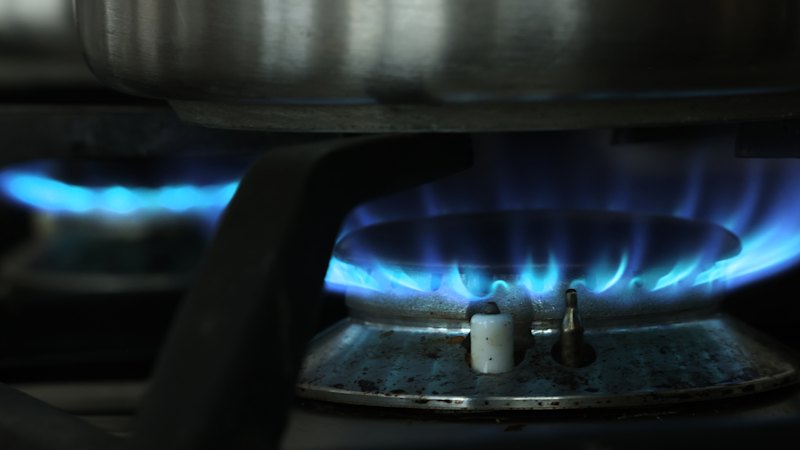
Large Australian gas producers will be forced to hold back up to 20 per cent of their export volumes for local customers for the first time, as the Albanese government presses ahead with a policy aimed at easing domestic energy prices despite industry warnings it could stunt investment.
Federal Resources Minister Madeleine King is expected to bring Labor’s long-awaited domestic gas-reservation bill to parliament on Wednesday after months of talks with major gas corporations, customers in the energy-intensive manufacturing sector, and some of the nation’s biggest liquefied natural gas (LNG) buyers in Asia.
Under the proposed scheme, starting from January 2028, companies wanting to continue shipping LNG from Australia’s eastern seaboard will be forced to set aside up to 20 per cent of their annual export volumes for local use only. The policy is designed to deliberately flood the domestic market with about 10 per cent more gas than it needs each year, with the aim of easing supply pressures and putting downward pressure on the cost of the fuel, which remains widely used in heating, cooking, electricity generation and manufacturing.
King is expected to outline the government’s final changes to the policy in a speech to the National Press Club on Wednesday. The changes are intended to close potential “loopholes … making it harder to game the scheme”, she said.
The new rules seek to address a long-standing grievance: that Australia, despite its vast gas resources, has allowed an LNG export boom to leave households and businesses more exposed to tightening gas supplies and soaring prices at home.
“This is a landmark moment for our country – one of the Albanese government’s most significant structural economic reforms,” King will say on Wednesday, according to a draft copy of her speech.
“It is Australia’s first national gas-reservation scheme, securing the Australian gas Australian homes and Australian businesses need at fair prices.”
Western Australia has long required its LNG exporters to keep 15 per cent of their production at home. Queensland’s export industry, by contrast, was established a decade ago without such rules. The new national scheme will have the biggest impact on the joint ventures that run the three giant LNG export terminals on Queensland’s Curtis Island, operated by Shell, Origin Energy and Santos.
For gas-connected homes and businesses across the southern states, the stakes of the policy are particularly high. Energy authorities warn that unless new gas supplies are made available, Victoria and NSW could face gas supplies running dangerously low by the end of the decade as production from ageing oil and gas fields in the Bass Strait rapidly declines.
The looming shortfall threat highlights a deepening challenge for Australian governments, which are having to balance goals to reduce emissions released from burning fossil fuels with the need to shore up supplies for those who still depend on them.
Households are increasingly switching from gas appliances to electric alternatives, which is having a positive impact improving gas availability: residential gas demand has fallen 16 per cent in Australia since 2020, according to figures from the Grattan Institute.
But the Australian Energy Market Operator warns that shift is not happening fast enough to remove the urgent need to boost gas supplies as output from the Bass Strait dwindles.
For gas-intensive manufacturing businesses, the reservation marks a long-awaited intervention. Industry leaders have rallied behind the policy, arguing the domestic gas market is “broken” following a three-fold surge in gas prices over the past decade. Unless cheaper fuel is made available on longer-term contracts, they say, more Australian factories that depend on gas to fire their kilns and furnaces or as a raw material in their manufacturing processes would be forced to close.
A coalition of major manufacturing firms on Wednesday urged all parties to support the reservation laws into parliament, warning that a vote to weaken or delay the bill would be a “vote against manufacturing investment”.
“For manufacturers, gas is a vital feedstock, a source of process heat and the fuel that firms our electricity,” said Manufacturing Australia chief Ben Eade, who represents companies such as BlueScope Steel, Brickworks, Dulux Group and Tomago Aluminium.
“For many, the price and availability of gas is fundamental to whether the next investment in a manufacturing plant happens here or offshore.”
Chemicals Australia, representing plastics and chemicals makers, said the legislation would “inject confidence and certainty” into a sector that has watched jobs move offshore for years.
“It’s only 20 per cent of Australia’s east coast gas production, but it will make a massive positive impact for the Australian economy - and there is still 80 per cent of gas production available for export,” the group’s chief executive, Matthew Flugge, said.
The government has sought to balance domestic gas supply pressures with the interests of Australia’s multibillion-dollar gas industry and the nation’s major overseas trading partners, including Japan, South Korea, Malaysia and China, which are major consumers of locally produced LNG. Following consultations in Australia and overseas, the government has agreed to certain concessions to keep the domestic surplus “modest” while reassuring Asian customers that their long-term contracts will be honoured.
Among the recently announced changes is the possibility of lowering the reservation level when forecast domestic demand is weak, while also giving ministers the discretion to reduce how much gas each producer must supply the local market when they are constrained by pre-existing contracts and pipeline capacity.
The national energy regulator would set the overall reservation volume annually, based on a rolling five-year demand forecast, plus an extra 10 per cent buffer.
Still, the Australian oil and gas sector remains deeply concerned about the policy’s design and its potential consequences. Australian Energy Producers, an industry group, warns the proposed 110 per cent oversupply of the east-coast gas market would threaten to “destroy investment signals and crowd out smaller, domestic-focused producers”.
Cecile Wake, chair of Shell Australia, operator one of Queensland’s three LNG terminals, told an Australian Financial Review energy conference on Tuesday that the government’s proposed policy was a “blunt instrument” that could force prices “below the long-run marginal cost of bringing on new production”.
The Business Briefing newsletter delivers major stories, exclusive coverage and expert opinion. Sign up to get it every weekday morning.

KioskNews shows a cleaned-up reading view extracted from the publisher’s page — the original always lives on their site, not ours.