House of Stassi: never before has reality TV been this self-aware – and truly brutal

Across the 2010s, Stassi Schroeder was the star of Vanderpump Rules, the hit reality TV show that tracked the near-psychopathic interpersonal relationships between the staff at Lisa Vanderpump’s peak-millennial restaurant SUR. From the moment she appeared on screen – all statement necklaces and crispy flatironed hair – it was clear that Schroeder was an early master of the reality genre. While the cast were all villainous in their own ways, she stood apart for her singular mix of charisma and chaos.
For eight years, Schroeder slapped her friends, belittled her bosses, bullied other women, insulted customers and was generally terrible at her job. But despite the frequent physical and psychological violence, she remained a firm audience favourite. In the years since, she has spoken about the impact this kind of adoration can have on a person: the worse she behaved, the more she was rewarded with attention from producers and the adoring – and admonishing – public. For a time, she was the people’s princess of darkness. That was until 2020, when she discovered there are limits to what even blond, leggy reality TV prodigies can do.
During the 2020 Black Lives Matter reckoning, it emerged that Schroeder and castmate Kristen Doute had once falsely reported their Black cast mate Faith Stowers to police for a crime she didn’t commit. For the first time, her actions were seen not as the plotting of a wily mean girl, but as the calculated acts of a privileged woman wielding her power to harm a woman of colour. Schroeder was fired from the show she helped make famous. More specifically, she was cancelled.
Schroeder has spoken at length about what the “cancellation” did to her life and ascendant TV career. At the time, she was newly engaged and preparing for her inevitable TV wedding and spin-off show with her surprisingly sweet partner Beau Clark. Instead, she spent the following years languishing in the purgatory of once-beloved, now problematic, celebrities: making a lot of money through podcasts, social media and brand endorsements. Then, this year, Disney and Hulu announced the prodigal daughter’s return via her own eight-episode series House of Stassi.
You don’t need to be a reality TV producer to understand what this show was supposed to be. All parties signed on for a self-aware redemption arc that allowed a former golden girl to reflect, grow and in turn permit an ocean of sheepish fans to click “follow” again.
Watching Schroeder sit down for her first confessional interview, one wonders if anyone has ever looked more at home in any situation. She jokes with off-screen producers, makes self-aware digs and notes that Disney money has improved the set design. Immediately, two things are clear: Schroeder is still a beautiful, charismatic, articulate narcissist who you can’t look away from. And, after fighting for years to secure another big break, she is not going to waste it.
On one level, the following eight episodes are exactly what you’d expect. Schroeder fights, cries, screams and cracks decent jokes while making you wonder if you would also look good in a pair of brown silk pants. On another, it’s a study in how this kind of work rots your brain and life, while leaving you desperate for more. At one point she admits: “I’m scared of reality TV, but it’s all I know … I love it, but I’m also traumatised by it. I can’t stay away from it.”
Schroeder came to LA to be an actor, but quickly realised her skill was acting as a version of herself. Watching House of Stassi, it’s clear she also considers herself to be a canny reality TV producer. Far from breaking the fourth wall, the show never constructs one. Producers’ voices are constantly heard off-screen as Schroeder chats about the process of not only pitching the show to Disney, but remaking her own existence to fit the pitch.
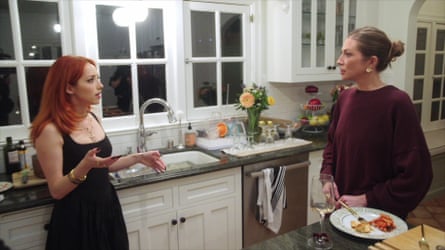
Over the years between reality TV ventures, Schroeder has built a nice life for herself. But nice doesn’t make good TV. Understanding the need for drama, she gets to work pushing every emotional bruise in reach. Early episodes see her arrange friends and family members like dolls, sometimes openly coaching them about how to appear engaging on camera.
Other times, her methods are more machiavellian. She arranges confrontations between former friends, triggers her younger sister’s insecurities and openly baits her mild-mannered husband Beau into fighting about their marriage on camera. All the time she justifies this chaos, to herself and the camera, by explaining that the whole show was pitched as a way to help her loved ones “level up their lives” and “all become rich and famous – like the Kardashians!” It never seems to bother her that many of them openly express that this isn’t the life they want, or that her actions are actively making their daily existence more miserable.
The results of this manipulation are mixed. Often, the cast seem baffled about how pieces of their lives are being moved around them. Old friends are destabilised by the appearance of faded acquaintances, seemingly brought in because they’re not interesting enough to occupy the screen alone. As a result, even the more stilted early episodes have a postmodern quality as Schroeder manipulates “reality” to fit her preferred version of the show.
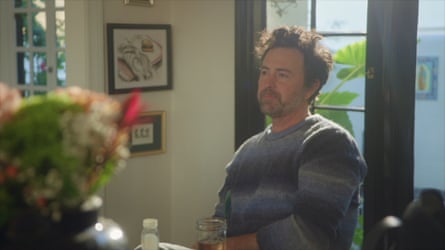
Schroeder is at her most alive and natural in the show’s confessional segments. There, speaking to producers, she sparkles. In contrast, with her “real” friends and family she is often awkward and clumsily abrupt.
Eventually, things pick up as Schroeder begins to lose her carefully produced control. It’s clear the intention of this show was to present a post-cancellation, girl-boss success story. One semi-interesting part of Stassi’s life is that she is the breadwinner and Beau is the “house husband”. This was supposed to be a tongue-in-cheek play on the nuclear family. Except it plays more Sylvia Plath than Lucille Ball.
It’s quickly made clear to everyone – except shockingly, Schroeder – that Beau is deeply unhappy. Beau complains to everyone – except shockingly, Schroeder – about how lost he feels after years of being out of the workforce and how badly he wants to return to his former career as a casting director. But Schroeder blocks all his attempts to not only go back to work, but even speak meaningfully about it. What plays out is not a career-Barbie fantasy, but a simmering look at a marriage turning toxic.
Being a self-aware reality TV show, of course this must all come to a head in a finale dinner on a haunted boat. Except, this isn’t one of the confrontational showdowns Schroeder has been building to all season between her friends/employees/cast members. Instead, she herself is blindsided as all her friends effectively stage an intervention about the state of her marriage.
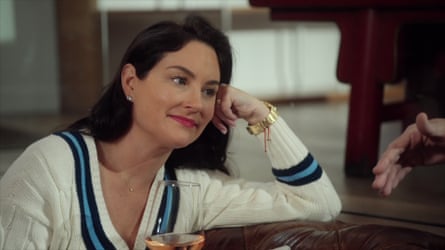
Whether you think Schroeder is a Cassandra-style truth-teller or a garden-variety narcissist, it’s fair to say this would be anyone’s nightmare. And, true to form, Schroeder delivers an epic meltdown, more feral and unfiltered than she clearly ever planned to share. By the end of the final episode she’s cowering on the floor after admitting to being afraid of her own children, screaming at her loved ones and telling her husband she never wants to see him again.
For the most part, House of Stassi is never as clever or innovative as it thinks it is. It aims for a self-aware reality TV critique, gets stuck along the way and largely just feels smug and overly produced. But in these final moments, Schroeder and friends accidentally deliver something truly “real”.
While her SheEO-shtick feels plastic, this is a truly brutal look at the complexities of motherhood. It’s hard to think of another piece of media – scripted or not – that so bracingly shows a woman not only cycling through the guilt and shame of having to admit she cannot handle her own children, but doesn’t really want to.
At the end of the season, Schroeder turns to the last individual left she can trust: the camera, admitting: “I feel stupid because I didn’t see this coming, and I should have.”
Ultimately, House of Stassi does say something interesting about the reality genre – just not what it was intending to. Because if Stassi Schroeder can’t bend this beast to her will and get out unscathed, no one can.
-
House of Stassi is available on Disney+ in Australia and the UK, and on Hulu and Fubo in the US. Find more recommendations of what to stream in Australia here
KioskNews shows a cleaned-up reading view extracted from the publisher’s page — the original always lives on their site, not ours.