Erin Patterson appeal as it happened: The ruling on the mushroom cook’s appeal and what it means for her future behind bars
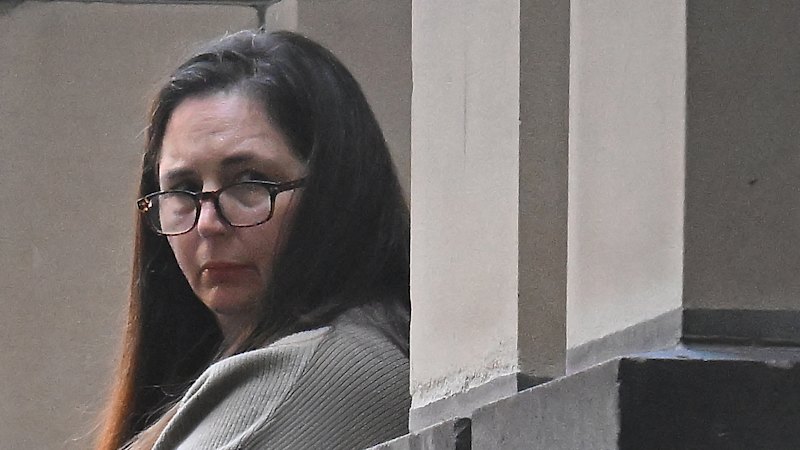
Just as she did when the jury delivered its guilty verdict, Erin Patterson stared straight ahead, completely unmoving as the findings of three Court of Appeal justices was delivered.
Clad in a royal blue prison jumper, she offered a blank stare from the small room with a window at Dame Phillis Frost, where she learned her fate this morning.
Comparatively, members of the homicide squad appeared to be shocked – putting hands on each other’s shoulders before hugging Nathan Patterson, the sole family member there.
Latest Posts
Walking back through that brief hearing, and here’s some more of what the Supreme Court heard this morning.
Speaking on behalf of the court, Justice Stephen McLeish read out the findings from the three justices.
The first ground that the defence team for mushroom cook Erin Patterson had argued was that the jury’s accommodation during her trial – being at the same location as prosecutors, police and media covering the case – contravened the principle that “justice must not only be done, but must be seen to be done”.
“Significantly, the judge’s tip staff, who was one of the jury keepers, assured the judge that there had been no interaction between the jury and the informant or prosecution solicitors, as against that assurance, there was only conjecture, guesswork, or surmise,” McLeish told the court.
Just as she did when the jury delivered its guilty verdict, Erin Patterson stared straight ahead, completely unmoving as the findings of three Court of Appeal justices was delivered.
Clad in a royal blue prison jumper, she offered a blank stare from the small room with a window at Dame Phillis Frost, where she learned her fate this morning.
Comparatively, members of the homicide squad appeared to be shocked – putting hands on each other’s shoulders before hugging Nathan Patterson, the sole family member there.
Earlier, Justice Stephen McLeish told the court they dismissed the grounds of Erin Patterson’s appeal against her conviction, but also found there is good reason to reassess her non-parole period.
The court has found that there was no objective basis for a fair-minded person to reasonably apprehend that the jury might not have discharged its function of rendering a verdict according to law.
That ground is therefore unsuccessful.
The justices, however, granted the appeal by the DPP, noting Patterson’s crimes were “extraordinarily cold and calculated, and stand to be denounced in the strongest terms”.
In all the circumstances, after anxious consideration, we have concluded that the case involved such shocking criminality that it is inappropriate to fix a non-parole period.
Erin Patterson will likely die in prison after the bench struck out her non-parole period.
Her appeal was also dismissed.
Notably absent today is defence barrister Richard Edney and surviving lunch guest Ian Wilkinson and his family.
Court doors to room one have opened with dozens of members of the public, press and legal fraternity taking a seat across two levels of the viewing area.
Present are also members of the homicide squad including Detective Leading Senior Constable Stephen Eppingstall and Detective Senior Sergeant Nigel L’estrange.
Erin Patterson is being beamed into the courtroom on a television screen from custody. She is seated in a small room with a window out into a grassed area. She put her right thumb in the air to confirm she can see and hear the proceedings.
Director of Public Prosecutions Brendan Kissane, KC, and Jeremy McWilliams have arrived for the prosecution. Barrister Veronika Drago is seated to the right of the bar table for Patterson.
The Court of Appeal will today hand down its decision on whether Erin Patterson’s criminal convictions should be overturned.
They will also decide if her non-parole period of 33 years should be scrapped and if she should instead spend the rest of her natural life behind bars for the murders of her in-laws Don and Gail Patterson, and Gail’s sister, Heather Wilkinson, and the attempted murder of Heather’s husband Ian Wilkinson at a lunch in August 2023.
Now-retired Supreme Court Justice Christopher Beale sentenced Patterson to life in prison, with a non-parole period of 33 years, on September 8 last year.
At the time, Beale resisted calls from the prosecution to jail Patterson for life with no prospect of parole, telling the court her case was so infamous she was likely to remain in restricted conditions in custody.
There are a few potential outcomes depending on how today may go.
If the three justices dismiss Patterson’s appeal, she could remain incarcerated until she’s at least 80, unless her legal team take their case to the High Court.
If her appeal is granted, Patterson could be ordered to face a retrial if the justices find she did suffer a miscarriage of justice during her earlier, 11-week trial in Morwell in 2025.
If the prosecution’s appeal is granted, Patterson’s parole period could be quashed and she ordered to instead spend the rest of her natural life behind bars.
Erin Patterson’s legal team is being led by barrister Richard Edney and are instructed by Doogue and George lawyers Bill Doogue and Ophelia Hollway.
Office of Public Prosecutions director Brendan Kissane, KC, is leading the prosecution alongside junior barrister Jeremy McWilliams.
Patterson is expected to appear via videolink from Dame Phyllis Frost Centre, the state’s main women’s prison.
The appeal hearing has been moved next door to courtroom one in the Supreme Court where there is considerably more space for the public to attend.
Court reporter Erin Pearson, who has covered the case for two years, will bring you updates as they happen.
Brendan Kissane, the director of public prosecutions, rejected the submission that there was a “fundamental irregularity” in Patterson’s trial as the jury briefly stayed in the same hotel as some prosecutors and police, which the defence argued “fatally undermined the integrity of the verdicts”.
Kissane said the evidence showed there was “no social contact between any juror and any other person”.
He said he believed trial judge Christopher Beale would have stopped the jury staying at the same hotel as some prosecutors and police in the Latrobe Valley had he known about it earlier. But he argued it was unintentional due to limited accommodation options and did not cause any fundamental irregularity as there was no evidence any prosecution figures spoke to jurors.
The prosecution also argued the iNaturalist material was part of a collection of evidence that taken together demonstrated that the applicant had opportunity to deliberately source death cap mushrooms at a time close to the lunch, and on the prosecution case, did so.
KioskNews shows a cleaned-up reading view extracted from the publisher’s page — the original always lives on their site, not ours.