Two Musk empires, one company? Billionaire backs SpaceX-Tesla merger
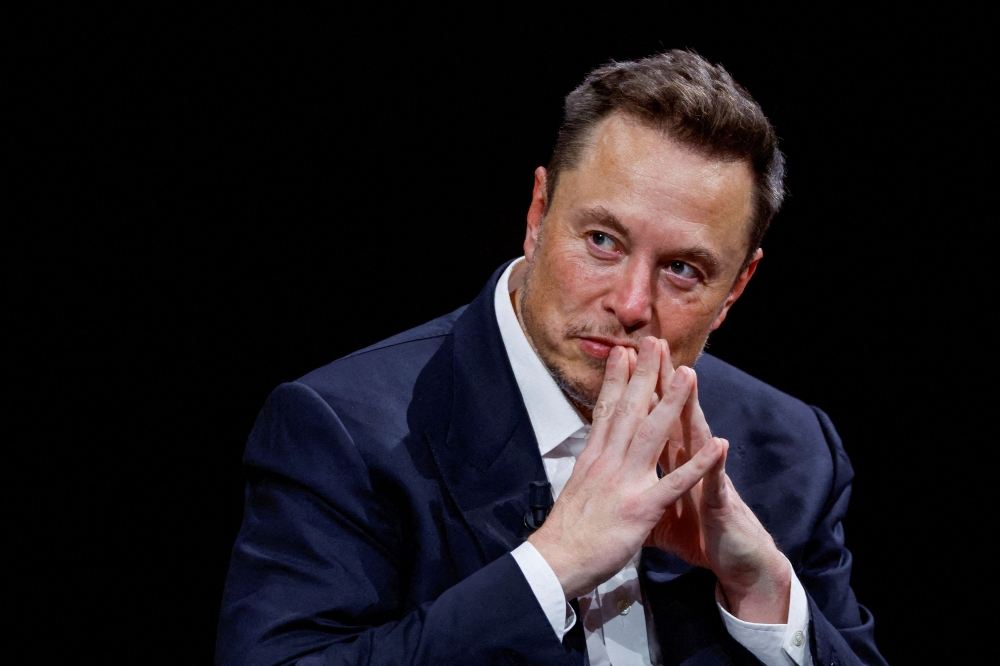

Elon Musk said combining Tesla and SpaceX would be a ‘good idea’, pointing to opportunities in artificial intelligence, robotics and space-based computing. — File pic
First Published: Wednesday, 21 Oct 2026 9:39 AM MYT
WASHINGTON, Oct 21 — Elon Musk said yesterday he would back a merger of SpaceX and Tesla, as his rocket and AI company reported its first quarterly profit since going public, driven by deals to rent out computing power to AI firms.
Asked about a possible tie-up on a call with analysts, Musk said he felt he was “tap dancing through a minefield,” but that a combination would be “a good idea.”
Shares in SpaceX shot up nearly 5 per cent in after-hours trading following the comments.
Musk said special committees of independent directors at both SpaceX and Tesla have been set up to study the idea at the request of shareholders.
He added that he could not take part in their talks because he has a conflict of interest.
Musk is chief executive of both companies, and also serves as chairman and chief technology officer of SpaceX.
He owned 48.4 per cent of SpaceX as of June 30, according to a regulatory filing, and controls more than 82 per cent of its voting power through super-voting shares.
He holds about 20 per cent of Tesla.
The committees have not agreed on the terms of any deal and there is no guarantee they will, Musk said, cautioning that it would be overstating it to treat a merger as a certainty.
Any deal would need the backing of a majority of all Tesla shares, not just those cast in a vote, which Musk called “quite a high hurdle.”
He said the two companies could gain from working together on AI software, chip design, robotics and space-based computing.
His remarks came after SpaceX posted net income of US$4.4 billion (RM17.95 billion) for the July-September period, compared with a loss of US$1.1 billion a year earlier.
Revenue jumped 161 per cent to US$14.6 billion. The quarterly results follow a bumpy start on Wall Street.
SpaceX began trading on the Nasdaq on June 12 after an IPO priced at US$135 a share that raised about US$85.7 billion.
Its first earnings report as a listed company showed second-quarter revenue of US$7.8 billion and a net loss of US$541 million.
The AI division, which SpaceX now calls “Super Intelligence,” drove the turnaround. Super Intelligence is US President Donald Trump’s preferred term for AI.
The unit’s revenue rose more than nine times from a year earlier to US$7.6 billion, overtaking the Starlink satellite internet business as the company’s largest source of sales.
Cloud computing
SpaceX credited new cloud services agreements, wider adoption of its Grok chatbot and its acquisition of Cursor, an artificial intelligence coding startup.
SpaceX’s cloud customers include Anthropic, which agreed in May to pay nearly US$45 billion over three years for computing power at SpaceX’s Colossus data centers.
Google signed on in June, agreeing to pay US$920 million a month from October through June 2029.
The AI unit turned an operating profit of US$431 million, compared with a loss of US$1.7 billion a year earlier.
As with other AI companies, spending remains heavy.
SpaceX invested US$19.6 billion in the quarter, US$16.4 billion of it in AI, bringing capital spending for the first nine months of the year to US$48 billion.
Its computing capacity reached 1.7 gigawatts, up from 0.6 gigawatts a year earlier.
Musk said he was “fairly confident” SpaceX could bring an additional 10 gigawatts of computing capacity online in 2027.
That would come on top of the roughly 2.5 to 3.0 gigawatts it expects to have running by the end of this year.
He added that power, cooling and electrical equipment were “somewhat of a limiting factor.”
Revenue at the Starlink satellite internet unit grew 69 per cent to US$5.2 billion, and consumer subscribers reached 13.6 million.
Average monthly revenue per consumer, however, fell to US$69 from US$83 a year earlier.
SpaceX also completed the first revenue-generating flight of Starship, the giant rocket central to Musk’s Mars ambitions and to deploying satellites at scale.
The flight carried 26 next-generation Starlink satellites into orbit. — AFP
KioskNews shows a cleaned-up reading view extracted from the publisher’s page — the original always lives on their site, not ours.