XenoBarometer: Migrant crackdown raises concerns over state’s role in growing anti-immigrant pressure
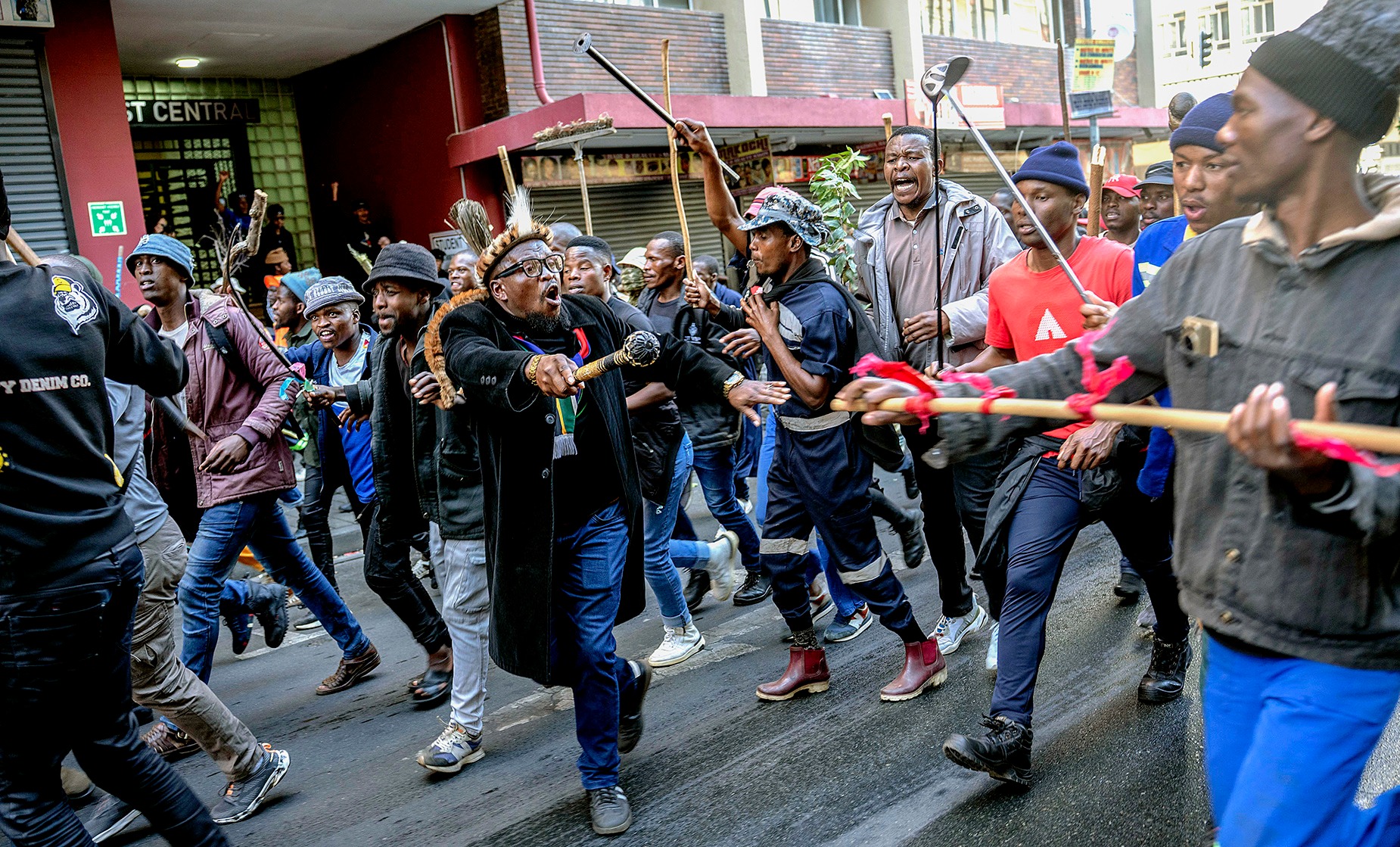
In the weeks since March and March announced a 30 June deadline for undocumented migrants to leave South Africa, tens of thousands of foreign nationals have self-deported from the country. By early September, 129,000 Zimbabweans had voluntarily repatriated, according to Chronicle, a state-owned newspaper. By early August, Malawian news media reported that more than 56,000 migrants had returned to that country.
Around the same time, the South African Police Service (SAPS) reported to Parliament that it had arrested, detained and, in some cases, deported thousands of others. Still, many foreign nationals – documented and undocumented – have opted to stay and weather an increasingly insecure future in South Africa.
XenoBarometer is a new reporting project that will be published weekly. It seeks to track the anti-immigrant movement, and its impact on politics and migrant communities in the country.
For this first edition, Viewfinder spoke to 13 activists and community leaders representing some of those who have remained. We asked them all the same question: How has life changed for you and your community since 30 June?
Their responses were wide ranging. But almost all of them reported a growing sense of insecurity and fear, coupled with shrinking access to services and opportunities to make a living.
In Johannesburg, Claude Kayitare, of the Southern Africa Network for Immigrants and Refugees, said that immigrants were still being stopped on the streets of Marshalltown, Johannesburg, and asked for documents from citizens who associated with the anti-immigrant movement. Sometimes, vigilantes were also extorting these immigrants for money, he said.
In Durban, Gaby Bikombo, of the organisation Refugee Social Services, said documented immigrants driven from informal trading sites remained unable to return to work. Bikombo said immigrants were still being refused access to public healthcare facilities, which had been the case since June last year.
Olorunfemi Adeleke, of the Nigerian community in Tshwane, said many migrants were keeping a low profile because they feared attracting the attention of authorities.
Crispin Kassarombo, of Voice of Africans for Change in Bellville, said many had lost jobs and businesses, leaving some struggling to afford rent and basic living costs.
Perhaps the most striking feature of these interviews, however, were accounts of government departments taking actions that appeared to align with, and in some cases advance, the anti-immigrant movement’s agenda. Three cases in particular stood out.
‘Freezing migrants’ bank accounts’
Asylum seekers who decide to voluntarily repatriate to their countries of origin cannot simply exit across South Africa’s land borders. The Border Management Authority is likely to refuse exit to any asylum seekers who do not first “cancel their application for protection”.
Cancelling one’s asylum application requires presenting at the Department of Home Affairs, and obtaining paperwork to be presented to the authority to ensure passage.
But, according to Isaiaha Mombilo from the Congolese Civil Society of South Africa, some asylum seekers who have attempted to follow this requirement have found their bank accounts suddenly frozen – leaving them unable to access the money needed for their repatriation.
/file/attachments/orphans/Xeno-Barometer1_603286.jpg "The Department of Home Affairs’ offices in Cape Town (Photo: Ashraf Hendricks / GroundUp)")
Mombilo claimed that the Department of Home Affairs was responsible for freezing these asylum seekers’ bank accounts. He said that banks had told affected people that they needed permission from Home Affairs for the accounts to be reopened.
“Some people are still here but cannot access their money, while some people have travelled home without their money. This has only increased the suffering and number of people who need social assistance,” Mombilo said during an interview.
Lumumba Chia, of the South African Refugee-Led Network, said he had also received reports of bank accounts being frozen when people’s asylum permits expired.
“People are afraid. Some want to return home, but their money is frozen,” said Chia.
Viewfinder reached out to the Department of Home Affairs for comment. Spokesperson David Hlabane acknowledged the queries and said the department was working on a response. None was forthcoming by the time of publication.
Court win for migrant shopkeepers
On 17 August, the KwaZulu-Natal Division of the High Court in Pietermaritzburg ordered Alfred Duma Local Municipality Mayor Zama Sibisi to unlock migrant-owned businesses that were physically shuttered with padlocks during what the municipality had billed as bylaw enforcement operations in June. Alfred Duma Municipality includes the town of uMnambithi, formerly known as Ladysmith.
The shopkeepers who took the mayor to court argued that they were documented and legally allowed to operate businesses in South Africa.
/file/attachments/orphans/Xeno-Barometer2_668008.jpg "Alfred Duma mayor Zama Sibisi at a March and March demonstration in uMnambithi, KwaZulu-Natal, on 2 June 2026. (Photo: Ladysmith Herald)")
Despite having publicly joined March and March protests in the town, Sibisi insisted that he was not “victimising” anyone and that the operation was about maintaining “proper standards, especially when it comes to public health and safety”.
But, for the shopkeepers, the court’s reprieve was short lived.
“After we got the court order, we tried to open our shops. They were only open for two days… (then) March and March came and closed down the whole town,” said a community leader representing Congolese, Ethiopian and Burundian shopkeepers.
He asked not to be named, fearing retaliation, owing to the volatile situation in Ladysmith where shops have been looted on several occasions in recent weeks.
Winelands police detain migrants
The Western Cape Coalition Against Xenophobia reported that more than a hundred migrants in the Winelands area of the Western Cape have been arrested in sporadic raids and detained in overcrowded conditions since June 30.
The coalition alleged that the police had withheld critical information and documents from the detainees. The areas impacted include Robertson, Montagu, Bonnievale and McGregor.
“This is all being done on the pretext that these are undocumented people, despite the fact that many of them do have documents,” said the coalition.
The SAPS has rejected allegations of indiscriminate arrests and the unlawful treatment of detainees.
“SAPS remains committed to ensuring that everyone in its custody is treated lawfully, fairly and with respect for their dignity and constitutional rights,” said Colonel André Traut, quoted in GroundUp which produced a report on the detentions. DM
This is a project of the Henry Nxumalo Foundation and Viewfinder, publishing every Wednesday in partnership with Daily Maverick.
KioskNews shows a cleaned-up reading view extracted from the publisher’s page — the original always lives on their site, not ours.