10 Classic Horror Books That Still Feel Deeply Disturbing in 2026

Kelcie Mattson is a Senior Features author at Collider. Based in the Midwest, she also contributes Lists, reviews, and television recaps. A lifelong fan of niche sci-fi, high fantasy, Gothic horror, elaborate action, and witty detective fiction, becoming a pop culture devotee was inevitable once the Disney Renaissance, Turner Classic Movies, BBC period dramas, and her local library piqued her imagination.
Rarely seen without a book in one hand and a cup of coffee in the other, Kelcie explores media history (especially older, foreign, and independent films) as much as possible. You'll also find her enjoying video games, amateur photography, geeking out over all music genres, admiring birds from her porch, trying to overcome her meager baking skills, and attending fan conventions with her Trekkie family.
Sign in to your Collider account
Fear doesn't have an expiration date. The most insightful horror novels hover between timely cultural specificity and timeless storytelling craft. Look no further than how older fiction reflects each generation's major concerns, conflicts, and unspoken taboos, only to regain contemporary relevance with alarming frequency. Some terrors are universal. Others only disturb based on a person's experience. These 10 distressing dark classics continue to linger, because a job well done always leaves its mark.
10 'The Monk' (1796)

The Monk's shockingly transgressive contents polarized 18th century audiences beyond stereotypical pearl-clutching. In fact, its scandalous reception led author Matthew Gregory Lewis to publish a revised edition. Over two centuries later, this defining Gothic horror title can still unsettle the most stalwart readers.
Split into two main narratives, the more notorious one traces Ambrosio, a monk famed for his devoted piety. A seductive emissary of the devil tempts him, and he falls headfirst into arrogance, hypocrisy, and repugnant corruption. Satan securing Ambrosio's loyalty through deceit doesn't absolve the mortal man of accountability. The Monk's deepest malevolence emerges from just how little it takes for an allegedly God-fearing man to abandon his moral principles in favor of the vilest acts imaginable.
9 'Frankenstein' (1818)
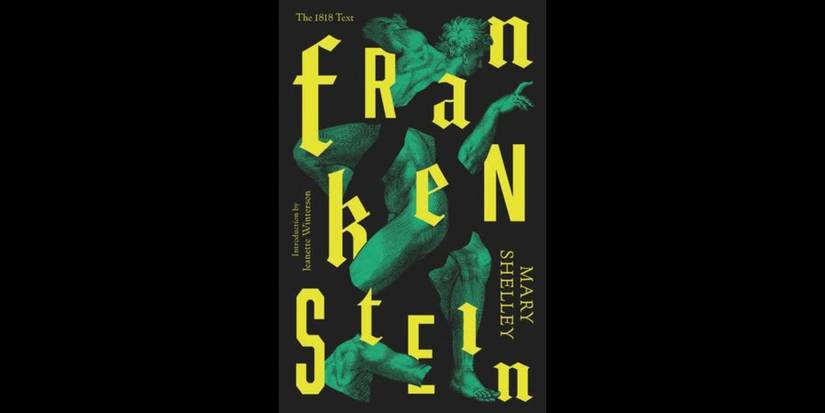
Never underestimate the profundity of a young woman. At 19 years old, Mary Shelley created Frankenstein, a literary sensation and discerning philosophical treatise — mortality, free will, abuse of power, and the hell humanity unleashes when our hubristic curiosity bypasses ethical guardrails — that hasn't aged a day. Even though Victor Frankenstein is showered with everything a young man could ask for, nothing except conquering nature itself will sate his scientific ambitions.
His nameless Creature enters the world as an innocent. He's pure, curious, malleable. People teach him murderous cruelty by choosing to inflict cruelty, and the pattern of retaliatory violence starts at home. A self-righteous father tries to play God, condemns his son to ceaseless misery, and sacrifices innocent lives. A feat of imagination informed by Shelley's tragic experiences with grief, isolation, gendered oppression, and parental legacy, her world-changing masterwork ripples with the vivid wonders and agonies of life.
8 'Strange Case of Dr. Jekyll and Mr. Hyde' (1886)

Almost everyone knows this famous twist. Robert Louis Stevenson still folds his secret inside Strange Case of Dr. Jekyll and Mr. Hyde's pages with all the efficiency of a hidden blade. As lawyer Gabriel John Utterson pieces together the ailing Dr. Henry Jekyll's connection to a depraved criminal named Edward Hyde, he discovers both men are one and the same.
Decades before body horror would develop into a sub-genre, Jekyll's elixir-induced transformation tackles cognitive dissonance, good versus evil, and the tug-of-war between public and private facades. The law-abiding Jekyll's covert alias grants him the freedom and immunity to be his true, despicable self. Dig deeper, and Stevenson's flexible text supports numerous allegories (substance addiction, homosexuality, body dysmorphia, class hierarchy). Some interpretations chill the blood because human evil tends to be terrifyingly predictable. When that malignancy manifests as socially demonized identities, it's immeasurably heartbreaking.
7 'Dracula' (1897)
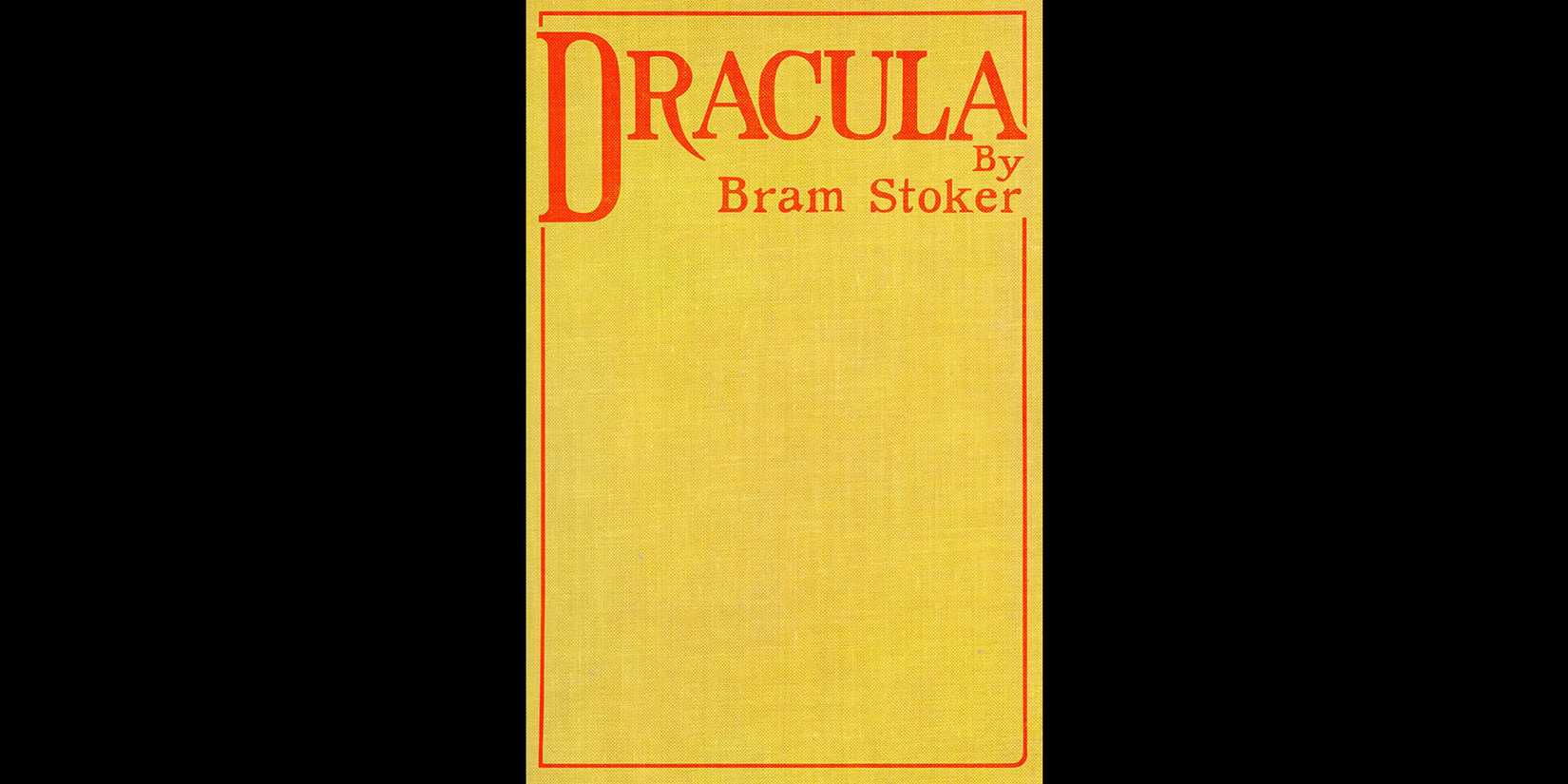
As the foundation for all successive vampire media, Dracula has developed an almost mythological status. One might expect such cultural overexposure to have diluted the text's impact. Bram Stoker's landmark work never loses its wretchedly hypnotic power. The epistolary style's tangible immediacy spins a spider-web of unnerving realism, overwhelming urgency, and creeping, inescapable doom. His cinematic eye for lurid images has rarely been replicated or matched; specific scenes will always grace the back of your eyelids.
Then, there's the big guy himself. Although not the first bloodsucker to play into psychosexual tension, Stoker's pioneering take on European folklore guarantees the Count's one-in-a-million appeal. Disarmingly alluring and inherently repulsive, a malignant force of nature and a portrait of all-consuming aristocratic greed, he's a nightmare born of antiquated Victorian refinement, technological advancement, xenophobia, disease, repression, and assault.
6 'Rebecca' (1938)
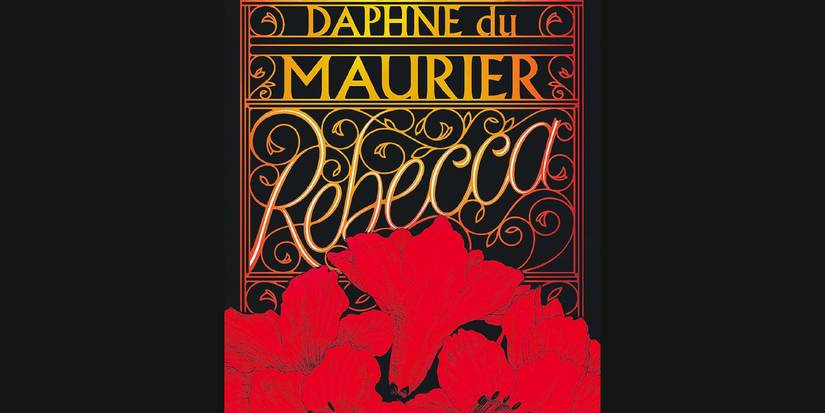
Daphne du Maurier envisioned her masterpiece as a "sinister" and "rather macabre" thriller instead of a straightforward romance with a dark underbelly. Therein lines the uneasy yet irresistibly magnetic Rebecca's essential tension. After a whirlwind courtship and marriage, widower Maximilian de Winter whisks the protagonist away to his estate. Rather than finding the comfortable companionship of which she has now dared to dream, the second Mrs. de Winter lives in the pervasive shadow of her titular predecessor.
Unmatched when it comes to Gothic Romance and psychological thriller atmosphere, Rebecca mixes dream-like surreality with claustrophobic disquiet. The legendary Manderley personifies opulence and misery, every architectural inch scarred by invisible remnants and visualized by du Maurier's lush, lyrical prose. Threats surround Rebecca's distraught heroine on all sides; it's no coincidence that the icily enigmatic Max and his ingénue wife check nearly every box on a list of gender-based power imbalances. We're privy to the narrator's innermost feelings while everyone, including her real-life creator, subsumes her very name.
5 'The Haunting of Hill House' (1959)

Shirley Jackson's The Haunting of Hill House is a definitive masterclass in hair-raising dread. The power of the unseen reigns supreme — when ephemeral sights and sounds are the only proof of paranormal predation, our panicked imaginations run wild long into the insomniac night. To that end, Jackson drives home the sinister foreboding by withholding definitive answers. Is Eleanor Vance an unreliable narrator whose fragile mental health latches onto the house's sordid past? Or is she the perfect feast for whatever entity "walks alone" among Hill House's ruins?
Supernatural or not, Eleanor's troubled soul becomes The Haunting of Hill House's gravitational center. Jackson sketches Eleanor's contradictory intricacies with pointed care; she's an insecure, rebellious, resentful, polite, ashamed, and unbearably lonely outcast, her complicated past tantalizingly obfuscated. She longs for freedom and belonging, but 1950s propaganda disguises forced domestic purgatory as idyllic bliss. Eleanor gleefully chases her first glimpse of hope, only for her unrealized identity to disintegrate underneath cumulative pressures. Hill House's prevailing tragedy lies with a woman whom no one cares to help.
4 'Something Wicked This Way Comes' (1962)

A metaphorical storm approaches small-town Illinois, and with all the foreboding inevitability of natural disasters or imminent death. Ray Bradbury's horror-fantasy hybrid, Something Wicked This Way Comes, follows 12-year-old Will Halloway and Jim Nightshade's coming-of-age journey. The friends were born on Halloween night, and Bradbury's eerily enchanting autumnal saga unfolds during those uncertain dark hours. The inviting warmth of Mr. Dark's traveling carnival rejuvenates Bradbury's fictional Green Town, but every recipient of the owner's tricks pays a morbid price.
Few books have rendered the transition from adolescence to adulthood with finer-tuned grace. Bradbury's unique cadence and vivid descriptions capture an appropriate wistfulness; one headstrong boy impatiently races toward change, while his reluctant counterpart prefers safe familiarity. Meanwhile, their unsatisfied adult neighbors try to recapture everything their lost youth signifies (innocence, joy, simplicity, newfound possibility, eternal life). Something Wicked This Way Comes' violence isn't graphic, but the hideous sensations it conjures are impossible to shake.
3 'Pet Sematary' (1983)'

Sure, a shapeshifting alien who inflicts cosmic gore is petrifying (just ask my lifelong nightmares). Yet Pennywise's nefarious metaphors don't strike quite as close to home as Pet Sematary. One of the bestsellers most synonymous with Stephen King's name is something of an outlier. Relentlessly entrenched in life's most unspeakable fears and senseless cruelties, Pet Sematary ranks among King's most existential and devastating dives into human nature.
In a sense, it's a wrenchingly simple premise warped by layer after layer of barbed-wire torment. A child's death destroys a family. In their unbearable grief, his loving parents delude themselves into believing his heinous resurrection is a miracle. King's craft here doesn't disappoint; he stretches the relatable but appalling sense of fundamental wrongness to its limit before racing laps around it. Above all, he dissects this particular kind of traumatic despair and reckons with death's inevitable permanence with visceral intimacy and emotional accessibility.
2 'Beloved' (1987)

While technically categorized as historical fiction, in terms of anguish, grief, and power, Toni Morrison's Beloved is utterly incomparable. As such, it's also impossible and inaccurate to label the Pulitzer Prize-winning work of art as strictly horror. Beloved transcends genre.
Set in post-Civil War Ohio, Morrison's irreplaceably singular magnum opus distills the ghost story's structure and themes to their rawest, truest essence through fictional, supernatural, lived specters: Sethe, a formerly enslaved Black woman existing the restless spirit of her youngest daughter Beloved, the true story of an enslaved mother named Margaret Garner, and the generational trauma of America's deplorable, unconscionable history. Morrison's spell-binding prose and narrative framing know neither equal nor rival. Beloved is a haunting in written form.
1 'The Silence of the Lambs' (1988)
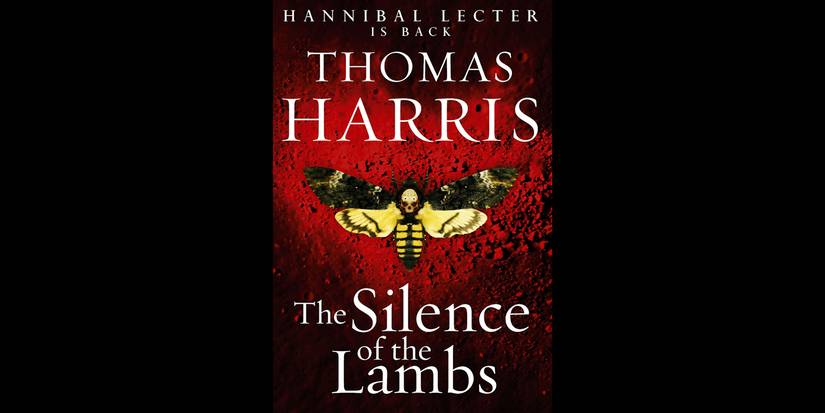
Thomas Harris' cat-and-mouse crime epic expertly navigates a fifty-fifty split between psychological suspense and horror. He doesn't hold back when it comes to the kind of absolute horror that makes you want to rinse your eyes with figurative bleach, either. To say The Silence of the Lambs houses two of fiction's most infamous monsters is true yet somewhat misleading. Describing Hannibal Lecter and Buffalo Bill in such terms grants them mystique — dilutes the fact they're human beings capable of practicing the compassion they reject. (The text might insist the latter isn't "a real transsexual," but the irresponsibly transphobic concept can't go unacknowledged.)
What's more, a refreshingly imperfect yet astute, ambitious, caring, and sensitive woman stands as a bastion between men and the rest of the world. Doesn't that sound familiar? It's no coincidence that Harris' villains are also just as real as the institutional and individual misogyny that circles Clarice Starling like sharks when fresh blood's in the water. Harris' morbid thrills wouldn't have ascended to legendary status without Silence of the Lambs' character-driven core.
Collider Exclusive · 8 Questions · 2 Minutes What Is Your Biggest Horror Nightmare? Elm Street · Chucky · Scream · The Conjuring
Four horror franchises. Four completely different ways of scaring you. One waits until you fall asleep. One makes sure nobody believes you. One is already in your group of friends. And one is in the house with your family. Answer eight quick questions about how you actually watch horror, and find out which nightmare was built for you.
😴Elm Street(Freddy Krueger)
🧸Chucky(Child's Play)
📞Scream(Ghostface)
🕯️The Conjuring(The Warren Files)
01
Which horror scene makes you cover your eyes? Four classic images. One of them is worse than the others for you.
02
You are home alone and you hear a noise. First thought? Everybody has one. It arrives before you have decided anything.
03
Which horror movie rule would you break first? Everybody thinks they would survive. Almost nobody actually does.
04
Something genuinely frightening happens. What do you do? Not in a film. In your actual living room, tonight.
05
How do you actually watch a horror film? Be honest about this one. Nobody is checking.
06
Somebody offers you serious money. Which do you still refuse? The amount does not matter. There is one on this list you are not doing.
07
Which feeling stays with you a week after the film? Good horror does not stop when the credits do.
08
Something wakes you at 3am. What is the worst possibility? Eight questions in, this is the one that decides your nightmare.
The Lights Just Went Out Your Nightmare Is…
Four franchises, four completely different ways of getting underneath your skin. This is the one built out of your particular fear, why it works so well on you, and what it would leave behind.
Elm Street
Your nightmare does not wait outside the door. It waits for you to close your eyes, which you are going to have to do eventually, because nobody has ever won that particular argument.
- Freddy is horror's cruellest idea: a threat that lives in the one place you cannot guard, cannot lock, and cannot avoid forever.
- You are the one who is fine during the film and wide awake at two in the morning. Your own head is where this does its damage.
- These films understood exhaustion as a horror engine. The kids on Elm Street do not lose because they are weak. They lose because they are tired.
- You can lock every door in the house. You still have to sleep.
Chucky
Your nightmare is not really the doll. It is the face of the person you tell, and the way they decide, very kindly, that you have imagined all of it.
- Chucky works precisely because he is absurd. That is the trap: the more accurately you describe him, the less anybody is going to believe you.
- You are the one shouting at the screen because the characters are not listening. You know that feeling from real life too.
- The franchise is at its best when the adults in the room are the real obstacle, and you have met those adults.
- By the time somebody finally believes you, you will have handled most of it on your own.
Scream
Your nightmare has your number, knows your name, and has almost certainly been inside your house before. The worst part is that you already know them.
- Scream is the only one of these where the killer takes the mask off and turns out to be somebody who was at the party.
- You are the person who calls the twist out loud before it lands. You watch people the same way you watch films.
- The franchise made the rules of horror part of the plot, which means the survivors are the ones paying attention. You would be paying attention.
- Everybody is a suspect, including the person who just offered to walk you home.
The Conjuring
Your nightmare is not really about you. It is about the people asleep down the hall, and the feeling that whatever is here is not interested in leaving.
- The Conjuring films are domestic horror. The house, the family, the perfectly ordinary room that quietly stops feeling ordinary.
- Your instinct is to get everybody into one room. Your fear is protective rather than personal, which is rarer than it sounds.
- This is the one franchise where belief is the weapon. The people who come through it are the ones who are not alone and refuse to be.
- Whatever is here did not come for you. It came for the household, and you are the one standing in the hallway.
KioskNews shows a cleaned-up reading view extracted from the publisher’s page — the original always lives on their site, not ours.