Striking down 27% quota, Madhya Pradesh High Court cites OBC chief ministers, quotes Rousseau
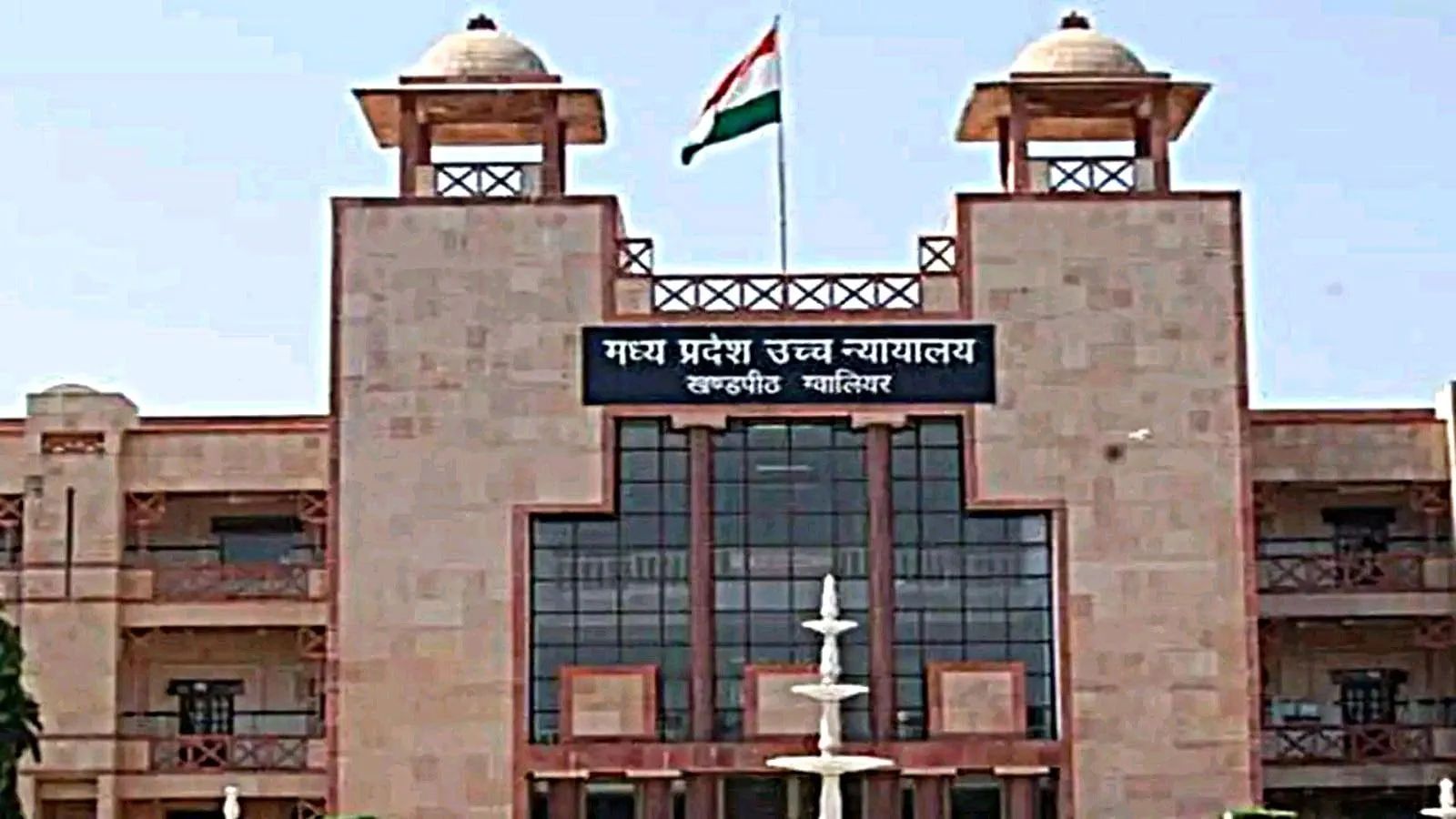
The Madhya Pradesh High Court has struck down the 2019 law increasing the quota for Other Backward Classes (OBCs) from 14% to 27%, concluding that the state had failed to establish the exceptional circumstances required to breach the Supreme Court-mandated 50% ceiling on reservations.
The law was enacted by the then Congress government led by Kamal Nath, leading up to the Lok Sabha elections in 2019. This was seen as a strategy to woo the OBC community, which is 50% of the population. After the BJP government came to power in 2020, it also supported the bill, although by then, challenges to the law had reached the HC.
A division bench of Justices Anand Pathak and Vinay Saraf on Friday said the data on higher education and public employment examined by it indicated that OBCs were adequately represented in MP.
The HC made it clear that the issue before it was not whether OBCs should receive reservation, but whether the increase from 14% to 27% was justified.
“This case is not about grant of reservation but extent of reservation. OBCs are certainly entitled to get reservation to the extent of 14%. However, case is not made out for increasing the reservation from 14% to 27%,” the bench said.
The court observed that the overall socio-economic condition of OBC data was “not only encouraging but, in fact, overwhelming.”
“That data, coupled with the fact that State is politically dominated by OBCs, with four CMs in regular succession, one after another, and more than 25% of Ministers and MLAs are from the OBC category, no case is made out to harp over inadequacy of representation in political, educational, economic, or social field,” the court said.
Story continues below this ad
The court said that “all parameters demonstrate adequacy of representation and even advancement of status overall. Such welcome steps are to be celebrated, rather than lamented. Much has been done. Still much is to be done. However differently.”
The bench said OBC candidates appointed between March 2019 and September 29, 2022, against the additional quota, would not be removed from their jobs. Their appointments would be adjusted against the next three recruitment drives, it said.
For appointments made after September 29, 2022, the court directed that recruitment be carried out on an 87% basis, with the remaining 13% of posts filled from the unreserved category. It directed the Madhya Pradesh Public Service Commission, the Madhya Pradesh Employees Selection Board, and other recruitment agencies to complete these appointments within three months.
Rousseau reference
In a broader observation on equality and the role of the Constitution, the bench referred to Jean-Jacques Rousseau’s The Social Contract, linking natural freedom and societal restrictions to the constitutional principles of liberty, equality and fraternity.
Story continues below this ad
“Famous opening line of ‘The Social Contract’… reminds us about Natural Freedom, Societal Chains, and Regulatory Mechanisms vis a vis human beings. This quote became the battle cry of the French Revolution, and concepts like Liberty, Equality, and Fraternity were reinvented for the modern world. Our Constitution reflects these concepts with added attribute of Justice (Social, Economic, and Political) in Preamble. Equality has been and is perhaps the single greatest craving of all human beings at all points of time,” the court said.
The bench also linked the constitutional principle of equality to the demands of modern governance, arguing that administrative efficiency and technological advancement remained important considerations. It said: “Today, the modern world is witnessing the biggest disruptors like Artificial Intelligence, Climate Change,… Space Exploration, Machine Learning, Quantum Computing,…These challenges are not only Civilizational, but even Existential in nature.”
The court held that when the “world is whisking fast with technological maneuvering,” then efficiency in administration assumes importance. “Constitution is a dynamic document, and its provisions have to be seen from the vantage point of the time in which we are living and challenges we (as humanity) are facing,” the court said.
2023 study
The bench’s assessment of OBC representation drew on a 2023 study by Dr BR Ambedkar University of Social Sciences, data from the All India Survey of Higher Education (AISHE), government employment figures, and recruitment examination results.
Story continues below this ad
The court noted that no caste census had been conducted in Madhya Pradesh in the post-Independence period, meaning precise estimates of the population of different categories remained tentative.
The study cited by the court found that OBCs accounted for 33.87% of enrolment in higher education, substantially above the existing 14% reservation quota. The bench also referred to AISHE data for 2021-22, which showed that enrolment of OBC students had increased by 163% over the period covered by the survey, compared with 146% for Scheduled Castes (SCs), 180% for Scheduled Tribes (STs), and 9% for other students.
The court questioned the 2023 study’s conclusion that the educational status of surveyed OBCs was “extremely weak”, saying that assessment was contrary to AISHE data and the figures cited in the judgment. It also referred to the study’s finding that 23.91% of OBC respondents had attained a graduate degree or higher, compared with the reported state average of 4.4% and the national average of 5.6%.
On government employment, the court cited the study’s finding that OBCs occupied 28.16% of government positions, compared with 17.58% for SCs and 17.99% for STs. It said the proportion of OBCs in government employment was twice the existing 14% reservation quota.
Story continues below this ad
However, the bench also noted that a substantial number of sanctioned posts earmarked for OBC candidates remained vacant. The court held that the state’s failure to fill these vacancies could not itself justify increasing the reservation beyond the 50% ceiling.
The bench also examined results from MP High Court recruitment examinations between 2015 and 2025 and MP Public Service Commission examinations between 2014 and 2018. According to the judgment, the data indicated that candidates from reserved categories were obtaining substantial representation, including through open competition.
The court noted that, in some instances, candidates from the SC, ST, OBC and Economically Weaker Sections categories together occupied 70% to 75% of seats, leaving general-category candidates with 20% to 25%. It said the data indicated that OBC candidates were obtaining seats through both their reservation entitlement and open competition.
Political reactions
Madhya Pradesh Chief Minister Mohan Yadav said the state government would study the judgment and “ensure further legal proceedings”.
Story continues below this ad
Former CM Nath attacked the state’s ruling BJP government, alleging it had been “conspiring from the very beginning to scrap this reservation.”
“Due to the government’s weak advocacy and providing half-baked information, the Hon’ble High Court has cancelled the 27% reservation for OBCs… the BJP has stabbed the OBC community in the back by presenting a weak case in court… The BJP has been against reservation from the start and has been trying to get this work done through the court instead of abolishing the reservation itself,” Nath said.
BJP state president and MLA Hemant Khandelwal accused the Congress of increasing OBC reservation in “haste, ahead of the 2019 Lok Sabha elections for political gain.” He said the HC had “flagged the haste and lack of preparation behind the 2019 ordinance.” Khandelwal said the “Congress should take responsibility for the legal shortcomings of its decision instead of blaming the BJP government.”
KioskNews shows a cleaned-up reading view extracted from the publisher’s page — the original always lives on their site, not ours.