Kashmir has no India-born terrorists for first time in 35 years, says Amit Shah
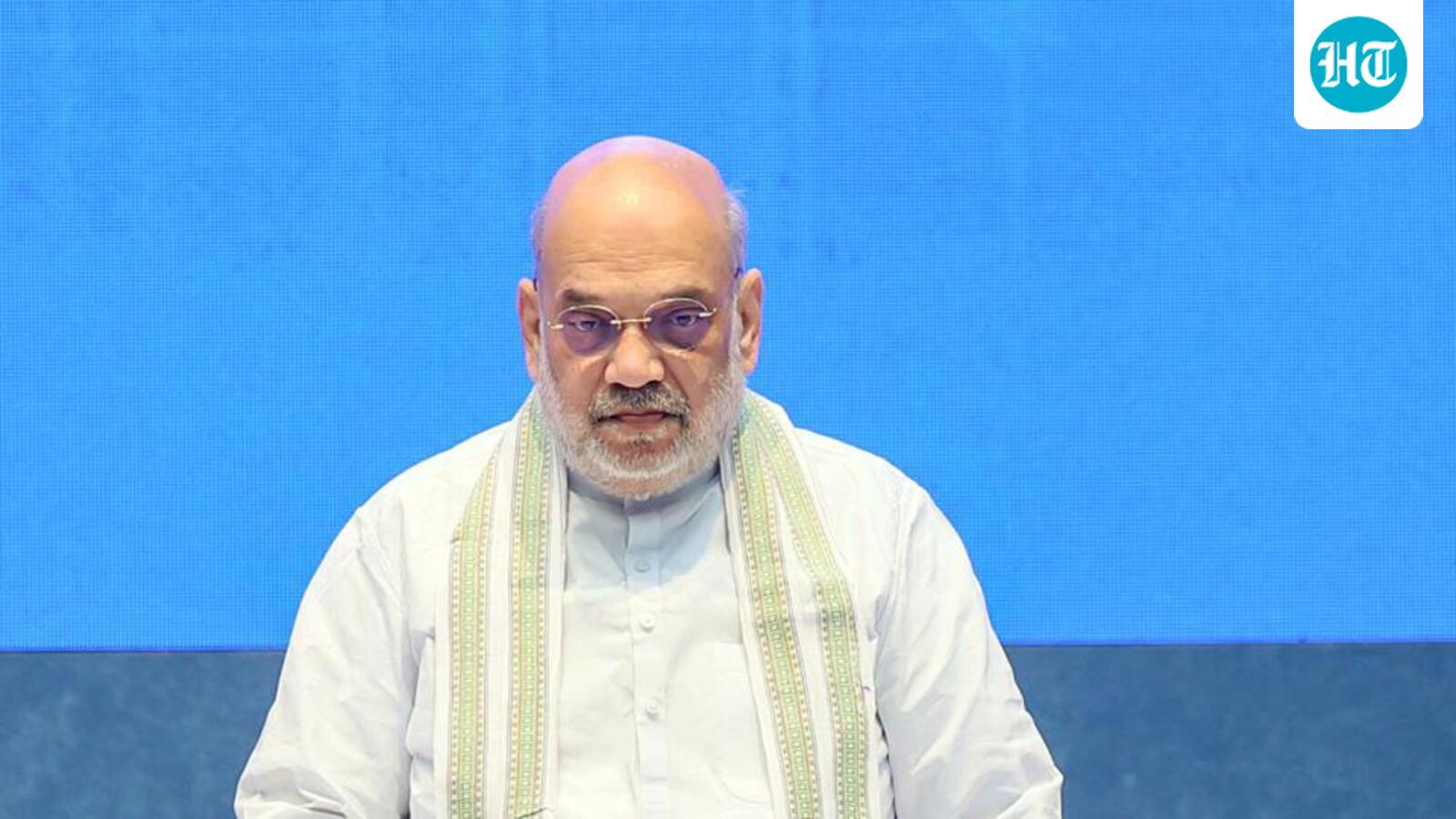
A day after security forces killed Lashkar-e-Taiba (LeT) terrorist Lateef Bhat in Kulgam, Union home minister Amit Shah said Kashmir was free of India-born terrorists for the first time in 35 years, terming it a “significant milestone”.
Shah’s announcement assumes significance against the backdrop of over three-decades of militancy in Jammu and Kashmir, in which Pakistan-backed terror outfits including Lashkar-e-Taiba (LeT) and Jaish-e-Mohammad (JeM) among others, have recruited local youth to run their networks and carry out attacks on security forces and civilians.
The home minister was speaking at the inaugural session of the two-day counter-terrorism conference of the National Investigation Agency (NIA) in Delhi, which is being attended by senior police officers from the states and Union Territories, officers from counter-terrorism agencies, and experts from related fields including law, forensics and technology. Union home secretary Govind Mohan and Director Intelligence Bureau (IB) Mahesh Dikshit were present at the conference.
“Yesterday, we achieved a significant milestone in the fight against terrorism. With the elimination of LeT terrorist Lateef Bhat, the entire Kashmir has become free from the presence of India-born terrorists. This situation has come about after 35 years,” Shah said. The development, he said, was the outcome of the government’s sustained efforts and its zero-tolerance policy towards terrorism.
“Some successful operations have recently been carried out against terrorism, which has strengthened the confidence of our country,” he added.
Shah asserted that government was working towards establishing a police station level system across the country for a unified strategy to counter terrorism.
He noted that police forces of different states had made various kinds of efforts, but a lack of coordinated action was visible. “Over time, during the tenures of successive governments, gradual efforts were made to overcome these shortcomings. Today, we can say with satisfaction that in this vast country — from Kashmir to Kanyakumari and from Dwarka to Kamakhya — we are putting in place a system under which a uniform strategy to combat terrorism will operate right down to the level of every police station,” he said.
He highlighted the joint action taken by police of several states and central agencies recently against the Pakistan-backed Shahzad Bhatti Network (SBN), which has been designated a terror organisation under the unlawful activities prevention act or UAPA.
“More than 40 of its modules have been neutralised across the country. Over 100 cases have been registered and more than 271 arrests were made. The hallmark of a successful agency is to apprehend terrorists and put them behind bars even before they can execute a terrorist incident. The police in every state should analyse this model, accept it, and implement it in their respective areas,” the home minister said.
He also cited the dismantling of the Popular Front of India (PFI) network in September 2022 as an example of coordinated police action, in which cops from 11 states and central agencies had taken part.
Shah stressed on the need to dismantle terror financing networks, for which better coordination was required between agencies.
“We will not achieve success unless we strike at the entire terrorist network in a coordinated and comprehensive manner”.
He also asked for “greater emphasis on structural and operational capabilities”.
“The entire terrorist network must be investigated and its capabilities dismantled. By doing so, many incidents could be prevented. We need to develop a mechanism through which police station-level intelligence is transmitted through multiple levels to the Director General of Police (DGP), enabling the extraction of actionable intelligence. The Anti-Terrorism Squads (ATS) of every state need to strengthen their cyber expert units,” Shah said.
He also said that establishing a quadrangular regional security grid in border states should be a “key priority”.
The home minister said 303 fugitives had been brought back to India from 36 countries since 2019 as part of a special drive to secure the return of offenders, which was essential to eliminate terrorism, organised crime and drug-related offences.
KioskNews shows a cleaned-up reading view extracted from the publisher’s page — the original always lives on their site, not ours.