6 Forgotten Classic Movies That Aged Like Fine Wine

Andrea M. Ciriaco is a long-time script reader and former entertainment editor who specializes in classic movies and Hollywood history. She was a student film critic at Kent State University for three years and worked at Warner Bros Studio in Burbank and The Safran Company for several years. Based on her vast taste and range of knowledge, many consider Andrea to be a walking IMDb who knows dozens of underrated movies and is a vital assesst to any trivia night. While movies are her expertise, Andrea is also a diehard fan of iconic shows including The Sopranos, Boardwalk Empire, Rod Serling's The Twilight Zone, Will & Grace and South Park. Some of her favorite filmmakers are Walt Disney,John Huston, Fritz Lang, Alfred Hitchcock, John Ford, Mel Brooks, Quentin Tarantino, Martin Scorsese and Howard Hawks.
Sign in to your Collider account
Classic movies that survive in popular memory tend to be the ones that either won an array of big awards, featured unforgettable performances by iconic stars, or changed the art and craft of filmmaking forever. While there is an abundance of notable classics, some, such as John Ford's The Whole Town's Talking and the 1966 psychological thriller Seconds, have either been overshadowed by more mainstream hits or have simply faded from the public's attention over time; whatever the reason may be, none of them diminish the importance and influence of these forgotten gems.
What unites them is that each one plays better now than it probably did on release, whether because its themes caught up with the world or because its craft has simply outlasted the trends. When film fans sit down to either discover or rewatch these lost cinematic treasures, it's impossible to deny how contemporary they feel, delivering timeless stories that resonate with generations. From the 1949 sports noir classic The Set-Up starring Robert Ryan and Don Siegel's underappreciated crime noir The Lineup, these are six forgotten classic movies that have surprisingly aged well!
6 'The Set-Up' (1949)

Robert Wise's The Set-Up is a lean and gritty boxing noir starring Robert Ryan as a washed-up boxer, Bill "Stroker" Thompson, who still believes he's one punch away from a comeback. Ryan, a real-life amateur boxing champion for Dartmouth, delivers one of the greatest underrated performances of its time, conveying an exhausted and proud has-been with a dignity the film never mocks. Wise turns the arena into a pressure cooker, cutting between the ring and a crowd that cheers for bloodshed while Milton Krasner's shadowy photography makes the action feel brutal rather than glamorous.
What keeps The Set-Up fresh is its lack of sentimentality. The stakes are small, one man's self-respect, and that makes them enormous. The film's influence on later boxing movies is easy to trace, but only a few of them manage to match the compression and moral clarity of The Set-Up. In short, The Set-Up is a masterclass in how to create a short, cheap movie that feels like a heartbreaking tragedy, making it a must-see forgotten piece of classic cinema.
5 'The Devil and Daniel Webster' (1941)

William Dieterle's Oscar-winning supernatural horror movie, The Devil and Daniel Webster, is based on Stephen Vincent Benét's 1936 short story of the same name, which was originally adapted into a stage play in 1938. Set in 1840, the movie follows a New Hampshire farmer, Jabez Stone (James Craig), who sells his soul to the devil, also known as Mr. Scratch (Walter Huston), for seven years of prosperity, but when the agreement is about to end, Stone desperately turns to a lawyer with political ambitions, Daniel Webster (Edward Arnold), to try and find a loophole in the terms.
Huston earned an Oscar nomination for Best Actor for his underrated performance as the charming and hilariously self-aware Mr. Scratch, effectively conveying his character as a country salesman who knows he's already made a winning pitch. The Devil and Daniel Webster has aged well because its theme of how ambition can erode a community remains as relevant today as it did in 1941. It also balances comedy and dread more gracefully than most modern fantasy movies and rightfully deserves to sit beside the best of the best studio-era classics.
4 'A Face in the Crowd' (1957)


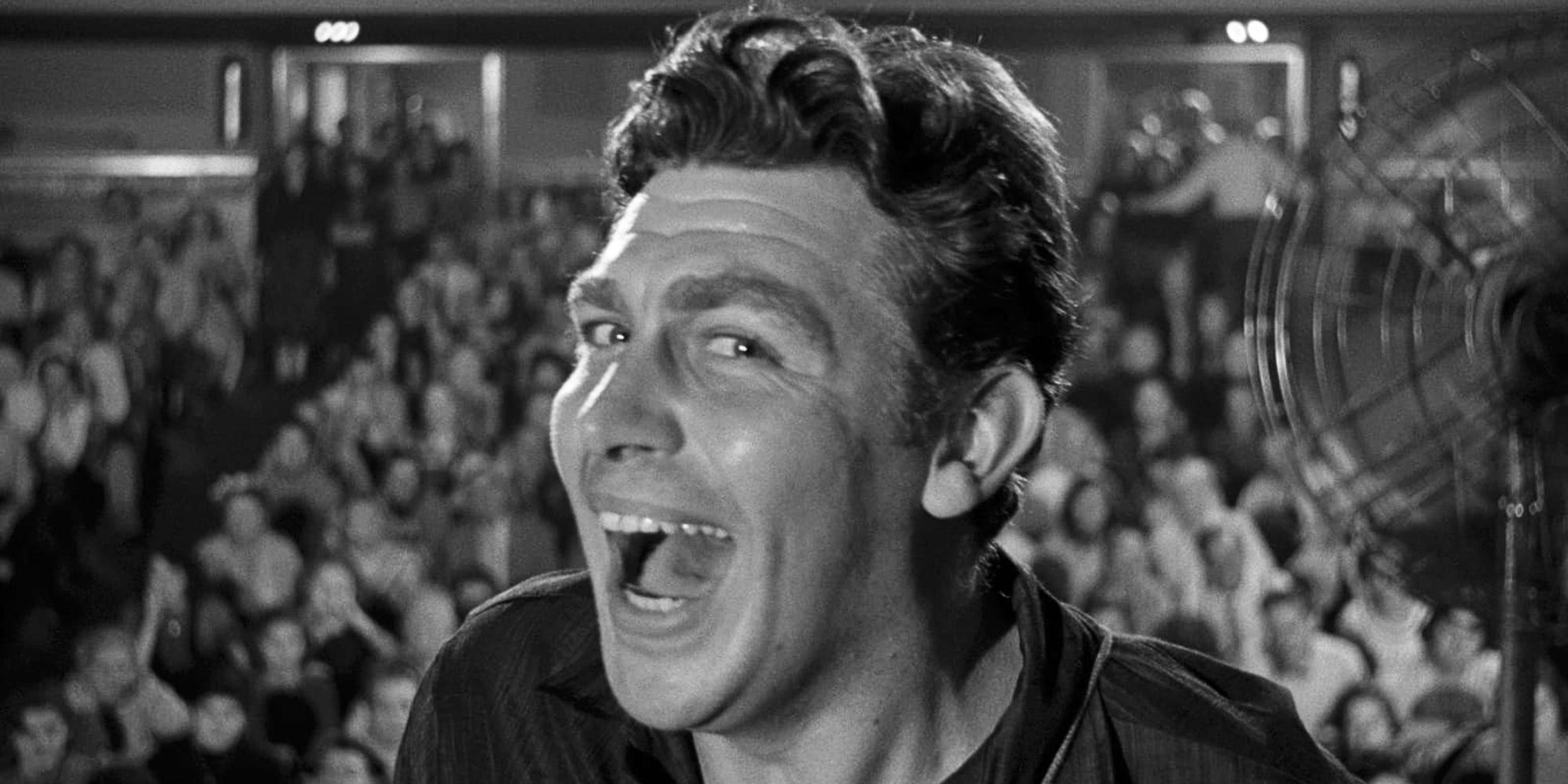
Elia Kazan's A Face in the Crowd is an adaptation of the short story Your Arkansas Traveler written by Budd Schulberg, who also adapted it for the silver screen. In his feature film debut, Andy Griffith made his feature film debut as Larry "Lonesome" Rhodes, a drifter discovered by a radio producer (Patricia Neal) in Arkansas who eventually rises to national stardom. A Face in the Crowd centers around the familiar farce of how fame and notoriety can impact those who are in the public eye, but Kazan's forgotten classic presents an alluring portrait of raw authenticity and depth that ultimately sets it apart from other movies of its time.
Before starring in one of the greatest shows of the 1960s, Griffith delivered a genuinely frightening performance in A Face in the Crowd, gradually curdling his character's genuine warmth into utter contempt for the audiences who made him famous. The film was ahead of its time, which is most likely why it flopped at the box office and received mixed reviews, but its depiction of a charismatic outsider who weaponizes his folksy charm, packaged by advertisers and handlers, has proven to be uncomfortably durable over time. Another standout quality of the movie is its central question about whether the public made a monster just as much as the monster made himself, which is a timeless theme that continues to resonate with audiences.
Collider Exclusive · Oscar Best Picture Quiz
Which Oscar Best Picture
Is Your Perfect Movie?
Parasite · Everything Everywhere · Oppenheimer · Birdman · No Country
Five Oscar Best Picture winners. Five completely different visions of what cinema can be — and what it can do to you. One of them is the film that was made for the way your mind works. Ten questions will figure out which one.
🪜Parasite
🌀Everything Everywhere
☢️Oppenheimer
🐦Birdman
🪙No Country for Old Men
01
What kind of film experience do you actually want? The best movies don't just entertain — they leave something behind.
02
Which idea grabs you most in a film? Great films are driven by a central obsession. What's yours?
03
How do you like your story told? Form is content. The way a story is shaped changes what it means.
04
What makes a truly great antagonist? The opposition defines the protagonist. What kind of opposition fascinates you?
05
What do you want from a film's ending? The final note is the one that lingers. What do you want it to sound like?
06
Which setting pulls you in most? Where a film takes place shapes everything — mood, stakes, what's even possible.
07
What cinematic craft impresses you most? Every great film has a signature — a technical or artistic element that makes it unmistakable.
08
What kind of main character do you root for? The protagonist is the lens. Who you choose to follow says something about you.
09
How do you feel about a film that takes its time? Pace is a choice. Some films sprint; others let tension accumulate slowly, deliberately.
10
What do you want to feel walking out of the cinema? The best films leave a mark. What kind of mark do you want?
The Academy Has Decided Your Perfect Film Is…
Your answers have pointed to one Oscar Best Picture winner above all others. This is the film that was made for the way your mind works.
Parasite
You are drawn to films that operate on multiple levels simultaneously — that begin in one genre and quietly, brilliantly migrate into another. Bong Joon-ho's Parasite is a film about class, desire, and the architecture of inequality that manages to be darkly funny, deeply suspenseful, and genuinely shocking across a single extraordinary running time. Your instinct is for cinema that hides its true intentions until the moment it's ready to reveal them. Parasite is exactly that — a film that rewards close attention and punishes assumptions, right up to its devastating final image.
Everything Everywhere All at Once
You want it all — and this film gives you all of it. The Daniels' Everything Everywhere All at Once is one of the most maximalist films ever made: action comedy, multiverse sci-fi, family drama, existential crisis, and a genuinely earned emotional core that sneaks up on you amid the chaos. You are someone who responds to ambition, who doesn't want cinema to choose between being entertaining and being meaningful. This film refuses that choice entirely. It is overwhelming by design, and its overwhelming nature is precisely the point — because the feeling of being crushed by infinite possibility is exactly what it's about.
Oppenheimer
You are drawn to cinema on a grand scale — films that understand history not as a backdrop but as a force, and that place their characters inside that force and watch what happens. Christopher Nolan's Oppenheimer is a film about the terrifying gap between what we can do and what we should do, told with the full weight of one of the most consequential moments in human history behind it. You want your films to feel important without feeling self-important — to earn their ambition through sheer craft and the gravity of their subject. Oppenheimer does exactly that. It is enormous, complicated, and refuses easy comfort.
Birdman
You are drawn to films that foreground their own construction — that make the how of the filmmaking part of the what it's about. Alejandro González Iñárritu's Birdman, shot to appear as a single continuous take, is cinema examining itself through the cracked mirror of a fading actor's ego. You respond to formal daring, to the feeling that a film is doing something that probably shouldn't be possible. Michael Keaton's performance and Emmanuel Lubezki's restless camera create something genuinely unlike anything else — a film that is simultaneously about creativity, relevance, self-destruction, and the impossibility of ever truly knowing if your work means anything at all.
No Country for Old Men
You are drawn to cinema that trusts silence, that refuses to explain itself, and that treats dread as a form of meaning. The Coen Brothers' No Country for Old Men is a film about the arrival of a new kind of evil — implacable, arbitrary, and utterly indifferent to the moral frameworks we use to make sense of the world. It is one of the most formally controlled films ever made, and its controlled restraint is what makes it so terrifying. You want your films to haunt you, not comfort you. You are not interested in resolution if resolution would be dishonest. No Country for Old Men is honest in a way that most cinema never dares to be.
3 'The Whole Town's Talking' (1935)

Academy Award-winning director John Ford is widely known for his iconic Westerns, which is most likely why his forgotten 1935 crime comedy, The Whole Town's Talking, typically flies under most film fans' radar. Based on W.R. Burnett's short story Jail Breaker, Edward G. Robinson stars in a dual role as a quiet advertising clerk, Arthur Ferguson Jones, who bears a striking resemblance to an escaped convict and ruthless gangster, "Killer" Mannion (Robinson). The film also stars Jean Arthur as Jones' quick-witted co-worker and love interest, Wilhelmina Clark, whose chemistry with Robinson is what ultimately gives the screwball side of the story real warmth.
The Whole Town's Talking essentially works because it plays both genres sincerely, never winking too hard at either. Jo Swerling and Robert Riskin's screenplay moves at a rapid pace and brilliantly balances slapstick comedy with real menace, appealing to anyone who is a fan of both screwball comedies and classic crime movies. The split-screen effect to convey Robinson in both roles, which was achieved without digital tools, still looks smooth and crisp decades later. This forgotten classic is also a reminder of how versatile Robinson was before he was locked into being typecast as a gangster, ultimately solidifying The Whole Town's Talking as a cherished contribution to classic cinema.
2 'Seconds' (1966)

John Frankenheimer's forgotten sci-fi horror thriller, Seconds, was booed at the Cannes Film Festival and ignored by audiences, but over the years, it has since become a cult classic and is recognized as a masterpiece of the science-fiction genre. The movie tells the story of Arthur Hamilton (John Randolph), a bored banker who undergoes a secret procedure to create a new life for himself. After faking his death, Hamilton undergoes facial reconstruction surgery and is given a new life as an artist in Malibu, Tony Wilson (Rock Hudson), but as he adjusts to his new life, he soon realizes that adjusting isn't going to be the most challenging obstacle he must overcome.
Hudson gives perhaps his finest dramatic performance, conveying a haunted and hollow man who has reached a devastating point of no return. Cinematographer James Wong Howe uses distorted wide-angle lenses and handheld shots that make every frame feel claustrophobic, while Jerry Goldsmith's organ-heavy musical score provides an undeniable sense of dread. Seconds has aged well because its anxieties about midlife regret, curated selves, and the promise of reinvention are more relevant now than they were in the 1960s. It's bleak, uncompromising, and visually daring, and the final act is still among the most disturbing moments in American cinema, rightfully earning its place on this exclusive list.
1 'The Lineup' (1958)

Don Siegel's The Lineup is a lean noir crime picture based on the 1950 radio series of the same name and is regarded as one of the last great entries in the classical era of the genre. Eli Wallach stars as an unnervingly polite hitman, Dancer, who, along with his mentor, Julian (Robert Keith), is tasked with retrieving a shipment of heroin that has been smuggled into the United States in souvenirs by unsuspecting travelers. When Dancer discovers that a tourist unknowingly disposed of the drugs, he finds himself in a tight bind that he can't get out of, at least alive.
Wallach undeniably steals the show in The Lineup as the courteous but intense hitman who talks about his work with a bureaucrat's calmness that is more chilling than any snarl or stare. Siegel shoots the city's streets, piers, and landmarks with documentary clarity, and the climactic chase on an unfinished freeway ramp is a standout set piece that now doubles as a time capsule. Stirling Silliphant's script keeps things tight, and the violence feels sudden and real. The Lineup is a forgotten classic that has aged surprisingly well because it never gets tied down by explanation. It trusts audiences to follow the procedure and then lets the characters' amorality speak for themselves, and is essentially a precursor to Siegel's iconic film Dirty Harry.

The Lineup
- Release Date
- June 11, 1958
- Runtime
- 87 minutes
- Director
- Don Siegel
- Writers
- Stirling Silliphant
KioskNews shows a cleaned-up reading view extracted from the publisher’s page — the original always lives on their site, not ours.