THE INTERVIEW : Ex-Tshwane mayor Cilliers Brink seeks second chance to ‘finish what we started’
/file/attachments/orphans/Election2026LogoInarticle_260133.jpg "LGE-2026-logo-signpost")
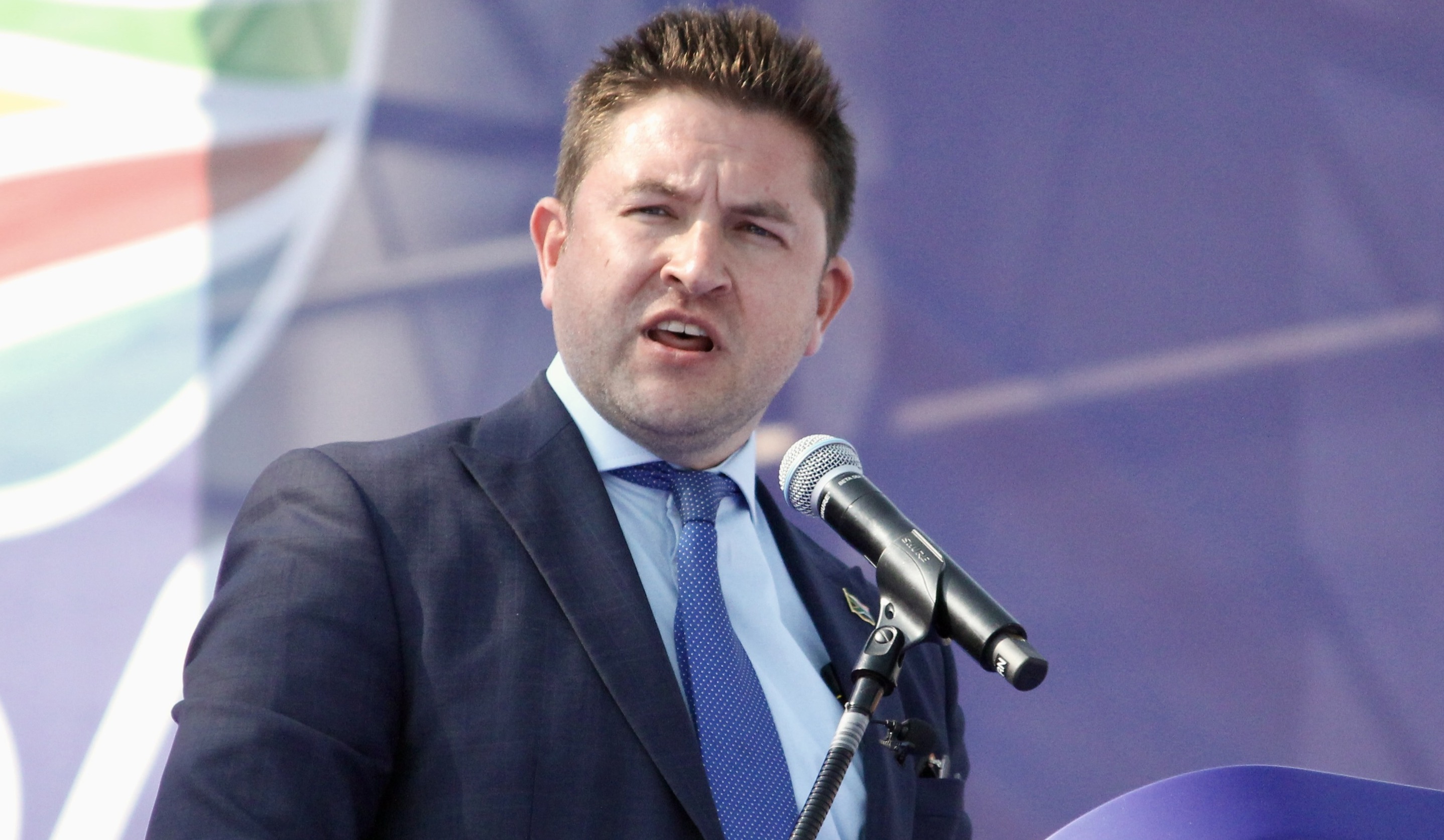
This week, the Democratic Alliance (DA) launched its “Working For All” tour in Tshwane, with former mayor Cilliers Brink returning as its mayoral candidate for the 4 November local government elections. The party has framed his candidacy as a comeback, with Brink promising to “finish what we started” if given “five years and 50%” – an outright majority to govern.
His three pledges focus on corruption, crime and service delivery by:
Firing corrupt officials and tenderpreneurs, and creating an “anti-corruption hit squad”;
Expanding crime-fighting technology including CCTV, drones and control rooms; and
Bringing greater private-sector involvement into water, electricity, roads and public lighting through public-private partnerships and private management.
Private sector solution
The DA is proposing greater private-sector involvement in municipal infrastructure and assets, including through public-private partnerships (PPPs) and private management contracts.
“Government continues to own everything, or most things. In terms of water, electricity, waste collection, the government owns the assets. It sets the tariffs, the price you pay for the service, and it determines the policy and the performance,” Brink told Daily Maverick.
“Private partnerships have to happen within that political framework.”
/file/attachments/orphans/ED_595296_924654.jpg "DA Tshwane Mayoral Candidate, Ald Cilliers Brink at the media on the rapidly escalating water crisis in Gauteng at Nkululeko House on February 11, 2026 in Johannesburg, South Africa. The Democratic Alliance (DA) also outlined steps the party is taking to pursue accountability. (Photo: Gallo Images / Sharon Seretlo)")
He said some services could instead be managed by private companies on a performance basis, pointing to water losses as an example.
“There will be projects that we do as formal PPPs. But I think in many instances you can fix things really quickly by appointing private management agents,” he said.
Brink argued that performance-based contracts could also reduce opportunities for corruption in municipal procurement.
“Rather spend your time appointing a good, credible management agent that you then compensate based on their performance… The municipality remains in charge of the policy and the price.”
His proposals include bringing private investment and expertise into municipal assets such as Wonderboom Airport, the fresh produce market and Bon Accord Quarry, as well as using private-sector partnerships to improve water, electricity, roads and public lighting.
He rejects the argument that greater private-sector involvement would come at the expense of poorer residents.
“South Africans pay tax twice... You pay your rates and taxes, and then you still have to get a generator when the power goes off. If we already depend on the private sector to improve our lives, why can’t we do that through government?”
‘Anti-corruption hit squad’
Against a backdrop of widespread organised crime and corruption, and allegations at the Madlanga Commission of political interference and criminal networks, Brink pledged to establish an “anti-corruption hit squad” reporting directly to the mayor and city manager.
The DA has claimed that Tshwane’s finances deteriorated from a surplus of more than R200-million to a deficit exceeding R4-billion over the past decade.
Brink separately cited an R857-million effective deficit at the end of the 2024/25 financial year, which he said occurred after the removal of the DA-led coalition.
The current administration, meanwhile, has defended its financial state, having collected R40.5-billion in 2024/25, or 98% of its revenue target.
The Special Investigating Unit (SIU) is probing tanker-related contracts in the City tied to a disputed figure of about R777-million for the 2024/25 financial year.
Brink has repeatedly attacked what he calls a “water tanker mafia” in Tshwane. The City’s deputy mayor, Eugene Modise, has been implicated, but has denied the allegations.
Tshwane’s procurement processes have also featured prominently in the Madlanga Commission, where testimony has pointed to political interference and potential corruption in security tenders valued at up to R2.9-billion.
/file/dailymaverick/wp-content/uploads/2025/09/ED_569308.jpg "Nonku-CilliersBrink")
Addressing inequalities
The City has faced longstanding infrastructure and service-delivery problems across successive administrations, including potholes, poor streetlighting, power and water outages, and the ongoing Hammanskraal water crisis.
Brink says his administration helped devise the clean-water solution with the national government after the 2023 cholera crisis. The project has continued under subsequent administrations through a partnership between Tshwane, the Department of Water and Sanitation and Magalies Water, with documented delays and technical problems.
The DA has made good governance and financial management central to its pitch, pointing to its record in municipalities. The party says more than 60% of DA-run municipalities have achieved clean audits, compared with roughly 5% of ANC-run municipalities.
“You will not hear my name spoken at the Madlanga Commission. You won’t see messages from a CFO saying, ‘I did this for the DA,’” said Brink.
But the DA’s emphasis on governance has also been accompanied by criticism that its approach does not adequately address the inequalities created by apartheid. Brink argued that meaningful transformation depends on the government having the capacity to invest in infrastructure and development.
“It is very important that we acknowledge those spatial legacies... It’s not that the capital budget is not spent in areas that require development – it always has been, whether DA or any of these other chaotic coalitions... [The budget] is so pitifully small.”
He rejected the idea that good governance and redressing historical inequality are competing agendas.
“There’s this idea that there are two agendas – one is to erase the legacy of apartheid, and the other is to maintain the status quo. That is not true. Unless we improve governance, grow the capital budget, invest in infrastructure – everything will deteriorate.”
Coalition instability
Tshwane has had four mayors since 2023, reflecting the coalition instability against which Brink is campaigning.
ActionSA’s Nasiphi Moya is the current mayor, heading an administration supported by the ANC and EFF. Moya previously served as Brink’s deputy mayor before ActionSA withdrew from the DA-led coalition in 2024, helping bring down his administration.
/file/dailymaverick/wp-content/uploads/2024/01/ED_445577.jpg "Nonku-ActionSA")
Brink has branded the current arrangement the “Doomsday Pact”, arguing that ActionSA governs the metro as a proxy for ANC and EFF interests.
“It’s as if the people who actually use the service don’t matter. It’s all about who’s going to be empowered by this project. And that bullshit has to be shattered,” Brink told Daily Maverick.
The DA is now seeking to regain control of the metro, pointing to its record during Brink’s tenure. Its claimed achievements include progress on the Hammanskraal clean-water intervention, the completion of the 1,200-unit Townlands social-housing development in Marabastad, and plans approved to lease the dormant Rooiwal and Pretoria West power stations to independent power producers.
Recent polling suggests the DA enters the election with a strong lead. The Social Research Foundation’s poll puts the party at 43% in Tshwane, about 11 percentage points above its 2021 result, with no other party polling above the survey’s 4.4% margin of error.
Despite a shifting political landscape, the ANC remains historically significant in Tshwane, having captured 34% of the vote in the 2021 municipal election compared to the DA’s 32%.
“It’s incredibly difficult to see how we will have the ANC at the decision-making table when many of the things that are going wrong in the municipality are as a result of entrenched ANC networks of cadres and tenderpreneurs,” said Brink.
“I can’t tell you one person of integrity in the ANC in Tshwane that I can talk to and say, ‘This is a leader whose word I can trust.’”
Brink, however, was reluctant to read too much into the figures or discuss potential coalition partners.
“This coalition talk does not inspire people. There’s no party on the ballot paper called ‘Coalition’,” said Brink.
The possibility of another coalition government is nevertheless significant, particularly as smaller parties gain ground. Brink resisted treating the current polling as a forecast of the election result.
“It’s very dangerous to look at these polls and say this is going to be the election result. Polls aren’t elections. You don’t count your coalition chickens before your election eggs have hatched,” he said.
He did, however, mention ActionSA, ruling out a return to the arrangement that brought Moya to power under its current leadership.
“I don’t think ActionSA can be a reliable coalition partner while [Herman] Mashaba is the leader,” said Brink. “He has to hand over to an elected leadership.” DM
KioskNews shows a cleaned-up reading view extracted from the publisher’s page — the original always lives on their site, not ours.