It’s time for action to catch up with data — Chandra Mohan Sinnandavar
OCTOBER 15 — Over the years, I have spent enough money replacing mobile phones that, looking back, I could probably have saved enough for the down payment on a car. Each new phone came with better technology, more sophisticated features and the brief excitement of owning something new.
Somehow, I hardly use half of these features and probably never will. Each new phone promises to make my life easier, although I suspect I still use it much as I did ten years ago. Manufacturers keep adding features, while my ability to appreciate them remains remarkably unchanged. Unfortunately, this fascination with new technology appears to have found its way into public policymaking. Announcing something technologically sophisticated certainly sounds impressive. Whether it actually solves the problem sometimes seems to be a question for another day.
Budget 2027 came with its fair share of welcome announcements. But as with shopping, not everything that looks attractive at first glance necessarily represents good value for money. Some initiatives may eventually become costly distractions, imposing additional obligations on businesses without delivering the improvements that justified them.
The recently announced requirement for commercial vehicles to install telematics systems is one such concern. The government announced that telematics would be made mandatory to monitor vehicle speed, location and risky driving behaviour, including integration with alcohol detection devices. It sounds impressive and reassuring, particularly when road safety remains a serious public concern.
My concern is particularly with the trucking industry, where operators have been using GPS monitoring systems for years. Modern systems, especially those equipped with additional sensors and monitoring features, can already capture vehicle speed, location, harsh braking, rapid acceleration and other potentially unsafe driving patterns. This information provides a valuable foundation for identifying and addressing many driver safety risks. Yet, where is the evidence demonstrating how effectively this information has been utilised? How many speeding alerts have resulted in corrective action? How many repeat offenders have been identified and dealt with? More importantly, what improvements in driving behaviour have been achieved?
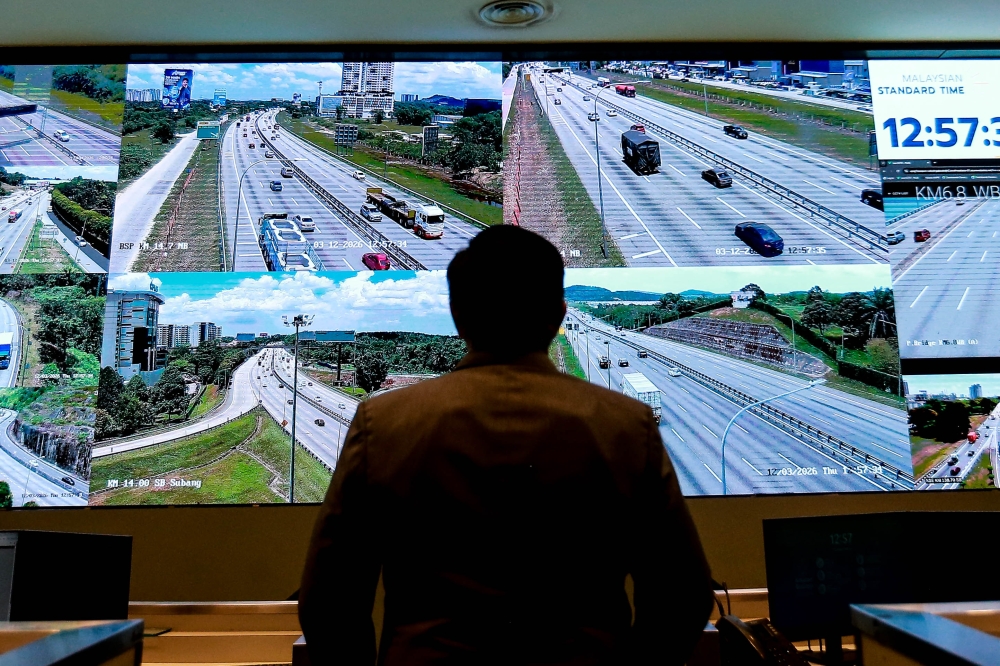
The author argues that road safety will not improve simply by mandating more sophisticated technology unless authorities first use existing data effectively to identify and correct unsafe driving. — Picture by Sayuti Zainudin
Advanced telematics certainly offers additional capabilities, particularly in detecting driver fatigue and distraction. But if we have yet to demonstrate that we can effectively analyse and act upon relatively straightforward GPS data, how prepared are we to manage larger volumes of more sophisticated information?
Some may argue that road safety is too important to question additional government intervention. I would argue that this is precisely why we must ensure that every intervention produces meaningful results.
Before recommending more sophisticated systems, perhaps MOT could first show us what has been achieved with the existing ones. After all, the GPS devices have been doing their job collecting information. Perhaps it is time we demonstrated what we have achieved with that information.
It would come as no surprise to me if, one fine day, after truck operators have invested in sophisticated telematics systems, we are told that even this advanced technology has failed to deliver the expected improvements in road safety. I consider this a likely outcome if we continue to neglect the need for proactive intervention to correct unsafe driving behaviour. By then, the equipment will have been installed, the bills paid, and perhaps another technological solution will be waiting to be introduced. For truck operators already facing rising costs, this is hardly an exciting prospect. The technology keeps advancing, the bills keep arriving, but the problem may remain much the same.
Road safety is not simply about the majority of truck operators and drivers who already comply with safety requirements. The real challenge is identifying those who fail to comply and ensuring that corrective action is taken. The ministry should first establish whether the required GPS systems are actually installed, functioning and being properly monitored. If we are still struggling to ensure compliance with these basic requirements, what makes us believe that introducing telematics will be any different? We may simply end up with more sophisticated equipment and the same old enforcement problems.
The priority should be to identify and act against non-compliant operators and unsafe drivers, rather than imposing additional equipment costs on those who are already complying. After all, installing more gadgets in compliant trucks will not automatically make non-compliant operators any safer. Once we can demonstrate that existing GPS data is being proactively analysed, unsafe driving behaviour corrected and measurable safety improvements achieved, we will be better positioned to determine what additional technology is necessary.
After all, buying a more sophisticated phone does not automatically make its owner any smarter. The same principle applies to managing road safety.
Our problem is not a shortage of data, but a failure to translate available data into preventive action.
* This is the personal opinion of the writer or publication and does not necessarily represent the views of Malay Mail.
KioskNews shows a cleaned-up reading view extracted from the publisher’s page — the original always lives on their site, not ours.