2.6 Seconds: Death in the Outback review – this docuseries about an Australian tragedy is shockingly intense
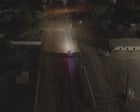
The first half of the title of Darren Dale’s four-part documentary series, 2.6 Seconds: Death in the Outback, refers to the gap between the first and second of three shots that the police officer Zachary Rolfe fired at 19-year-old Kumanjayi Walker, fatally wounding him, in the remote Northern Territory community of Yuendumu in 2019. Three years later, after a five-week trial, Rolfe was found not guilty of murder and cleared of two other charges. Three years after that, Rolfe was found to be racist by a coroner, who couldn’t rule out that his attitude played a role in Walker’s death.
This case became, in the words of the journalist and author Kate Wild in Dale’s documentary, “emblematic of the rest of the country and of Australian history”. Those 2.6 seconds arguably crystallised two centuries of pain for Indigenous Australians and spoke to the ongoing, unrelenting tragedy of Indigenous deaths in custody, as well as the broader, global history of police killing black civilians.
Dale’s approach doesn’t simplify the narrative, or narratives, around the event, nor squeeze things into simple cut-through messages. After watching all four information-packed episodes, my mind was swirling. And it felt as though the director, despite making this engaging and often deeply alarming series, was still getting his head around what happened, too. This is unquestionably a work of journalistic rigour but it sometimes struggles to turn its wealth of information into clear through-lines or conclusions.
One overarching argument made in 2.6 Seconds is that systems failed Walker and Rolfe, in different ways and for very different reasons. Both men came from very distinct circumstances. Walker had cognitive and health problems, with one interviewee estimating that his emotional age was between six and nine. He had a difficult childhood, escaped from youth detention several times and threatened police officers with an axe during a failed attempt to arrest five months before his death.
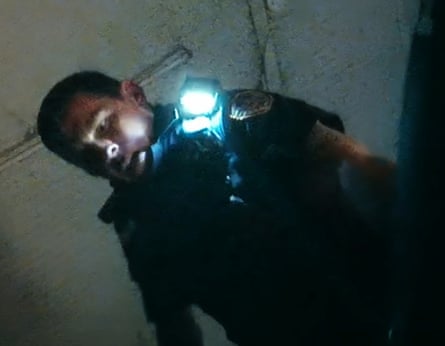
Rolfe’s life story involves a stint in the army – during which he was deployed to Afghanistan – before undertaking advanced weapons training with a private company in the US, and applying to various Australian police forces. He was ultimately hired by NT police to work in Alice Springs, the nearest major town to Yuendumu 300km away.
Nino Bucci, a Guardian Australia journalist interviewed in the documentary, says Walker’s death was avoidable. “Zach Rolfe shouldn’t have even been a copper,” he says, and, “Kumanjayi Walker shouldn’t have even been out of custody.”
2.6 Seconds makes the case that Rolfe may have felt drawn to the chaotic aspects of life in Alice Springs, which is painted as something of a wild west by several interviewees, many of them police. The NT police commissioner, Martin Dole, describes policing there as “extremely challenging”. A police commander, James Gray-Spence, describes a “wave of crime” that was “unprecedented” in the town. Carey Joy, a former senior constable who worked in Alice Springs, says of new recruits: “What they will see in their first week on the street is nothing that college can prepare them for.”
Those three quotes arrive in quick succession, one comment beginning barely after the previous one has ended, which is indicative of Dale’s overall approach. The sheer detail in the series is a virtue and a vice. It covers an extraordinary number of deeply troubling factors in this tragic story – cycles of poverty and oppression, intergenerational trauma and institutional racism, to name just a few – each of which could warrant a documentary in its own right. There’s often barely a pause between one talking head, speaking to an idea that deserves considerable thought, and the next, which can make the material feel a little crammed.
But most of the second episode, which primarily deals with Walker’s death and the immediate fallout, is different. Whereas the first feels a little scrambled, this one is well arranged and shockingly intense, focusing on a window of time and unpacking it in hair-raising detail. After this, however, the show gets a bit tangled again in episodes three and four. There is just so much information, so many different avenues of investigation, and so many voices.
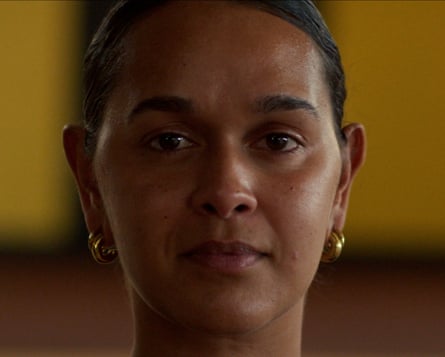
There are lots of interviewees to keep track of. The most prominent include the always interesting and well-spoken barrister Andrew Boe (also credited as the series writer) and Samara Nangala Fernandez Brown, one of Walker’s cousins. The latter is a particularly inspiring presence, rising to the challenge of pursuing justice for her cousin, and doing so with such dignity and determination. Brown would be well aware – and viewers will be too, after watching this series – that the systems that made those 2.6 seconds possible are difficult to reckon with.
-
2.6 Seconds: Death in the Outback airs on SBS and NITV on Tuesdays and Wednesdays at 8.30pm and is available to stream on SBS On Demand now in Australia. It will stream on Netflix around the world in 2027
-
Indigenous Australians can call 13YARN on 13 92 76 for information and crisis support; or call Lifeline on 13 11 14, Mensline on 1300 789 978 or Beyond Blue on 1300 22 4636
KioskNews shows a cleaned-up reading view extracted from the publisher’s page — the original always lives on their site, not ours.