Tai Po fire survivors battle grief, fear and trauma as first anniversary nears
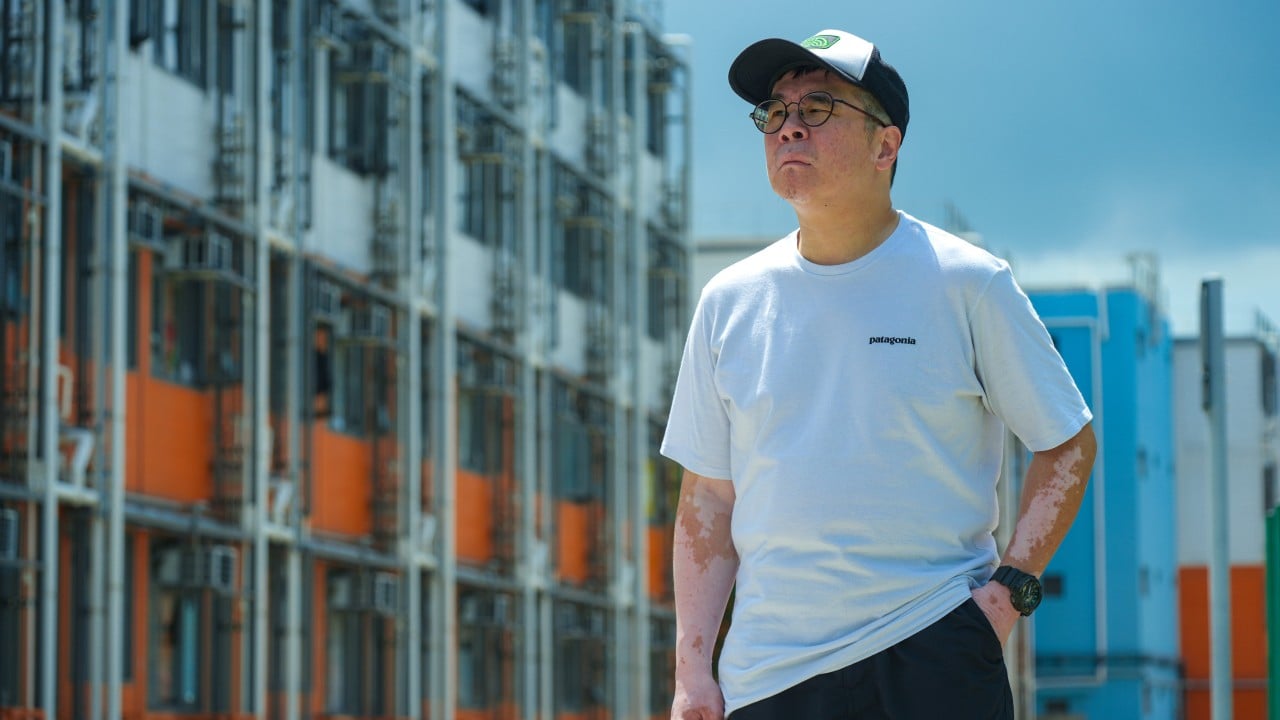
A year after the deadly Wang Fuk Court blaze in Hong Kong, Hilary Lau has developed certain habits born out of the tragedy.
The 49-year-old who lost both his parents can fall asleep only under a fire-resistant blanket and keeps extra fire extinguishers at his flat in Kong Ha Wai Village, a transitional housing project in Yuen Long. His fear of fire has even made him reluctant to eat hotpot – a reaction he cannot fully explain.
Although Lau was not at home when the fire broke out, losing his parents and the image of flames destroying his home have left him permanently scarred. He has not returned to Wang Fuk Court or watched the news since that day.
“When I see fire engines or police cars on the street, I burst into tears for no reason. Sometimes I try to avoid them,” Lau said.
“I have also had nightmares almost non-stop over the past year.
“Many times, I dream of the photos of the victims, as I went to look at photographs of the bodies [to identify my parents] almost every day after the fire.”
For many residents, the emotional toll of the tragedy lingers in sleepless nights, in the sudden panic triggered by a passing fire engine and in the empty chairs at family dinner tables.
Some survivors have returned to work, rebuilt routines and slowly regained a sense of control over their lives, while others are still learning to live with grief, fear and trauma.
25:28
The day their lives changed forever: residents of Wang Fuk Court recount the deadly fire
The city’s deadliest inferno in decades broke out at the Tai Po housing estate in the afternoon of November 26, killing 168 people and displacing nearly 5,000 residents.
The Advisory Committee on Mental Health has said that more than 3,000 victims of the fire had received mental health support from the authorities, with some having fewer symptoms of post-traumatic stress disorder after intervention.
The government is studying whether existing community networks could continue to offer mental health support to people affected by the fire.
Secretary for Labour and Welfare Chris Sun Yuk-han said on Sunday that the “one social worker per household” scheme would remain in place even as residents settled into permanent homes, pledging trauma and mental health support for bereaved and seriously injured families would last “years, even decades”.
For some residents, recovery has meant the slow, difficult work of building a new life around what remains.
Lau said he did not go to work for about four months. He remained at home, crying and struggling to cope with his emotions.
He continues to see psychologists and social workers regularly.
Medication and a return to work have helped improve his mental state.
Now working in the catering industry, Lau said the job gave him a sense of purpose and routine, as well as the company of colleagues.
Lau said he also valued the support of friends who checked in with him daily, met him regularly, shared his grief and offered comfort.
“They may not be professionals and may not know what to do, but at least they are willing to listen when I need someone to talk to,” he said.
Experts said some residents had made progress over the past year, but stressed that recovery was rarely a linear journey.
Bess Lam Yin-hung, an associate professor at the department of counselling and psychology at Hong Kong Shue Yan University, said typical emotional responses among survivors of major disasters at the one-year mark included flashbacks, nightmares and heightened anxiety triggered by reminders such as the sound of sirens.
Some might also experience anger and guilt, or feel unable to return to the site of the tragedy, she said.
Lam said different losses – of loved ones, homes, possessions and routines – would shape recovery in different ways, and there could be ups and downs.
“It’s truly a shared trauma for our community, so the impact and recovery could take years.”
The charity Mind HK opened an office in Tai Po after the fire to offer mental health support to affected residents. It has served more than 700 people, most of whom previously lived in Wang Fuk Court.
Clinical psychologist William Lam Wing-chung, a clinical adviser to the charity’s Tai Po Mental Health Support Project, said about 5 per cent of them showed symptoms of post-traumatic stress disorder that persisted.
They were prone to overreacting, easily startled by sudden noises, less flexible and overwhelmed by a deep sense of helplessness about themselves and the world, accompanied by intense negative emotions, he said.
Some severely affected residents stayed at home for long periods, unable to function, and experienced suicidal thoughts, he said. Among them were people who had lost family members, escaped the fire or had previous traumatic experiences.
“Once they gradually settled into their new places, they started experiencing a lot of unprocessed emotions – whether it was grief, anger or a sense of helplessness and worry about the future,” he said.
Lam noted that some residents had also shown resilience by trying hard to accept what had happened, adapt and find their own way forward.
For Tse Chi-keung, 47, helping others who had lost their homes, as he had, became a way to begin healing the pain.
Having grown up in Tai Po, the former Wang Fuk Court resident had lived in the estate for six years with his wife and son, 11, before the blaze destroyed their home.
Even as grief for the home he lost weighed heavily on him, Tse pulled himself together and began rallying resources for fellow residents earlier this year.
With donations from an organisation, he set up a temporary relief point in Tai Po, distributing clothes, meals and supermarket coupons to displaced residents.
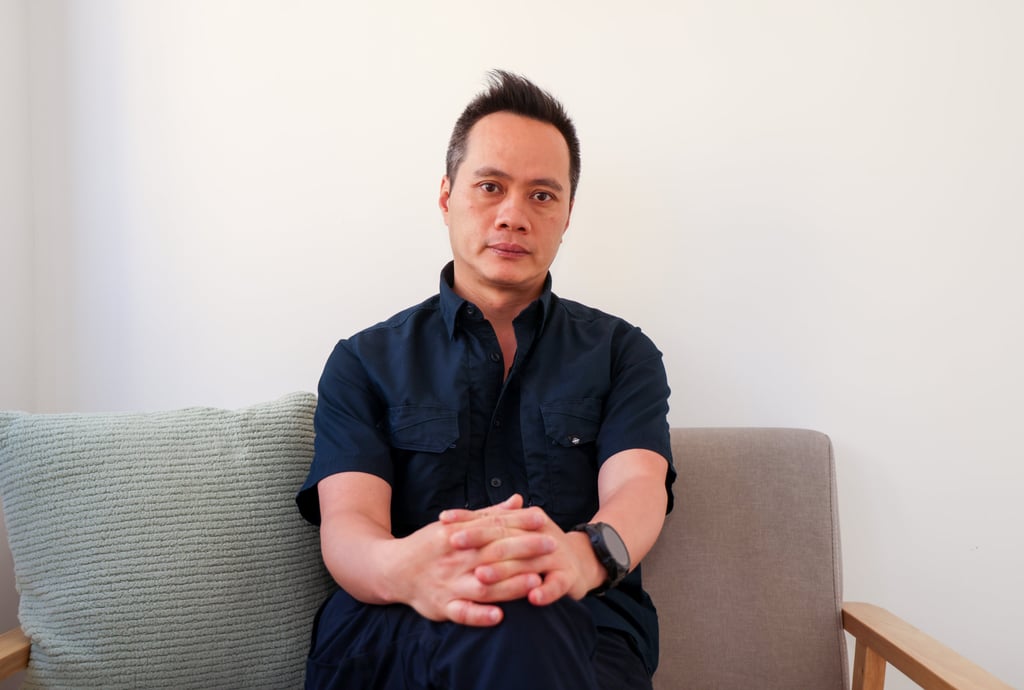
Tse also helped connect them with counselling services and he has remained in touch with affected residents and continues to organise activities.
“Helping others is also helping myself, as I walk alongside them through this tragedy.”
Clinical psychologist William Lam called for more sustained support for affected residents in need.
He pointed to a four-layer model widely used internationally to support people after major disasters.
The first layer ensures basic safety, providing resources to sustain daily living as well as temporary housing. The second helps maintain social and family connections, with follow-up support from volunteers and social workers.
The third layer provides training to help people manage their emotions, while the fourth offers trauma-related treatment.
“Hong Kong lacks long-term, systematic psychological support following disasters,” he said.
To help fill the gap, Mind HK’s project has made regular home visits to affected residents, invited them to join community activities, taught them skills to cope with negative emotions and seek help, and provided services from clinical psychologists and psychiatrists.
Lam of Shue Yan University said only some NGOs were providing such support on their own, and their projects often lasted no more than a year. She called on the government to play a bigger role in providing long-term psychological support.
As the first anniversary of the tragedy approaches, the memories Lau has tried to hold at bay are beginning to resurface.
To ease the pressure, he plans to go to Macau during the week of the anniversary.
“My psychologist suggested that, on major dates, I should not stay in Hong Kong,” he said.
You can also call +852 2896 0000 for The Samaritans or +852 2382 0000 for Suicide Prevention Services. In the US, call or text 988 or chat at 988lifeline.org for the 988 Suicide & Crisis Lifeline. For a list of other nations’ helplines, see this page.
KioskNews shows a cleaned-up reading view extracted from the publisher’s page — the original always lives on their site, not ours.