Has AI solved the Riemann hypothesis? Claim makes waves at 200th birthday event in China
A US-based mathematician has stunned the community by claiming to have solved the nearly 170-year-old Riemann hypothesis using artificial intelligence (AI).
The news broke on Friday as a major conference opened in southern China’s Shenzhen, where world-leading mathematicians have gathered until Monday to mark the 200th anniversary of the birth of Bernhard Riemann – the German pioneer behind one of the field’s greatest unsolved problems.
The claim sent shock waves through the mathematics community, with one attending scholar saying that he was 98 per cent certain the proof was correct.
02:36
Chinese mathematicians Wang Hong and Deng Yu win prestigious Fields Medal
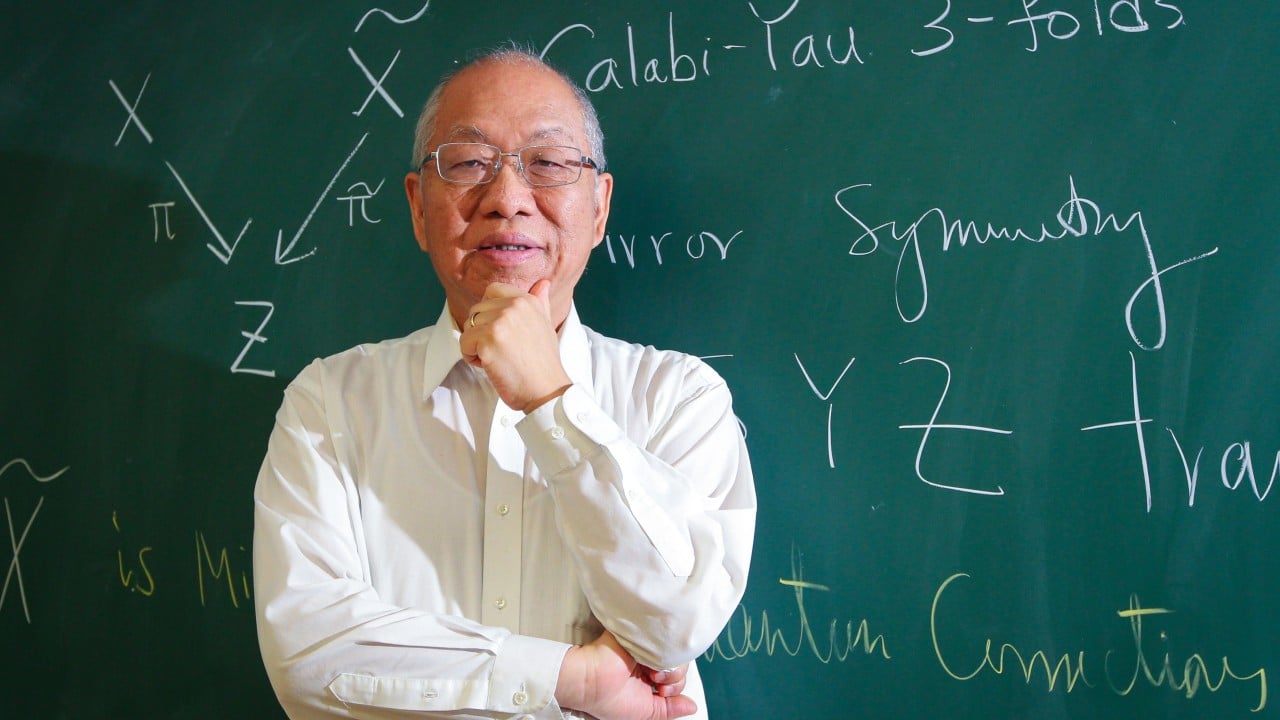
Fields medallist Shing-Tung Yau, director of the Yau Mathematical Sciences Centre at Tsinghua University and chair of the conference’s scientific committee, told The Beijing News that he was at the event when he learned of the feat.
He said the announcement indicated that mathematics “has entered a new era,” the paper reported on Sunday.
Yau said several scholars at the conference had studied the Riemann hypothesis, including speaker and fellow Fields medallist James Maynard.
Maynard, an Oxford University professor who has made important contributions to the hypothesis, told the New York Times soon after the announcement that he believed the AI proof was likely to be correct. “I’d be 98 or 99 per cent certain,” he was quoted as saying.
The proof was unveiled on Friday by Levent Alpoge, a Turkish-American mathematician at Anthropic. He said on his personal website that he had solved the problem using the American company’s AI model, Claude.
Independent mathematicians immediately began running checks on the Lean-based code – generated by Claude over a period of six weeks – with some now confirming its mathematical accuracy.
Despite the early nod from peers, translating the solution’s underlying logic into a human-readable paper – and securing formal recognition – could take some time.
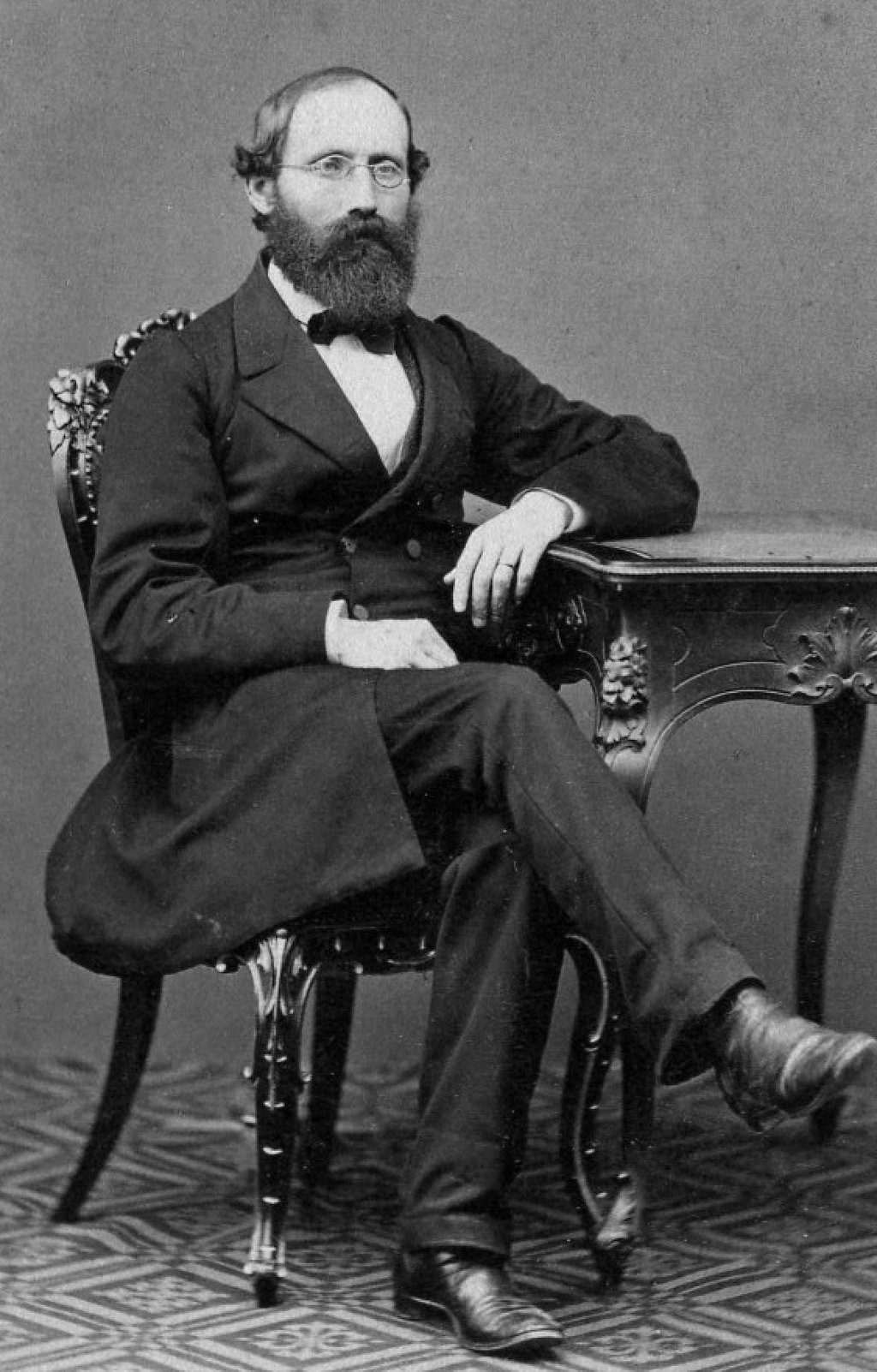
Riemann, born in September 1826, first proposed the hypothesis in 1859. Formally unproven for 167 years, it is widely regarded as one of the most important unsolved problems in mathematics.
The problem is tied to the distribution of prime numbers and forms a cornerstone of modern number theory. Even without formal proof, mathematicians have long assumed the hypothesis to be true, relying on it to derive countless other theorems.
Alpoge did not publish a full readable manuscript, but rather released around 17 million lines of code written in Lean, an open-source programming language and interactive theorem prover.
“It being obviously inappropriate to attempt to post some massive unreadable travesty of ‘slop’, I decided to only present Lean,” Alpoge said in a note posted on Friday alongside the code.
Terence Tao, Fields medallist and mathematician at the University of California, Los Angeles, responded in a blog post the same day.
“I imagine the digestion process will take some time, though in this case at least we have a human author to communicate with to assist with this task,” Tao wrote.
The Riemann hypothesis is one of seven Millennium Prize Problems proposed in 2000 by the Clay Mathematics Institute, with each solution carrying a US$1 million prize. Only one has been officially resolved so far.
Last month, another AI milestone took the mathematics community by storm when OpenAI published hundreds of manuscripts covering a wide range of problems – including others also on the Millennium list.
According to Yau, the use of AI could shift mathematics towards a mode of research more often used in fields like biology, physics and chemistry, where the result or answer is found first and carefully examined afterwards, rather than the step-by-step approach traditionally used by mathematicians.
“As for human intelligence, I think machines still cannot compare,” Yau told The Beijing News, while adding that the problem-solving ability of machines was still stronger than their ability to pose questions.
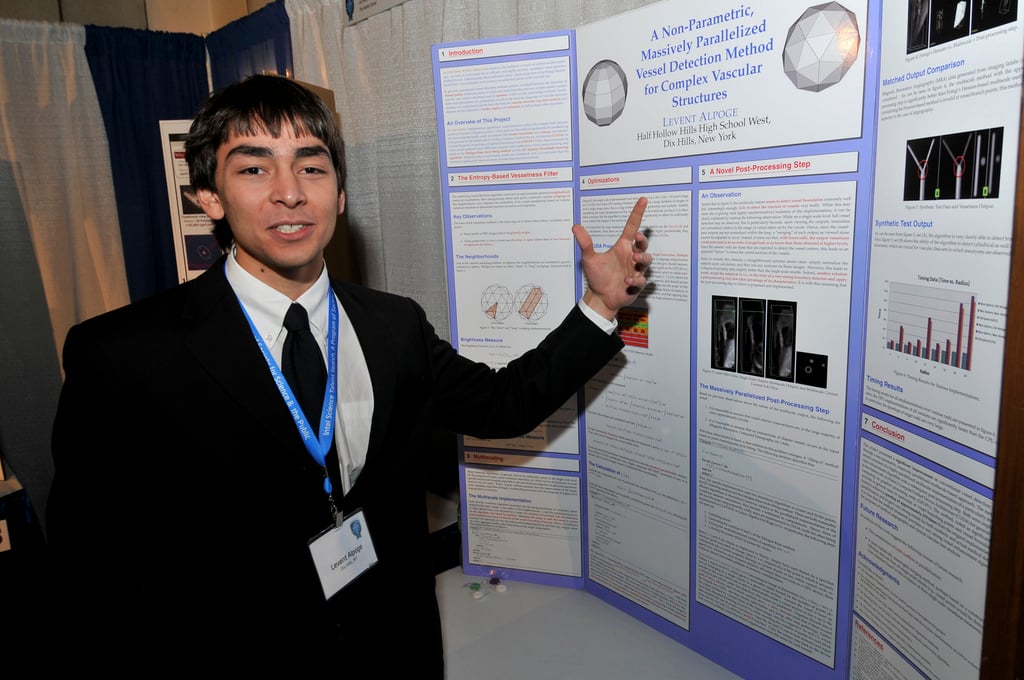
Alpoge echoed the sentiment in his Friday note.
“This puts us in the rather extraordinary situation this age has made possible, in which I am presenting the world with a complete argument before having mastered a massive neighbourhood around its mathematics,” he said.
The timing has triggered speculation, given that the Riemann proof was released right after Anthropic’s initial public offering on the Nasdaq.
Alpoge addressed the issue in his note, describing the timing as “horrible” but maintaining that he would have finished earlier if he could have.
“There is an obvious cynical view, to do with the timing, but it is false, and I am pleased that I am in circumstances where it is obviously false.”
KioskNews shows a cleaned-up reading view extracted from the publisher’s page — the original always lives on their site, not ours.