Lajja Gauri idol to Tagore painting: Yuge Yugeen museum takes shape
The gallery will be the first of seven themed galleries planned across the North and South Blocks, with the larger museum expected to display 1.8 m objects.

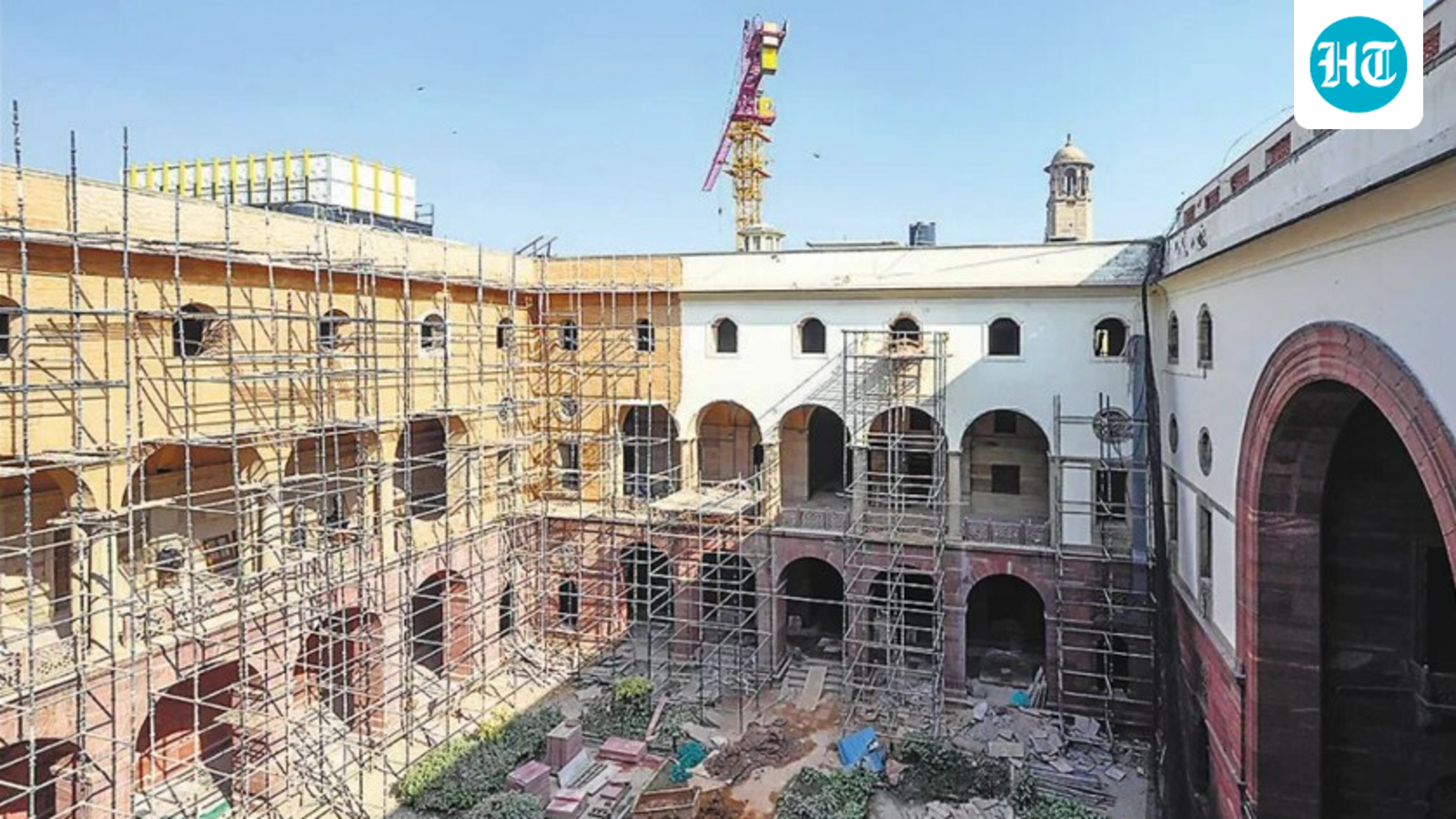
A section of Delhi’s North Block, once home to key government ministries including Home and Finance, will open to the public towards the end of 2027 as part of the government’s Yuge Yugeen Bharat Museum, with its first gallery showcasing up to 1,000 objects tracing India’s traditions of adornment.
The gallery will be the first of seven themed galleries planned across the North and South Blocks, with the larger museum expected to display 1.8 million objects. Other themes include Mathematics and Astronomy, Architecture and Cityscapes, Healing Systems and Medicine, Beliefs and Spirituality, Languages and Scripts, and Bharat Connects -Trade and Ideas.
The exhibits will be sourced from government museums across the country, including the Kolkata-based Indian Museum, the country’s oldest museum. A dedicated team has been appointed to examine collections and select objects for the galleries.
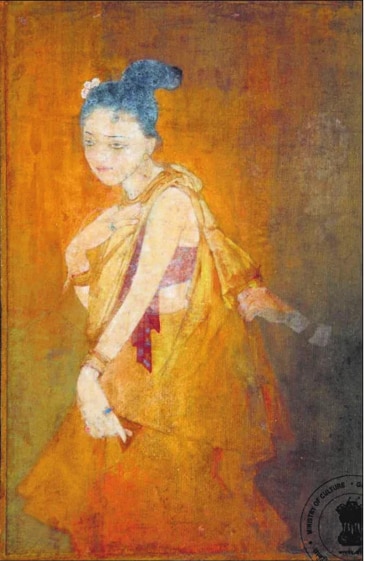
For the Adornment gallery, the Indian Museum has sent rare works, including a Mauryan period stone sculpture of the Earth goddess, called the Lajja Gauri figure, and a 14th century statue of Darpanika (Surasundari) from the Eastern Ganga Dynasty from Puri, Odisha. The Victoria Memorial Hall in Kolkata will send an early 20th century watercolour by Abanindrnath Tagore depicting Vasantasena from Mrichhakatika. A sculpture of the same character from the National Museum collection will also be displayed, as will Saundarya Lahiri, a Sanskrit literary work attributed to Adi Shankaracharya.
The exhibits will include inscriptions, manuscripts, sculptures, paintings and archaeological material, offering what Union culture secretary Vivek Aggarwal described as “hard evidence” of India’s civilisational legacy.
“In the Adornment gallery, we are attempting to show the sophistication of India’s civilisation and the evolution of how we, as a people, presented ourselves, with jewellery, dresses, head gears, tattoos, craft,” Aggarwal said during a walk-through of the section on Wednesday.
The gallery will also explore how adornment and “shringar” evolved through India’s civilisational journey, he said.
The section will include an orientation room and food and beverage facilities, a ministry official said.
Giving North Block a new lease of life
Built between 1912 and 1929 by architect Herbert Baker, along with its twin South Block, North Block was designed as part of the seat of imperial power in British India. Its red sandstone structure, courtyards, corridors and rotunda have since served generations of government officials.
The building is now undergoing extensive restoration and adaptive reuse to accommodate the museum. Wooden window panes have been carefully removed, door frames are being treated for pests and polished, floors are being replaced and walls are receiving lime plaster. Seepage repairs are also under way, while worn out portions of courtyard pillars are being restored using similar red sandstone.
Although the building is not a designated heritage structure, the restoration is being undertaken with minimal intervention, Aggarwal said. Office partitions are being removed and courtyards, corridors and rooms reconfigured for museum use.
“Adaptive reuse means that we have to turn what was once an office into a museum, while preserving the heritage value of the building,” he said.
The conversion will require significant changes to the building’s infrastructure. The museum will need centralised climate control, dehumidification and tighter security to protect artefacts spanning several centuries. At least 70-80% of the 78,000-square-metre built-up area in the section being developed will be converted into gallery space, compared with the estimated 45-50% earlier used for offices, Aggarwal said. The courtyards will be covered without scaffolding touching the original structure and converted into central display areas.
The restoration plan has been developed by School of Planning and Architecture, Bhopal with assistance from the Archaeological Survey of India and heritage experts. Los Angeles-based architect and museographic designer Kulapat Yantrasast is leading the team repurposing the building. Teams of museologists, scenographers, curators and scholars are also working on the new museum.
Announced by Prime Minister Narendra Modi on May 18, 2023, the museum project received approval from the Cabinet Committee on Economic Affairs earlier this month. The total project cost is estimated at ₹3,230 crore. The museum is part of the Central Vista redevelopment project.
ABOUT THE AUTHOR
Dhamini Ratnam is the National Culture Editor of Hindustan Times, and writes on society and the arts with a particular emphasis on the politics of gender, sexuality, and queer feminism. She won the SOPA for Human Rights reporting in 2015 and a Global Investigative Journalists' Conference fellowship in 2017. She is co-editor of Queer India Now, a non-fiction anthology published in 2026.
KioskNews shows a cleaned-up reading view extracted from the publisher’s page — the original always lives on their site, not ours.