Isolated Brazilian tribe emerges amid alarm over threats to group’s way of life
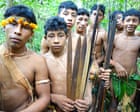
About 20 Indigenous people emerged from isolation in Brazil’s Amazon rainforest, several organizations reported on Tuesday, raising the alarm about increased invasions into the tribe’s territory.
According to the NGO Survival International, members of the Awá people, who live in voluntary isolation, arrived on Monday in a village and made contact with a government team in a “historic encounter”.
The village they entered was within the Arariboia Indigenous territory in the north-eastern state of Maranhão, home to the Guajajara ethnic group.
Local community leaders said the villagers offered food to the group.
“They asked for yams and took them back into their forest,” said Survival International.
The NGO explained that the Awá typically subsist on hunting and gathering. However, they have faced increased incursions from illegal loggers, hunters and cattle ranchers.
A video of the encounter, filmed by Guajajara villagers and released by Survival International, shows a group of men, women and children at the edge of the forest.
Partially concealed by vegetation, they appear naked and are wearing necklaces. The men carry bows and long arrows.
“The physical condition of some members, particularly the children and the elderly, caused concern among the villagers, who noted clear signs of severe emaciation,” warned Coapima, an organization representing Indigenous groups in Maranhão.
Coapima highlighted the risks that unplanned contact poses to such groups, noting that they are particularly “exposed to diseases” against which they have little to no immunity.
Funai, the public agency responsible for Indigenous affairs, said in a statement sent to AFP that its technical teams were closely monitoring the situation and analyzing available information regarding the group’s health.
Survival International’s director, Caroline Pearce, said the group’s choice to emerge from isolation was a “troubling indication of how the continued invasion of uncontacted peoples’ forests puts otherwise self-sufficient Indigenous people in real danger”.
She said the Awá were being driven into “an ever-smaller island of the Amazon rainforest, surrounded by destruction”.
According to the NGO, about 196 “uncontacted” peoples and groups, who choose to live in isolation, have been identified across 10 countries.
More than 90% of such groups live in the Amazon rainforest, primarily in Brazil, with others in Indonesia and India.
The Forest Guardians – a group of Guajajara people who have battled illegal invasions for years – warned in comments in the Survival International statement that “climate change, fires, deforestation and land encroachment” were affecting the Awá’s way of life.
According to Survival International, many of the guardians have lost their lives trying to protect the territory they share with the Awá.
KioskNews shows a cleaned-up reading view extracted from the publisher’s page — the original always lives on their site, not ours.