Who Is To Blame? Team Trump Turns On Each Other Over Nvidia 'Spy' Scandal
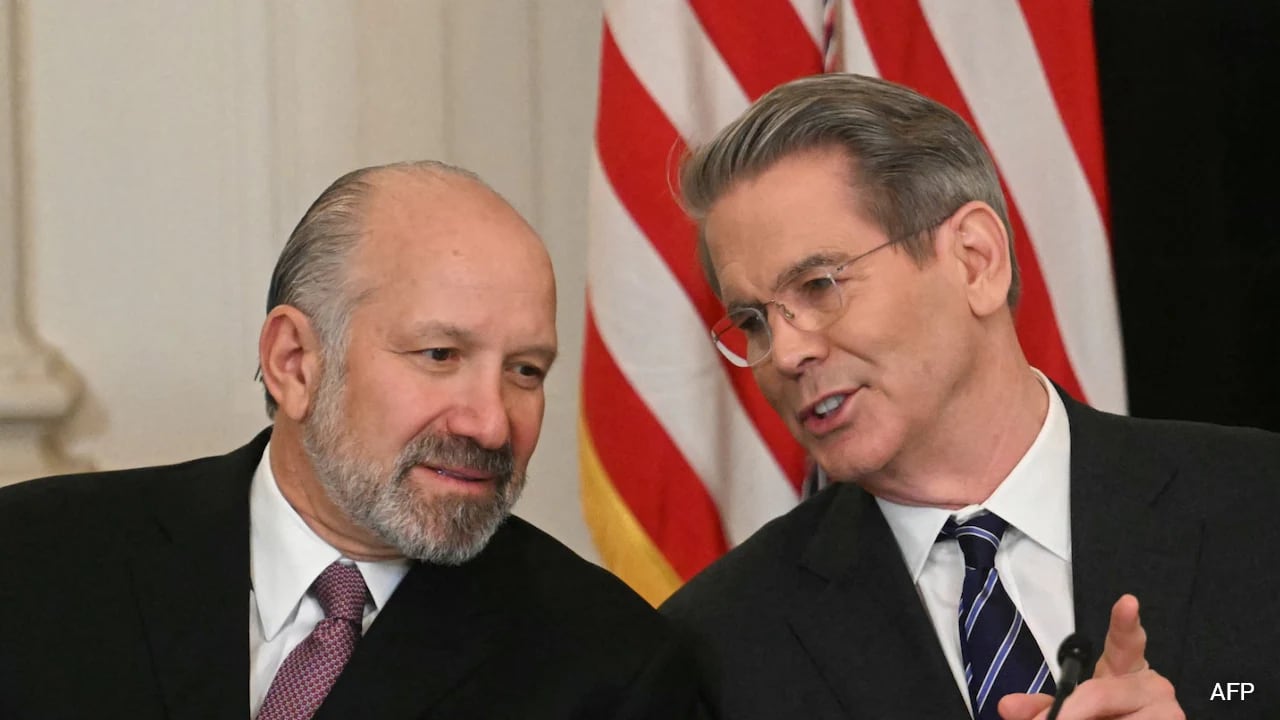
US Treasury Secretary Scott Bessent has blamed the Commerce Department for failing to blacklist a Singapore-based company accused of helping Chinese firms get access to restricted Nvidia chips.
Megaspeed is at the centre of a growing scandal that has also engulfed Nvidia CEO Jensen Huang, who resigned on Thursday after admitting to an extramarital affair with a woman linked to the company.
Speaking to CNBC on Friday, Bessent said several US government departments had supported adding Megaspeed to Washington's trade blacklist for months. However, the decision had not been carried out.
He said the Treasury Department, Pentagon, US Trade Representative's office and State Department had all backed the move.
"But Commerce has the pen," Bessent said, pointing to the department led by Howard Lutnick. "You will have to ask them about their internal processes."
Bessent's Anger Over Nvidia Chips Reaching China
Bessent said he was "frustrated" by the failure to stop the alleged flow of advanced Nvidia chips to China.
He said US President Donald Trump had made his position clear, particularly on restricting China's access to Nvidia's more advanced processors.
"He made it very clear that China should not receive any Nvidia chips above H100s," Bessent said.
"Any leakage is very frustrating because it hurts our great companies, and in the AI race gives the Chinese an advantage," he added.
The remarks amount to an unusual public criticism of one government department by another, exposing divisions within the Trump administration over the enforcement of technology export controls.
The $4 Billion Nvidia Chip Trail
US investigators suspect Megaspeed helped Chinese companies get around American export restrictions by purchasing Nvidia chips for its data centres in Southeast Asia and then routing them to China.
The company reportedly traded more than $4 billion worth of Nvidia chips over a two-year period.
The scandal took a more serious turn this week when US media identified Megaspeed's former director, Alice Huang, as an alleged Chinese intelligence asset. Reports also claimed she had a relationship with Jensen Huang.
China has denied the spying allegations.
Jensen Huang acknowledged an extramarital affair in a letter to Nvidia employees dated November 8. He did not identify the woman in the letter.
He stepped down from his position on Thursday as the controversy continued to grow.
Bessent Questions Nvidia's Internal Checks
While much of the attention has centred on Huang's personal life, Bessent argued that the bigger question was whether Nvidia had done enough to prevent its chips from reaching restricted buyers.
"The story thus far has been on Jensen Huang's personal foibles," he said.
"The real story here should be: Did Nvidia know their client, and was there a robust effort at Nvidia to make sure that there was no leakage."
Bessent also questioned whether Nvidia had sold chips to businesses that were effectively acting as middlemen for Chinese buyers.
He raised concerns about Nvidia potentially dealing with "what were obviously pass-through shell companies."
"I think it's important that anyone at the company there be held accountable for that," he said.
Nvidia Faces Congressional Scrutiny
The fallout is now drawing attention from US lawmakers.
Nvidia's board has said it will investigate the matter. Meanwhile, three committee chairs in the US Congress have asked Huang to attend a closed-door briefing on November 18.
Bessent said the alleged movement of restricted chips showed that export controls were still being bypassed.
He acknowledged that there was "a lot of leakage in the system" and said the administration was "constantly working to close that down."
The controversy has raised questions not only about Nvidia's internal checks but also about how effectively Washington is enforcing its restrictions on China's access to advanced artificial intelligence technology.
KioskNews shows a cleaned-up reading view extracted from the publisher’s page — the original always lives on their site, not ours.