25 years on, Kutch lessons on crisis and rebuilding
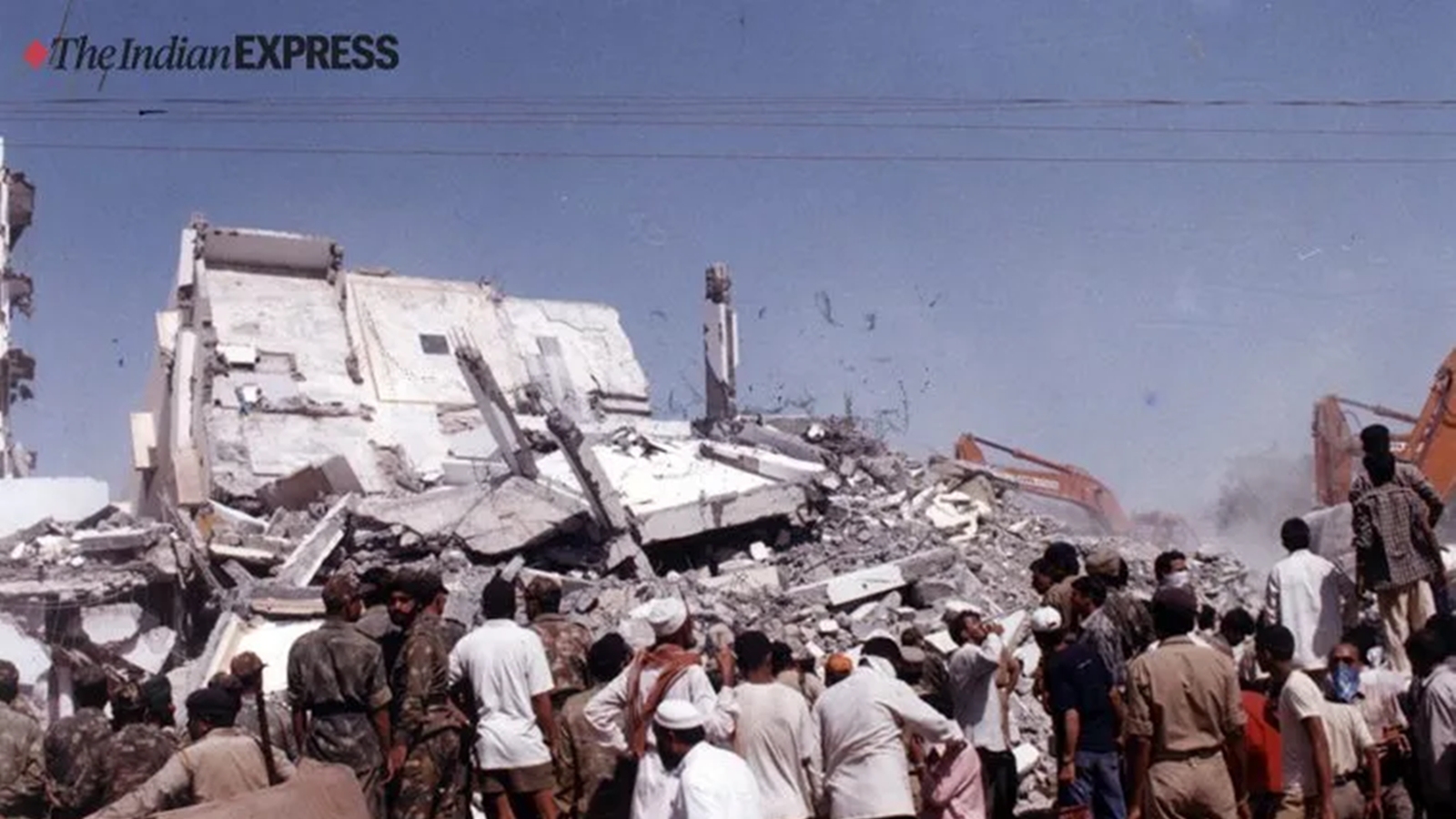
Twenty-five years ago, posted in Kutch as the district development officer, I had little idea of what an earthquake felt like, much less of how to deal with its impact. But the morning of January 26, 2001, changed all that. I was in my car, en route to the Republic Day function, when the Kutch earthquake struck. The car lurched as if the road beneath had become jelly, and by the time the driver brought it to a stop, houses had folded into rubble, and anguished cries pierced the air. Over the next few weeks, we learnt that over 12,000 people had died in Kutch and that in over 300 villages, more than seven out of 10 houses had fallen.
The first decisions came within weeks. The Gujarat State Disaster Management Authority was set up on February 8, 2001. Five housing packages, based on the owner-driven approach, were announced within a month of the disaster. Decisions about the relocation of severely damaged villages or allowing NGO participation in reconstruction could be taken only with the consent of the villagers as ascertained through the gram sabha. Teams went from house to house to assess the damage, and a family that disagreed with its assessment could ask for a re-survey or go to a grievance committee at the village or district level, and an ombudsman.
When Narendra Modi became Gujarat chief minister in October 2001, the housing damage assessment was complete. Across Gujarat, more than 2 lakh destroyed houses had to be rebuilt and several lakh more repaired. Added to this was the challenge of rebuilding damaged public infrastructure. Modi set ministers and officers a target: Visible change on the ground by the first anniversary, barely three months away. Senior officers were asked to spend their weekends in the district, each with an area to answer for and the authority to decide on the spot.
Under Modi’s leadership, the government stayed with the owner-driven approach, in which a family rebuilt its own house with money and technical assistance from the state. The money came in instalments to the family’s bank account, and subsequent instalments were released only after an engineer had certified progress. The state government’s objective was to “Build Back Better” — to rebuild in a way that left families safer than before. New houses were registered jointly in the names of husband and wife and insured against earthquakes and cyclones. When the PM speaks today of Jan Bhagidari, of government and citizens sharing the work of development, I think of the gram sabhas and families of Kutch who worked this way 25 years ago.
Gujarat framed a State Disaster Management Policy in 2002, enacted the Gujarat State Disaster Management Act in 2003, which made GSDMA a statutory authority, and set up the Gujarat Institute of Disaster Management. A National Disaster Management Act followed in 2005. In 2016, PM Modi put forward a 10-point agenda on disaster risk reduction that asks for risk cover reaching poor households and for building on local capacity. In 2019, he launched the Coalition for Disaster Resilient Infrastructure at the UN. It’s worth noting that insured homes and village masons trained to build safely were part of the Kutch programme from its early years.
In February 2016, Nepal’s PM K P Sharma Oli came to Bhuj, 10 months after an earthquake in his country, to see how Kutch had been rebuilt. He said the visit gave him confidence for Nepal’s rebuilding. Seven years later, in June 2023, Cyclone Biparjoy made landfall near Jakhau on the Kutch coast. More than a lakh people along the Gujarat coast had been moved to shelters in the days before, and the state reported no loss of life.
What, then, does Kutch teach about leading through a crisis? First, a family that rebuilds its own home builds to its own needs and owns its safety. Second, that public money should follow verified progress so that trust and accountability reinforce each other. Third, what a state learns in an emergency must be made permanent — in law, institutions and in trained people.
When I am asked what the reconstruction of Kutch achieved, I think of the families who rebuilt their homes, and I think of Biparjoy. A government that has been through a disaster has a chance to change how it works. The people of Kutch are safer today because of the decisions taken in those years. I am grateful to have been a small part of that.
The writer is additional chief secretary, Health and Family Welfare Department, Gujarat.
He was DDO of Kutch at the time of the 2001 earthquake. Views are personal
KioskNews shows a cleaned-up reading view extracted from the publisher’s page — the original always lives on their site, not ours.