Jewish communities must build warm ties with every first responder - opinion
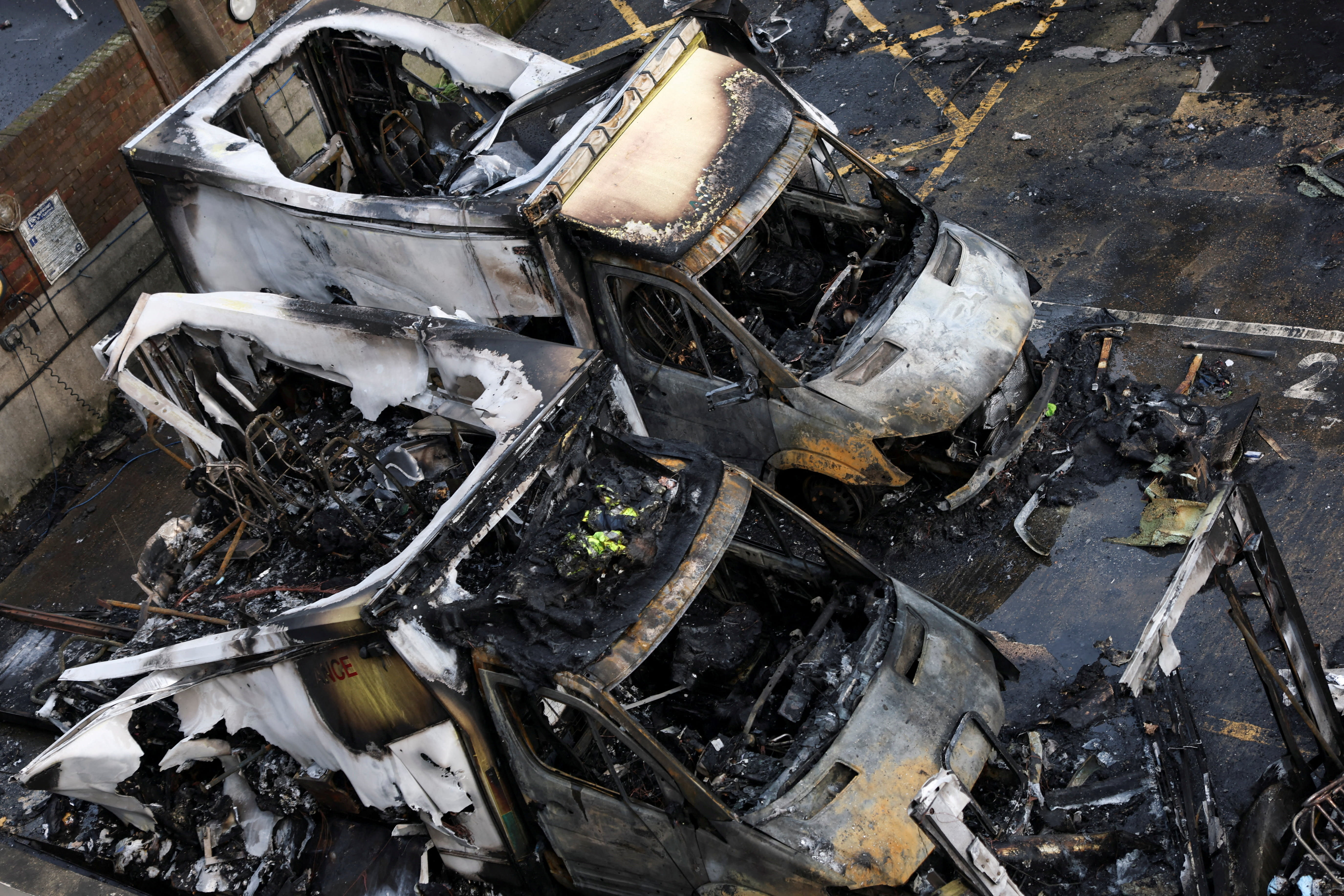
If the people who answer a distress call do not see Jews as neighbors worth rushing toward, our safety, our health, and our ability to remain in a community or a country are in the balance.

Police, fire, EMS, and rescue are not immune to antisemitic lies. B’nai B’rith International will pilot proactive relationships in select communities – and we need partners to do it.
Jewish communities have spent years building cameras, plans, and volunteer patrols. Those tools matter. They are not enough.
If the people who answer a distress call – the ambulance team, the engine company, the rescue squad, the police officer – do not see Jews as neighbors worth rushing toward, our safety, our health, and our ability to remain in a community or a country are in the balance.
This is not only a law-enforcement problem. Firefighters, paramedics, EMTs, and disaster crews are just as exposed as anyone else to antisemitic lies. We cannot assume a Star of David on a door or a synagogue on a dispatch screen will be treated as a call for help rather than a reason to hesitate.
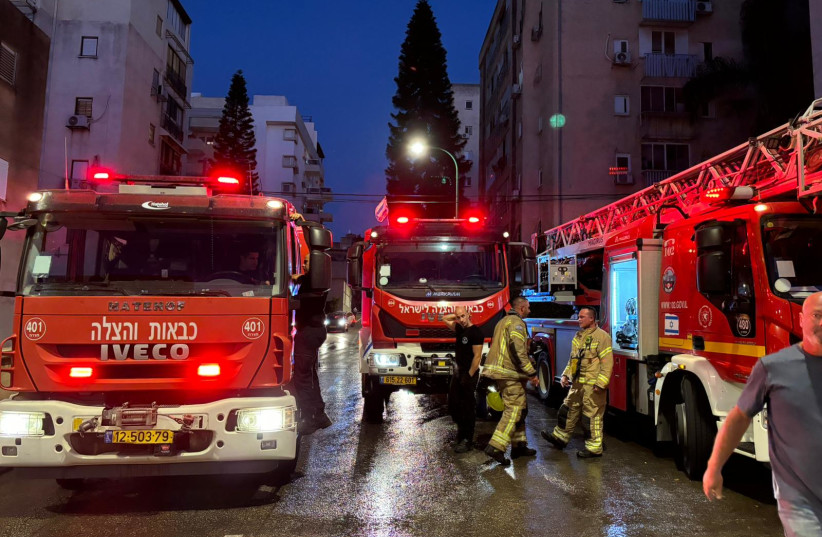
I have seen what changes when the relationship is built before the crisis.
At the Anti-Defamation League, I took newly appointed NYPD chiefs of department to the United States Holocaust Memorial Museum in Washington. The museum opened early for a special tour on law enforcement and the Holocaust.
These were seasoned officers. I watched their faces change as they learned how the Nazis used ordinary police in the Final Solution. The lesson was not that American officers are Nazis; it was that decent institutions can absorb a lie if no one has done the work of making Jews fully human to them.
Later, standing volunteer security outside my synagogue with the Community Security Service, I often stood next to a uniformed officer who knew almost nothing about the institution he was assigned to protect.
We started with human conversation – shared values, kids, the job. That bond is bipartisan. It is as simple as organizing a visit to say thank you: we are the Jewish community, and we appreciate you.
Preventing a possible nightmare
The nightmare we are trying to prevent is specific: an ambulance team that sees a Star of David and decides that call can wait; a firefighter who does not drive as fast to a Jewish home or business. If we lose first responders, we do not merely lose a layer of security. We lose the practical possibility of living as Jews in public.
B’nai B’rith International has spent decades working with first responders after natural disasters. We have thousands of volunteers in close to 50 countries. That network has too often been used only after the wreckage. We intend to use it before the siren sounds.
We at B’nai B’rith International will pilot this initiative in select communities in North America, Latin America, and Europe.
The work is straightforward and local: synagogues and lodges going to firehouses, EMS stations, and precincts; thank-you visits; shared meals; tours that humanize Jewish life; and ongoing contact so a first responder already knows the people behind the address.
We will need partners – synagogues, federations, security networks, first-responder associations, and communal organizations that already have relationships on the ground. As we develop this through our international infrastructure, we will reach out. This is not about silos. It is about partnership to make Jews safer and human again.
Gratitude is not soft. It is a strategy. A chief who walks through a Holocaust museum with Jewish hosts does not leave as the same official who entered. An officer who has talked about his children with a congregant does not hear the next rumor the same way.
The Jewish world is very good at showing up after a catastrophe.
The next chapter is quieter: walking into a firehouse when nothing is burning and saying, “We see you, we need you, and we intend to be neighbors you would run toward.” If we wait until the siren is already sounding, we have waited too long.
KioskNews shows a cleaned-up reading view extracted from the publisher’s page — the original always lives on their site, not ours.