Funding Putin: ‘Blood oil’ imports from major Asian supplier surge
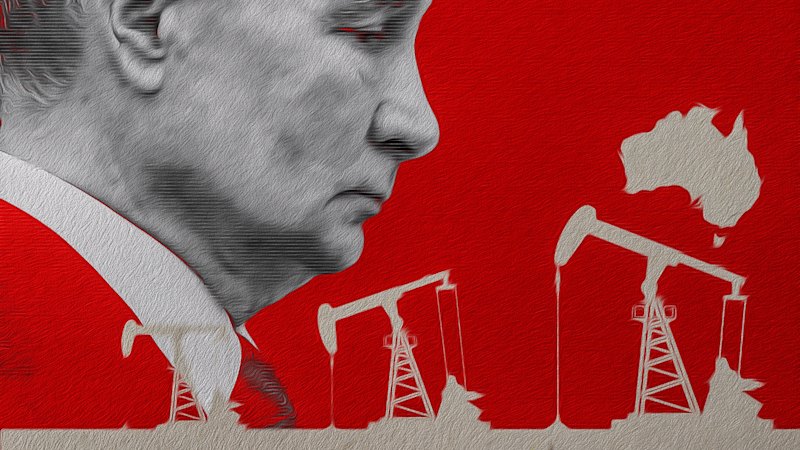
The vast majority of fuel arriving in Australia from a key Asian refinery has come from Russia, a new analysis has found, sparking warnings that motorists and businesses are inadvertently funding Vladimir Putin’s war on Ukraine.
A new report by the Centre for Research on Energy and Clean Air (CREA) estimates that 68 per cent of oil exported to Australia from Brunei’s Hengyi refinery in the first seven months of the year was Russian-derived, up from 24 per cent two years ago.
Australia has imported a total of 2.6 million tonnes of Russian-origin oil from the Hengyi refinery since the war in Ukraine began in 2022, mostly in the form of diesel, the Finland-based think tank estimates.
Prime Minister Anthony Albanese travelled to Brunei in April to lock in Australian fuel supplies despite shortages caused by the closure of the Strait of Hormuz.
Energy Minister Chris Bowen is travelling to Saudi Arabia this week to meet his counterpart, Prince Abdulaziz bin Salman, as concerns again rise over global energy shortfalls linked to the war in Iran.
Australia banned direct imports of Russian oil after Putin’s invasion of Ukraine, but a loophole has allowed Russian crude oil to enter the nation after being refined in third countries such as India, China and Brunei.
This masthead’s “blood oil” series, launched last year, highlighted the vast quantities of Russian-origin oil that have flowed into Australia after being refined into diesel and other products.
The Department of Foreign Affairs and Trade (DFAT) issued new guidance following the series, warning importers they could be breaching Australian sanctions law by bringing in Russian-origin oil processed in third countries.
Only Russian oil imports that have been “substantially transformed” were allowed, the department said.
The Ukrainian-Australian community has urged the government to go further and impose a total ban on all petroleum products derived from Russian crude.
The release of the new report comes ahead of a meeting between Albanese and Ukrainian President Volodymyr Zelensky at the United Nations General Assembly on Wednesday, where they are set to sign a long-awaited security pact.
CREA analyst Isaac Levi said: “If Australia is truly an ally of Ukraine, it cannot arm Ukraine with one hand while financing Putin’s war with the other.
“Australia must close this loophole with a simple legal ban on oil products made from Russian crude, or innocent Australians will continue unknowingly filling their cars with fuel that provides a financial lifeline to Russia’s death and destruction in Ukraine.”
Australia is easily Hengyi’s biggest destination country, accounting for 43 per cent of its oil-product export volume.
The refinery’s reliance on Russian crude has skyrocketed from an annual share of just 5 per cent in 2022 to 37 per cent last year and 72 per cent in the first seven months of this year.
Hengyi’s Russian crude share reached an all-time high of 88 per cent between April and June 2026, according to CREA.
A DFAT spokesperson said the government had “imposed strict sanctions and other trade measures to restrict the import, purchase and transport of oil coming from, or that originated in, Russia, in response to its unprovoked and unjustified war against Ukraine”.
“We consistently review our measures and look at what more we can do, including with international partners, to impose costs on Russia and limit its ability to fund its war,” the spokesperson said.
“We also expect businesses to prevent their supply chains from inadvertently funding Russia’s unprovoked and unjustified full-scale invasion of Ukraine.”
Chemical engineer Mark Corrigan, who has campaigned for tougher restrictions on oil imports, said the government should prioritise cracking down on Russia’s energy revenues even as it works with countries like Brunei to secure Australian fuel supplies.
“While Europe weathers the current global oil disruption resolutely without Russian supply, the Australian government has misplaced its moral compass, continuing to trade in Russian blood oil through intermediaries like Brunei,” he said.
“Australian motorists are forced into complicity funding the renewed barrage of Russian ballistic missiles raining on Kyiv families.”
Hengyi Industries, the owner of the refinery, did respond to requests for comment.
The Australian Federation of Ukrainian Organisations told a Senate inquiry earlier this year that the nation’s “failure to take action risks turning the country into a dumping ground for blood oil that is illegal in comparable jurisdictions”.
The inquiry’s final report, released last month, found Australia has become an international outlier by allowing fuel made from Russian crude oil to enter the country and urged the government to strengthen the sanctions regime
KioskNews shows a cleaned-up reading view extracted from the publisher’s page — the original always lives on their site, not ours.