Even Before Diwali, Delhi-NCR Had Worse Pollution Levels Than Last Year: Study
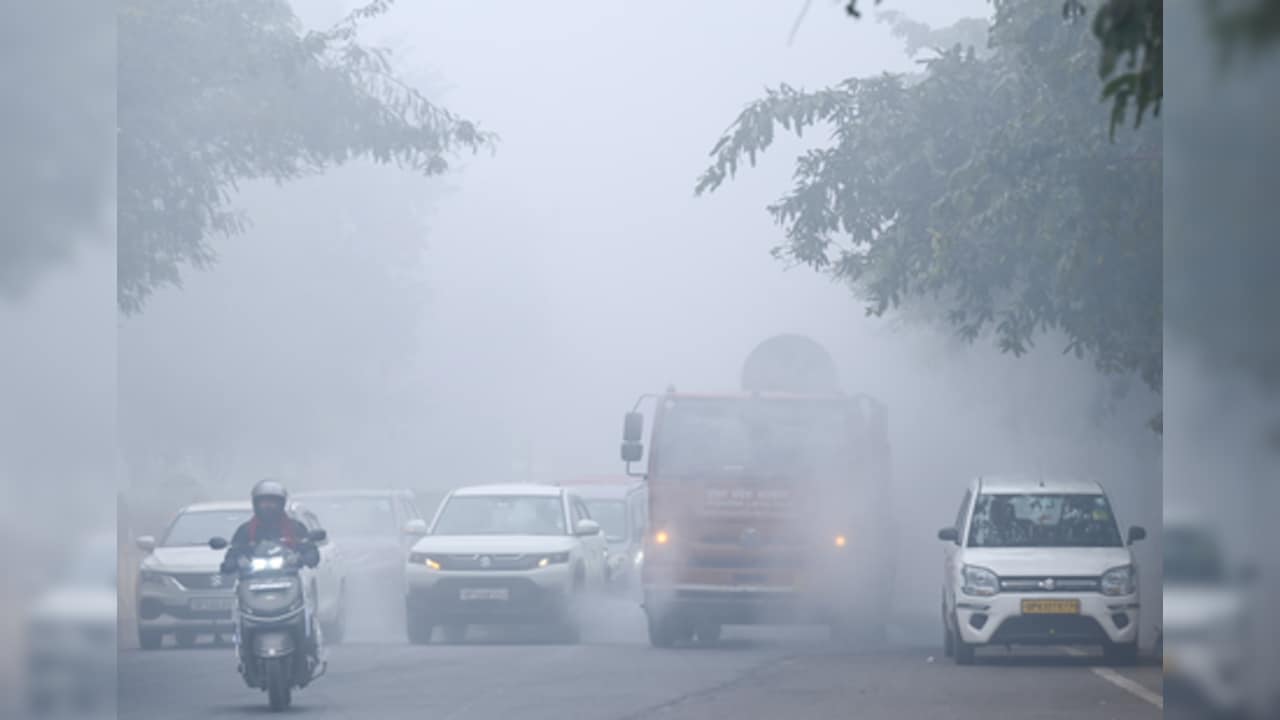
Air pollution in Delhi-NCR has worsened during the onset of winter (from October to mid-November) this year. This has been revealed in a new analysis by the Centre for Science and Environment or CSE, an organisation that monitors environmental issues.
Anumita Roychowdhury, Executive Director of Research and Advocacy at the CSE, said: "Pollution around Diwali serves as a critical 'tipping point' every year. However, the elevated levels of particulate matter observed even before the festival this year indicate that the baseline level of pollution is higher compared to previous years."
In the week leading up to Diwali in 2026, the average PM2.5 level was recorded at 236 micrograms per cubic meter -- the highest in the last three years.
This is 97 per cent higher than the average PM 2.5 level of 120 micrograms per cubic meter recorded in 2025!
It is 32 per cent higher than the 179 micrograms per cubic meter recorded in 2024.
The figures indicate a significant surge in pollution this year, even before the festival.
The data was compiled through a detailed analysis of air quality information available on the Central Pollution Control Board's portal, along with data on the contribution of various pollution sources (provided by the Indian Institute of Tropical Meteorology) and traffic data obtained from TomTom.
Sharanjit Kaur, Deputy Programme Manager at CSE said in 2026, pollution levels in Delhi during the period preceding winter were higher than in 2025.
"There was a brief dip only towards the end of September, due to rainfall. In both years, pollution spiked significantly a few days before Diwali. However, in the week leading up to the festival in 2026, the levels of toxic pollutants were notably higher-and the air quality worse-compared to previous years," she said.
CSE's assessment indicates that, among local sources of pollution in Delhi-NCR, transport remains the primary contributor.
An analysis of traffic congestion confirms that vehicular emissions are the main reason people are exposed to toxic pollution on a daily basis.
Anumita Roychowdhury noted that the measures implemented throughout the year to control emissions from key sources have proven insufficient.
Had the air been cleaner at the onset of winter - and had incidents like stubble burning or the bursting of firecrackers been effectively curbed - the pollution levels would not have reached such a critical state, she said.
The report further claims that emergency restrictions imposed on pre-BS-VI vehicles have also failed to reduce traffic congestion.
Meanwhile, the smoke from stubble burning has increased, yet even when the number of farm fires declined, the situation remained one of severe pollution.
KioskNews shows a cleaned-up reading view extracted from the publisher’s page — the original always lives on their site, not ours.