9 Sci-Fi Shows With The Best Spaceships

While modern sci-fi has moved away from many typical tropes of the genre, like aliens and robots, some themes are classics for a reason, and a great spaceship can define a TV show. The best spaceships ever designed all have something unique about them, from the immense size of Star Trek's Borg cube to the fascinating biology of Moya in Farscape. Many of the greatest sci-fi TV shows of all time have practically made their central spaceship a character as important as any of the speaking parts, which is understandable considering the role they play in their respective shows.
Many of the most iconic movie and TV show spaceships work as the setting for the majority of the pivotal moments, which means that the ship will appear in virtually every scene. Its design and function must feel so believable and tangible that the ship can work as both the backdrop and the central focus at different times, which is a very difficult place to occupy in a story. Still, it can be done, as these shows prove.
Farscape

Many sci-fi TV show characters talk to their ship, with the ship occasionally talking back in the form of a computer. However, while Farscape did something rare by making its central ship, Moya, into a living being, it is not the first or only sci-fi series to do so. However, the show took its biological inspiration to another level entirely. Leviathan ships like Moya have symbiotic relationships with their pilots, who act as their heart and voice, with a forced bond being immensely painful for the ship and pilot.
The Leviathan ships are an immense species with a culture of their own, as well as the ability to reproduce, with Moya's volatile son, Talyn, becoming one of the best characters in Farscape as the first ever Leviathan warship. Farscape's ships remain some of the best concepts in sci-fi, while the series is a must-watch space opera masterpiece that puts a new spin on intergalactic travel by making it unpredictable.
Firefly

Firefly, with its main cast of misfits and old but lovingly maintained spaceship, is a comfort watch for many, with Serenity feeling like home to fans as well as the show's main characters. Designed to look like both a bird and a firefly, the ship is bulkier and quirkier than some of the sleeker modes of transport in other sci-fi series. Still, this is part of Serenity's charm, and she is treated as a character representing both home and freedom.
Unlike Farscape's Moya, Serenity is not a living being. Instead, it is the crew's relationship to her that makes her feel like a combination of friend and protector. Serenity is full of hidden details, making the ship feel lived-in, and it is partly this atmosphere that has made Firefly into the sci-fi icon that it became, as viewers want to live aboard her, joining Mal and his crew on adventures and return to the ship at the end of the day.
Battlestar Galactica
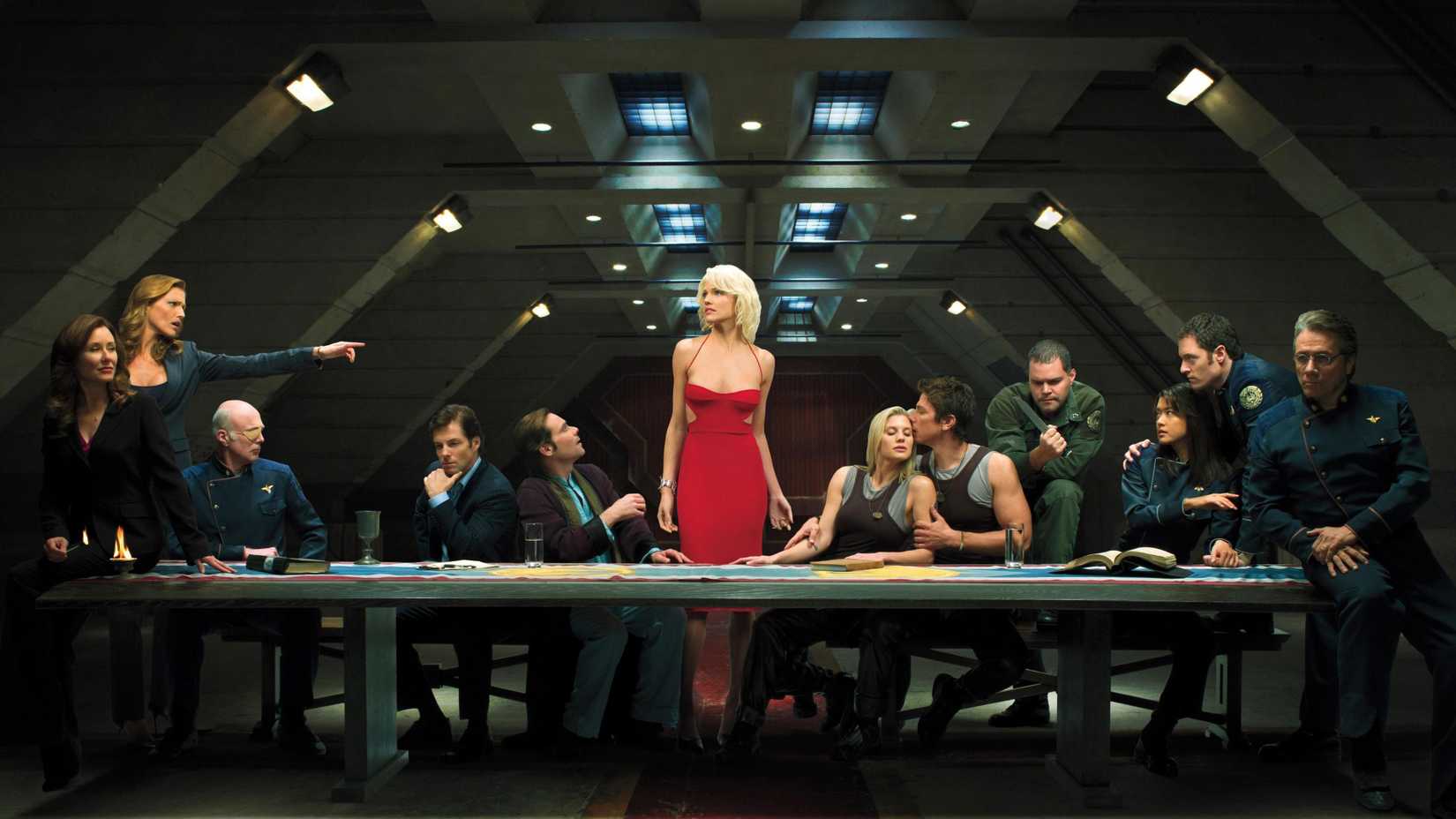
The Galactica acts as a visual representation for the crew and the events they have survived, growing more battle-worn over time, with dents and marks that resemble the stories that human bodies tell through healed injuries and scars. The decision to let the spaceship age in this way was deliberate, as the production team wanted the ship's look to mirror the fleet. Being central to The Adama Maneuver, one of the best action scenes in a sci-fi TV show, gave The Galactica icon status, but it is not the only ship in the show.
The best way to highlight a perfect design can be to compare it with another, and Battlestar Galactica is full of sleek Cylon engineering, with the formidably intelligent Cylon Raiders, disturbing Resurrection Hub, and immense Basestar acting as visual and metaphorical opposites to the Galactica. The show is essential watching for sci-fi fans, with the central spaceships being one of the best parts of the series.
The Expanse
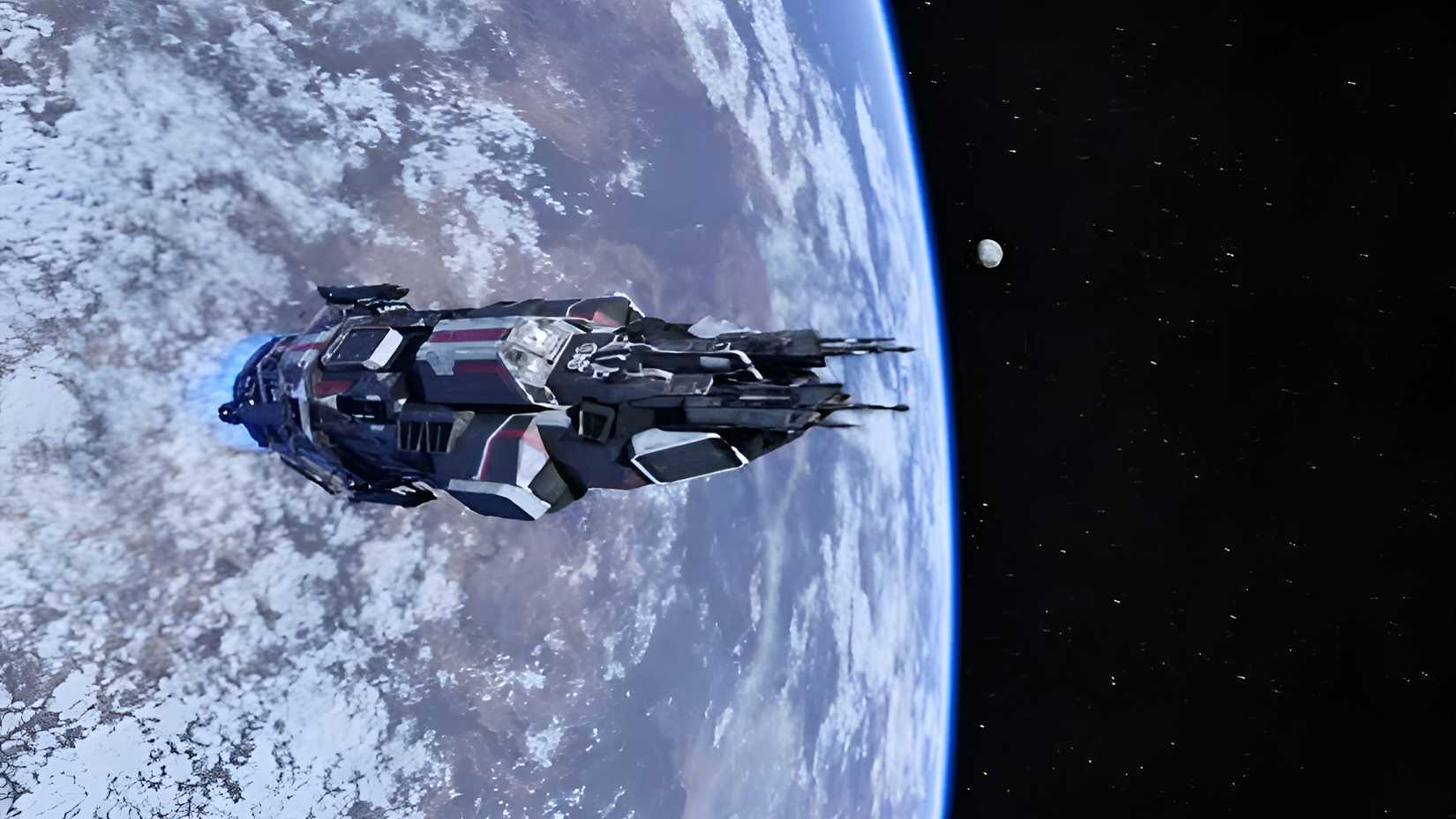
Despite the genre's name, science fiction is not always grounded in reality, with many great shows taking major artistic liberties with the way spaceships operate. On the other hand, The Expanse has been praised by astrophysicists for its realistic approach to space travel. The Rocinante might function as a home and mode of transport just as other great sci-fi spaceships do, but it stands out for its realism. The Expanse's spaceships follow physical principles and often require their inhabitants to modify themselves with spacesuits and IV injections in preparation for high G-force.
The Expanse has a 95% critics' rating on Rotten Tomatoes.
With three main cultures being central to The Expanse, their ships reflect their economic situations and political focus. Martian ships tend to feature advanced, streamlined technology ready for war, and Belter ships feel heavier and slower, with repairs made with scrap metal, reflecting the way of life for the exploited and impoverished yet often skilled class. This attention to detail makes the show feel truly immersive, while The Expanse remains impressively factual.
Star Trek: The Next Generation

Star Trek is one of the staple sci-fi TV shows that defined the genre, with its utopian premise and optimistic view of space as "the final frontier." The Original Series introduced The Enterprise, now one of the most recognizable spaceships of all time, but The Next Generation took design and concept to the next level, aided by tremendous advances in visual effects. This has allowed Star Trek's alien spaceships to take center stage.
Viewers can learn about Star Trek's different civilizations from looking at their spaceships and their recognizable silhouettes, with The Borg's terrifying space cube making the Enterprise-D look miniscule, conveying the danger ahead with just one image. The Klingon ships look aggressive, in line with their warrior culture, while Romulan Warbirds suggest a carefully calculated design and strategic approach.
Doctor Who

Doctor Who has the most unique spaceship design of all time, with the iconic TARDIS being the show's defining image. Shaped like an old British police emergency telephone box, the TARDIS can not just traverse space, but time as well. More than just a spaceship, it is one of the most mysterious objects in sci-fi, ever-changing and containing entire universes, with unlimited possibilities for the show's characters and story, no matter which regeneration of The Doctor is piloting it.
TARDIS stands for Time And Relative Dimension In Space.
The TARDIS might be the best-known spaceship in Doctor Who, but others are more inventive than most in sci-fi, from the time-warping Mondasian Colony Ship, which saw days on the upper deck lasting for millennia on the lower levels, to the clockwork-themed SS Madame de Pompadour that connected the far future to 18th century France through hidden windows within its structure.
The Mandalorian

The Mandalorian’s Razor Crest feels like a modified hotrod vehicle, with barely a square inch that has not been replaced, fixed, or engineered in some way. This makes the repurposed military ship feel like Din Djarin’s lived-in vehicle, rather than merely being a cool spaceship. It is a constantly-evolving mode of transport that feels customized rather than custom-built, which may reflect vehicles that viewers love, adding to The Mandalorian's emotional weight and relatability, making the Razor Crest's season 2 fate even more heartbreaking.
Even without the Razor Crest, Din Djarin's Starfighter spaceship takes on some hotrod details, with the bounty hunter customizing it for his own purposes. The fact that the spaceship stands out so well is a testament to its perfect design, as The Mandalorian features plenty more ships to rival it, like the Gorian Shard's pirate ship-like corsair, the fortress Gideon's Command Cruiser, and The Gauntlet Starfighter with its signature rotating wings.
Love, Death & Robots

Some spaceships raise the profile of their show through design, while others do so through lore, and the Love, Death & Robots episode "Lucky 13" does just that. The cyberpunk anthology series explores its genre through creative shorts with most lasting less than 20 minutes, and not all episodes feature a spaceship. However, one of the best episodes of Love, Death & Robots is a 13-minute-long redemption story about the relationship between a ship and pilot.
Question 1 of 3
When Cutter, a rookie pilot, is given a supposedly unlucky ship, she works to turn their fortunes around, building her reputation and reversing the reputation of the ship. The episode, narrated by and starring Samira Wiley, highlights the way character development can also be applied to an inanimate object, as the episode ends on a bittersweet note, with one final act of heroism that destroys the ship, and Cutter wishing she could have Lucky 13 back rather than her state-of-the-art replacement.
Alien: Earth

Alien: Earth already had a challenge ahead in living up to Ridley Scott's sci-fi movie masterpiece and its instantly-recognizable spaceship. However, in a shock move, Alien: Earth has set a fandom-splitting franchise record, with a better critics' score on Rotten Tomatoes than the original movie. Set largely aboard the USCSS Maginot, the ship was designed to look eerily similar to Alien's Nostromo, with its claustrophobic atmosphere setting the tone for the story.
While Alien: Earth made significant changes to the terrifying alien species in the franchise, one aspect that stayed constant was the ship, as it was designed to feel as though it came from the same time period as the Nostromo. This sense of lurking danger has successfully carried over from Alien to the franchise's first TV series, illustrating how important aesthetics can be when creating a spaceship and seamlessly continuing the story.
KioskNews shows a cleaned-up reading view extracted from the publisher’s page — the original always lives on their site, not ours.