5.1% Indians Now Live Below $3 A Day, But Bigger Gaps Remain: Report
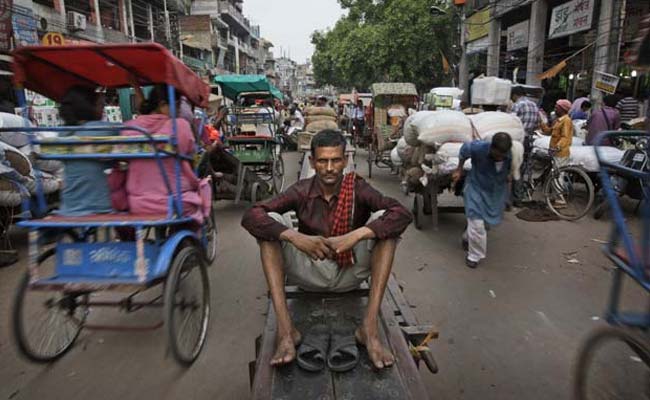
India has seen a major reduction in extreme poverty over the past decade. Just 5.1 per cent of the country's population now lives below $3 a day, according to the Sustainable Development Report 2026. The share living below $4.20 a day stands at 9.6 per cent, the report added.
But the report also raises a bigger question. As India gets richer, is that growth translating into better health, nutrition, jobs and environmental conditions?
The Sustainable Development Report 2026, published by the Sustainable Development Solutions Network, tracks the country's progress across all 17 United Nations Sustainable Development Goals.
Also Read | Layoffs Are Rising In Tech, But These Skills Are Helping People Unlock Better Pay
India scored 68.3 out of 100 and ranked 94th among 169 countries. Its ranking has improved by 18 places since 2015, the biggest rise among major powers.
Neetu Yadav, Associate Professor, Faculty In-charge - EQUIS- MDI Gurgaon, told NDTV that India's development story needs to be viewed beyond economic growth and infrastructure. The real test, she noted, is whether growth improves people's everyday lives while protecting the environment.
The poverty numbers are among the clearest signs of progress. Only 5.1 per cent of Indians now live below $3 a day. The figure rises to 9.6 per cent when the $4.20-a-day threshold is used.
Basic infrastructure has also expanded rapidly. Electricity access has reached 99.5 per cent of the population. Internet usage stands at 70 per cent. Around 89 per cent of adults now have a bank or mobile-money account.
Having A Tap Is Not The Same As Having Clean Water
India's access to drinking water stands at 95.7 per cent, while sanitation access is 83.4 per cent. Yet only 19.2 per cent of wastewater is treated.
This creates a striking gap between infrastructure on paper and the quality of services people actually receive. The same pattern can be seen in healthcare.
Maternal mortality remains at 80.5 deaths per 100,000 live births. Under-five mortality is 26.6 per 1,000. Tuberculosis affects 187 people per 100,000.
Professor Neetu Yadav said this is where India's next phase of development becomes more complicated. Building infrastructure is only the first step. The larger challenge is ensuring that these systems deliver better outcomes for households.
India Produces More Food, But Children Still Face Malnutrition
Agriculture offers another example of this contradiction. Cereal yields have increased to 3.6 tonnes per hectare. But 12 per cent of the population remains undernourished.
Child stunting stands at 35.5 per cent, while wasting affects 18.7 per cent of children. Only 23.6 per cent of young children receive a minimally diverse diet.
So, producing more food has not automatically translated into better nutrition. For households, what matters is not just how much food the country produces. It is also whether families can afford nutritious food and whether children get a sufficiently varied diet.
Environment Could Become India's Bigger Development Test
The report also highlights a difficult trade-off. India's per-capita emissions from fossil fuels and cement stand at 2.2 tonnes. Air pollution is associated with an estimated 132.1 deaths per 100,000 people each year.
Protected land covers 9.7 per cent of the country, while protected marine areas account for 8.5 per cent.
This means India's growth story is increasingly tied to an environmental question. Can the country continue expanding incomes, cities and infrastructure without putting greater pressure on air, water and land?
Yadav said sustainable development cannot be measured only by how much an economy grows. It also has to be measured by whether that growth improves living standards without creating new costs for future generations.
KioskNews shows a cleaned-up reading view extracted from the publisher’s page — the original always lives on their site, not ours.