Saudi Arabia's Limited Options Against Houthis After Trump's Rebuff
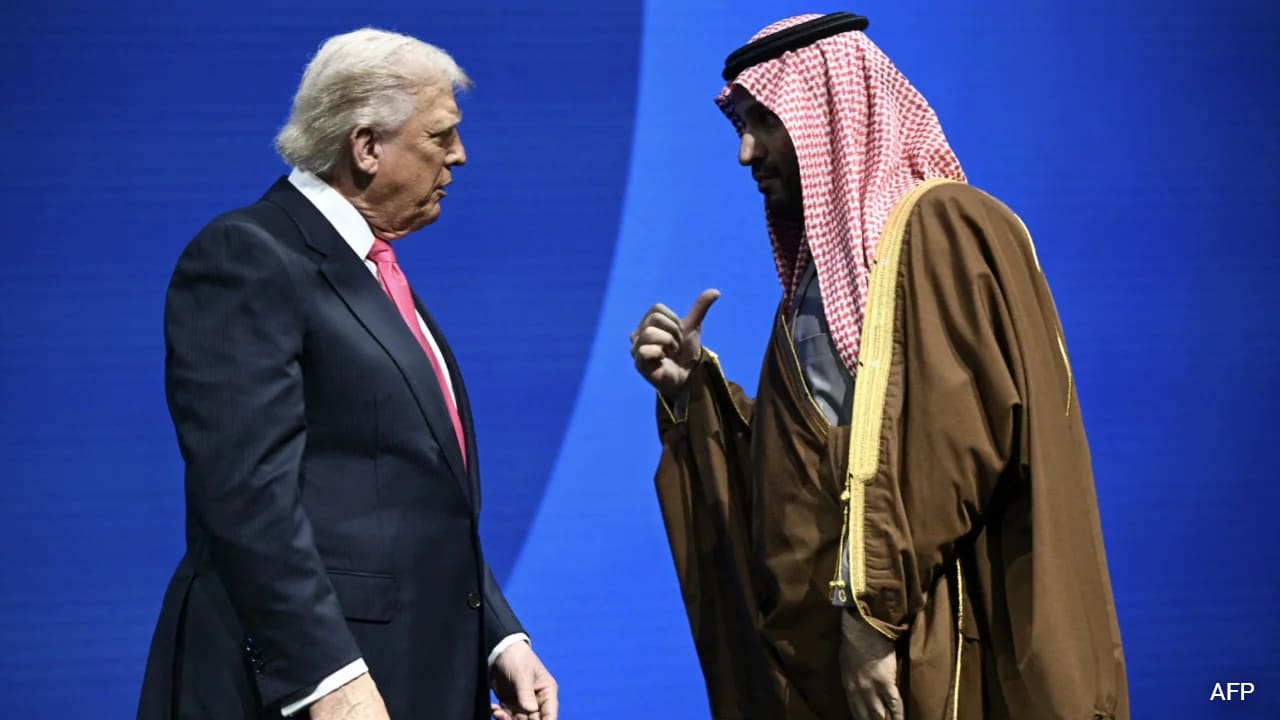
Despite its best efforts, Saudi Arabia has been caught in the middle of the war between the United States and Iran. Now, the lightning advances of the Iran-backed Houthi rebels threatening a crucial Red Sea route has forced the Kingdom's leadership to assess its dwindling options on how to respond.
In recent weeks, the Houthis in Yemen have repeatedly attacked the kingdom, threatening to choke its oil trade, adding pressure to the already struggling global economy. Adding to the Saudis' frustration is their most essential ally, the United States', unreliability.
The US has proven to be unpredictable over the course of the war, and US President Donald Trump seems reluctant to widen an already unpopular and stalemated Middle East war ahead of congressional elections.
Iran's Trump Card
For Saudi Arabia, diplomatic efforts to engage with Iran have so far produced limited results. A planned meeting between officials from Iran, Saudi Arabia, and other Gulf nations was abruptly postponed over the weekend, as the gap between their positions remained vast.
The Houthis' advance against Saudi forces ramps up global economic pressure as Tehran's grip over the Strait of Hormuz has been loosened, giving the Islamic Republic another strategic trump card in the war.
Michael Ratney, a former US ambassador to Saudi Arabia, said the latest developments are "incredibly frustrating" for the kingdom.
"Despite their antipathy for the Iranians, this is a war they had never asked for, they had great trepidation about it. And once it started, all of their...worst-case scenarios started coming true."
The Saudi government has not issued any statement on the matter yet, but a Saudi official anonymously told Associated Press that the kingdom would defend itself and work with partners, including the United States, to ensure freedom of navigation in the Red Sea.
The Shrinking Ground
Saudi Arabia's crown prince and de facto ruler, Mohammed bin Salman, has spent years trying to build a Middle East with wide-ranging social and economic changes aimed at transforming the ultra-conservative kingdom into a global business hub in a more prosperous and integrated region.
Those efforts suffered major setbacks after Hamas attacked Israel in 2023. That war triggered another in Iran. When the US and Israel attacked Iran on February 28, it responded with missile and drone attacks on the kingdom and other Gulf states, effectively shutting down the Strait of Hormuz and bottling up oil and gas exports from the region.
Saudi Arabia escaped some of the worst effects by piping its oil across the Arabian Peninsula to the Red Sea, where it could be exported to Europe via Egypt's SUMED pipeline and the Suez Canal, or to Asia via a route running through the Bab el-Mandeb Strait, and toward the Indian Ocean.
But tensions reignited with the Houthis in July, leading the rebels to declare a blockade of Saudi shipping and resume large-scale attacks for the first time in four years.
The Houthi Problem
In just over two weeks, Iran-backed rebels have attacked Saudi Arabia from the east, the south, and the north.
A Saudi oil tanker was struck in the Strait of Hormuz at the end of August, killing two sailors. Last week, Houthis said they seized the port city of Mokha and a Red Sea island from Saudi-backed Yemeni government forces, enhancing the rebels' ability to block Saudi shipments through the Bab el-Mandeb.
Soon after, Saudi Arabia said it was forced to shut down the pipeline leading from major oil fields in the east to the Red Sea in the west because of drone attacks originating in Iraq, where Iran supports powerful militias. That pipeline is the key alternative export route for the kingdom to get its oil to the Red Sea in the absence of the Hormuz route.
Houthi attacks have already caused a plunge in Saudi oil exports to Asia, from around 3.4 million barrels a day in June to just 128,000 in August, though they had recovered somewhat this month to 700,000, according to figures compiled by Kpler, a global trade monitor.
Saudi Arabia fought against the Houthis for years beginning in 2015, but its allies made little progress on the ground. The conflict killed an estimated 150,000 people and at times pushed Yemen to the brink of famine before a 2022 ceasefire.
Limited Options
"Saudi Arabia has spent several years trying to move beyond the Yemen conflict and focus on economic transformation and regional stability," Neil Quilliam, a Middle East expert at Chatham House, told the Associated Press.
"Recent Houthi gains increase pressure on Riyadh to respond, but every available option carries significant costs and uncertain outcomes."
The kingdom's next move could be to step up its military response and try to dislodge the Houthis, but that would prolong the conflict and lead to even heavier Houthi attacks on Saudi energy infrastructure, said Sherwan Hindreen Ali, Middle East research manager at ACLED, a conflict monitoring group.
"The kingdom already faced this in the past, but Houthi weaponry is more sophisticated now than it was back then, and the Saudis likely have fewer interceptor missiles available as a result of the U.S.-Iran conflict," he told Associated Press.
The Saudis could also seek a diplomatic solution with either the Houthis or their patrons in Tehran.
But the Houthis have demanded the lifting of a Saudi-led blockade, which would allow them to grow much stronger over the long term, and Iran has little interest in stabilising the region without securing major US concessions.
The US Problem
For decades, Saudi Arabia and other Gulf states have relied on US security guarantees, and Crown Prince Mohammed bin Salman had reasons to be confident in that partnership and help the kingdom at such a crucial time.
But the trust eroded under Trump, who did not respond during his first term when a 2019 attack claimed by the Houthis temporarily knocked out half of Saudi Arabia's oil supply. Again, before attacking Iran earlier this year with Israel, he did not bother to consult America's Gulf allies, and since then it has struggled to defend them from Iranian attacks.
"The reason a country like Saudi Arabia invests so heavily in developing a security partnership with the United States is for just this sort of eventuality," Michael Ratney, a former US ambassador to Saudi Arabia, said while talking to the New York Times.
But when the crown prince asked Trump to take military action against the Houthis last week, the president declined, the NYT reported.
"Already confronting one open-ended conflict with Iran, with an overstretched Navy and a diminishing munitions stockpile, it's unsurprising that he does not want to open this new front. But it is bitterly disappointing to the Saudis," said Dan Shapiro, a former top Middle East policy official in the Pentagon during the Biden administration.
Whether the United States helps Saudi Arabia with the Houthis is still a matter of discussion, but Washington is reportedly assisting Riyadh with intelligence.
KioskNews shows a cleaned-up reading view extracted from the publisher’s page — the original always lives on their site, not ours.