My suburb is the middle child who finally found its voice
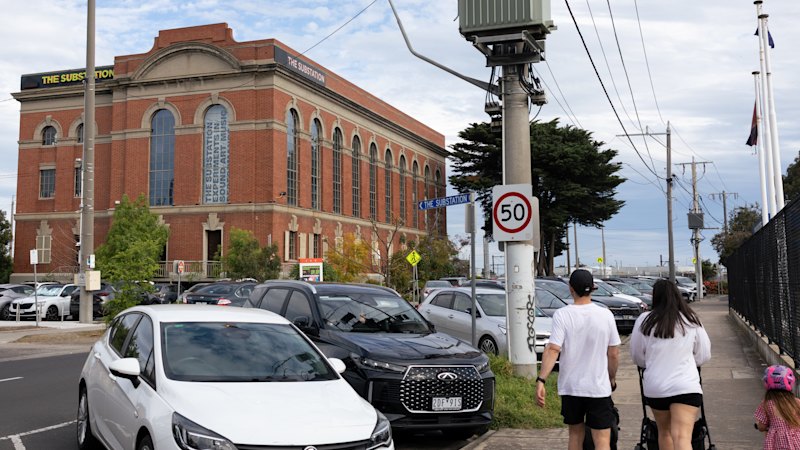
If Melbourne’s inner-west was a family, my suburb would be the middle child.
It’s the independent one, sometimes overlooked, and accustomed to being introduced as “the one between”. To the north, Yarraville, the trendy younger sibling with the Sun Theatre, bookshops, and Instagrammable village streets lined with cafes and restaurants.
To the south, Williamstown, older and more refined, rich in history and carrying itself with the assuredness of someone whose mortgage is paid off and superannuation secured.
My suburb, Newport, sits between them, unfussed and getting on with things.
I usually have to introduce it by relating it to somewhere else. It’s “just down Melbourne Road from Yarraville” or “just before you get to Williamstown”, but this does Newport a disservice. And I have to admit, I was once one of the chief offenders.
My wife and I lived in Yarraville for years and thought little about Newport. It was a mere blur through a train window or a stretch of road on the way to the Williamstown shops.
Then in 2021 my brother-in-law’s family moved there and it worked its way into our lives. There was the discovery of yet another good cafe down a side street. A Sunday with our golden retriever at Newport Lakes. Before long, we had drifted down Melbourne Road to buy our first home here.
Newport, about 12 kilometres south-west of the CBD, has an industrial past of workshops, quarries, and power stations, but is changing. The old quarries have been turned into a number of reserves peppered between a mix of classic weatherboard cottages, solid 1960s brick bungalows, and the new townhouses that seem to pop up by the minute.
The warehouses and workshops are being gradually transformed into more homes, cafes, and businesses. This is perfectly typified by the beautiful and imposing Victorian edifice of the Substation, built more than a century ago to convert power for Melbourne’s suburban railway. Towering over the railway station, it was abandoned and fell into disrepair in the 1960s before the local community campaigned in the ’90s to save it and it was restored and reopened as an arts centre in 2008. This year it starred as the setting of new ABC comedy Bad Company, about a struggling theatre group.
The Newport Railway Workshops, a sprawling expanse of sheds, tracks, and rolling stock of all kinds in the suburb’s south, has been a centre for repair and maintenance since the 1880s. Working railway facilities sit alongside heritage workshops and the Railway Museum is a reminder that the railway helped make the place.
As young families and professionals have arrived, we haven’t buffed away every rough edge. This is best illustrated by Newport’s version of the old argument: which side of the tracks is better? On the east side by the river, life is a little more polished. Leafy streets lined with large stately homes run towards the water and the sporting fields that stretch out along the bay.
But even in this idyllic setting there are many reminders of Newport’s industry. Along the northern edge of the suburb are the fuel terminals and factories that carry over into Spotswood. Towering over the north-east is the Newport Power Station with its unavoidable 183-metre chimney, while just metres away massive container ships glide in and out on their way to the busy Port of Melbourne.
A power station has been on the Newport site for about a century, after it was built to power Melbourne’s transition to electric rail, but the utilitarian concrete block that dominates the skyline today dates back to the 1970s when the old power station was controversially retained and transformed into a gas-fired plant. Both it and the Substation have powered the development of the West and of the city as a whole. One was saved and transformed by a devoted community in a way that typifies how Newport is changing, while the other sits where the Yarra meets the bay as a blunt reminder of its industrial roots.
Take a walk here along the water under the West Gate Bridge, and you cross through the West’s heavy industry and manufacturing heartland to the suburbia of tree-lined and tranquil paths in just minutes.
On these walks, we pass “the Warmies”, where heated water from the Newport power station draws fish and, in turn, devoted fishers casting a line beneath the cooling tower. They are there, throwing in a line every day, despite occasional warnings that fishing there is “probably not a good idea”.
By the railway station is the Junction Hotel with a dog-friendly beer garden at one end and The Fifth wine bar at the other, and an eclectic run of independent shops in between that gives our little family a taste of village lifestyle. While my wife and I are recognised and greeted warmly along this strip, the most effusive welcome is for Kevin, our golden retriever. Not everyone knows our names, but they all definitely know his!
Cross the tracks to the West where we live, and those rougher edges might be more apparent as Newport bleeds into Altona. The houses might be less flashy, but it’s a bit more relaxed.
Newport’s village square on this side of the station is a bustling town centre, but the streets further afield, beyond the cricket and footy club, typify Newport’s west. Step off the busy main road and you come across the sprawling fields, manicured gardens, and nature reserve of Newport Lakes, an almost unreal oasis for evening walks and weekend picnics.
Similarly, among the Challis Street shops is a small gate leading to a little cafe, sufficiently tucked away to make finding it feel like a secret shared. Aptly named, Hidden Brew is the type of unique, friendly place you dream of having in your neighbourhood. And that’s Newport.
Nobody seems particularly interested in creating a scene here, we’re just getting on with life. Newport is no longer a compromise for people who could not afford somewhere else, they like it for what it is. It has qualities of both siblings – the cafe culture of Yarraville and the waterside vibe of Williamstown – but Newport remains unmistakably itself.
David Whitely works in crisis management and lives in Newport with his wife and their golden retriever Kevin.
KioskNews shows a cleaned-up reading view extracted from the publisher’s page — the original always lives on their site, not ours.