Dead fish in Yamuna again: Government says filing FIR to investigate ‘fake’ info, ‘role’ of AAP workers
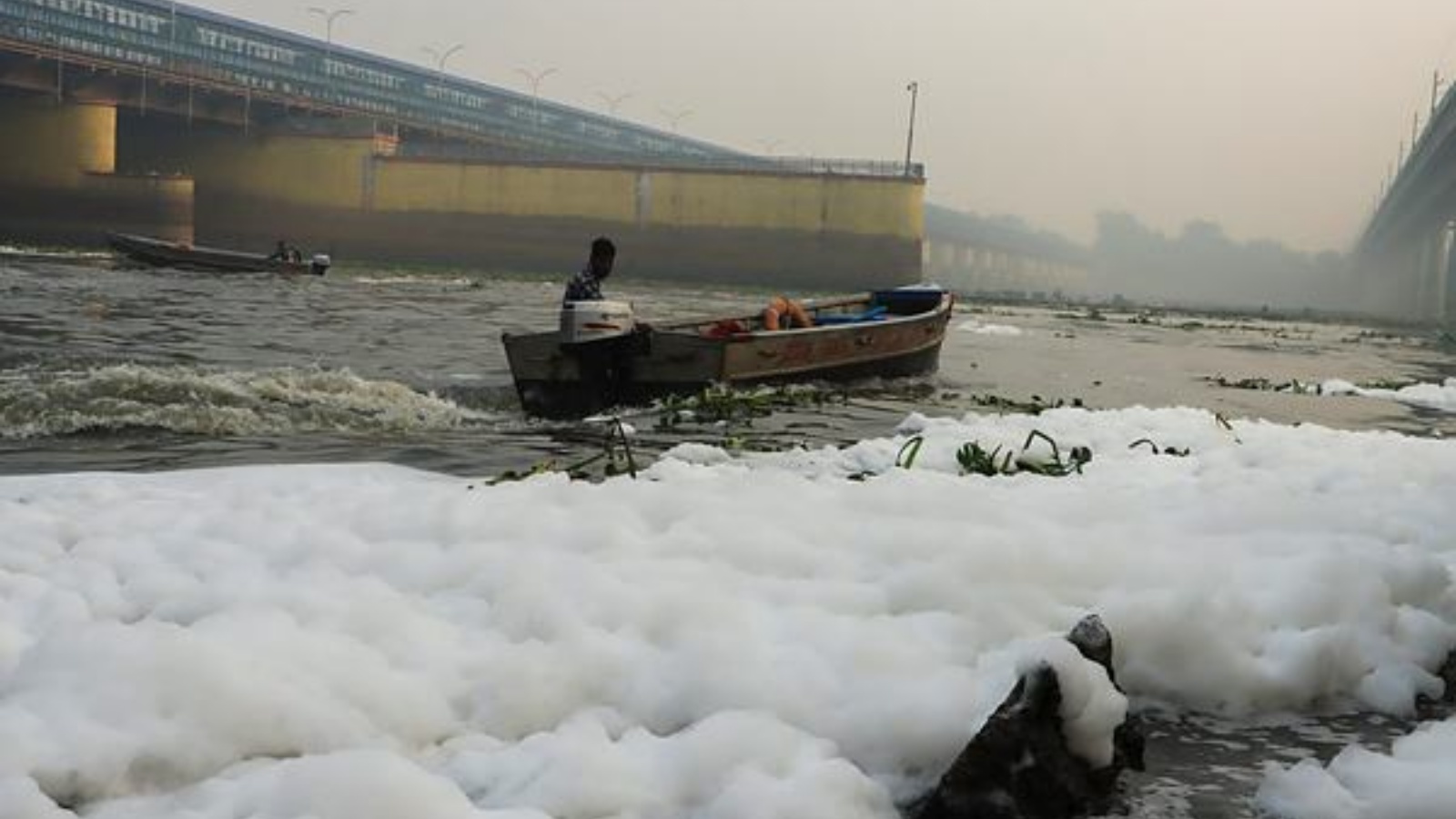
A day after hundreds of dead fish were spotted in the Yamuna near Sonia Vihar – the second such incident in less than a month – the Delhi Irrigation and Flood Control department approached the police on Thursday seeking an FIR over social media posts alleging that chemicals were being sprayed into the river ahead of Chhath Puja.
In its complaint, the department termed the allegations “fake information” circulated with “malafide intentions” to create panic and tarnish the government’s image ahead of the festival on November 15 and 16.
Delhi Water Minister Parvesh Sahib Singh alleged that some people were deliberately dumping dead fish. “As soon as ferry services started operating on the Yamuna, just a day later, officials from our department informed me that some people were dumping dead fish into Yamuna,” he told mediapersons.
“The department is filing an FIR today. An investigation will be conducted to identify who these people are and whether they have any connection to AAP workers,” he claimed.
The latest fish deaths were reported on Wednesday, a day after the launch of the Namo Yamuna River Safari, an electric river cruise. On October 14, large numbers of dead fish were spotted along the Burari stretch, with industrial effluents entering through drains 2 and 8 suspected to be have contributed to the deaths.
The latest incident coincided with a deterioration in the quality of raw water drawn from the Yamuna, with ammonia levels rising to around 1.3 mg/l. This had forced the Delhi Jal Board (DJB) to curtail production at its Sonia Vihar Water Treatment Plant for nearly five hours on Wednesday.
A senior DJB official said that all water treatment plants had been functioning normally since Wednesday evening.
Story continues below this ad
The problem of high ammonical nitrogen concentration in Yamuna during winter is not new. As the amount of water in the river drops due to lack of rain post-monsoon and during winter, the concentration of pollutants increases.
DJB’s plants can treat raw water containing up to 1 ppm of ammonia. Under such circumstances, raw water in Yamuna is either diluted with fresh water from Upper Ganga Canal or Munak Canal. However, the rise in ammonia levels on Wednesday coincided with the closure of the Upper Ganga Canal for annual maintenance, hence water was not available for dilution in Yamuna, affecting the plants’ production capacity temporarily, officials said.
Ammonia is a nitrogen-containing compound that can enter water bodies through untreated sewage, industrial effluents, agricultural runoff and the decomposition of organic matter. Studies have shown that elevated concentrations and high phosphate content can be harmful to aquatic life. Ammonia can also contribute to the depletion of dissolved oxygen in water, which can stress or kill fish.
Dr Shiv Singh Rawat, a water expert and former Haryana Irrigation department engineer, said investigators should examine sewage and industrial discharges from drains 2 and 8, elevated ammonia levels, and the alleged use of polyaluminium chloride, a chemical used to reduce water discolouration, settle suspended particles and address the issue of surface foam ahead of the cruise.
Story continues below this ad
“Any excessive or inappropriate chemical dosing could potentially harm aquatic life,” he said, calling for independent testing of water, sediment and fish samples.
Pankaj Kumar, a Yamuna activist, said an ammonia reading of around 1.3 mg/l was not high enough to explain the scale of fish mortality. “Such mass fish deaths have not happened back-to-back in such a short period in the last 10 years,” he said.
Bhim Singh Rawat of the South Asia Network on Dams, Rivers and People said back-to-back fish deaths in a relatively cleaner stretch of the Yamuna was alarming. “Laboratory testing is the first essential step towards identifying the cause and deciding remedial action,” he said.
KioskNews shows a cleaned-up reading view extracted from the publisher’s page — the original always lives on their site, not ours.