Normally stingy with water, sabra plant switches gears for rainy days, study finds
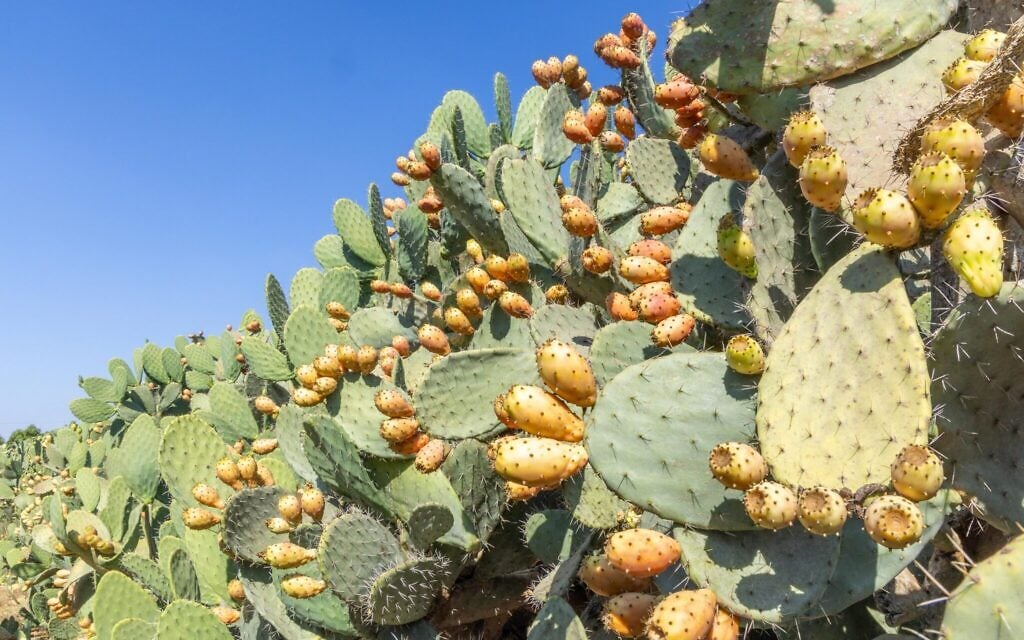
New research from Ben-Gurion University of the Negev and the Agriculture Ministry’s Volcani Institute has revealed that the prickly pear moves between gears to cope with drought but maximize growth when it can.
Commonly planted throughout Israel, where it survives on short winter rains and long dry summers, the prickly pear cactus bears distinctive green pads that grow when water is available. To absorb carbon dioxide for photosynthesis, the pads open their pores only at night so they lose less water through evaporation, though the strategy means they grow more slowly.
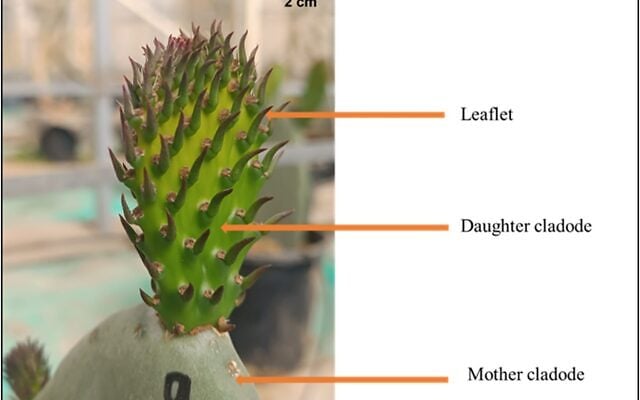
During rainy periods, the pads develop tiny cone-shaped leaves, each about a centimeter long, that drop off after about six weeks and are barely noticeable.
0:00 / 0:00
Promoted: Wondering Jews, Angela Buchdahl

Curious about the purpose of the tiny short-lived leaves, the scientists found that they allow the cactus to absorb carbon dioxide when water is less scarce and evaporation is less of a concern. Unlike the pads, the leaves open their pores during the day and take in carbon dioxide in sunlight, like most other plants, supplying young pads with around a fifth of the carbon they need to grow.
When the researchers removed the leaflets, or sealed their pores with clear nail polish, the new pads ended up about a third smaller and nearly 40 percent lighter after three weeks.
Get The Times of Israel's Daily Edition by email and never miss our top stories
By signing up, you agree to the terms
“The cactus effectively has two gears,” explained Prof. Ilya Gelfand of BGU’s Jacob Blaustein Institutes for Desert Research. “Most of the year it runs in saving mode and breathes at night to hold on to every drop [of water]. When [rain] arrives, it switches to a second, faster gear [by growing] temporary leaves that work by day like a regular plant. When the good times end, it simply drops them. That lets the cactus grow quickly whenever the desert briefly allows it, without giving up its ability to survive drought.”
According to Ben-Gurion University, prickly pear is grown on about 6.4 million acres worldwide for fruit, livestock feed and to fight desertification, mostly in parts of Africa and Latin America where droughts are more common. “Knowing how the plant speeds up its growth during short wet periods could help farmers and plant breeders as the climate gets hotter and drier,” the university said in a statement announcing the research.
While native to central Mexico, the cactus Opuntia ficus-indica, known as the sabra in Hebrew, has become a symbol of the typical Israeli — tough on the outside, sweet within.
The study, led by doctoral student Patrick Mdemba, was published in the October edition of the Journal of Experimental Botany.
Animal lovers, this one's for you

In 1935, Rabbi Max Shorenstein left Denmark to pursue his lifelong dream: building a zoo in Tel Aviv and teaching children to love animals. The Tel Aviv Zoo became one of the city’s greatest attractions, but envy, greed, and corruption drove Shorenstein from the paradise he created.
The film 'There Are No Lions in Tel Aviv' is available to screen November 19-26 for members of our reader support group, The Times of Israel Community. Join the Community today to support our work and watch our DocuNation series of outstanding Israeli documentary films.
I want to watch I want to watch Already a member? Sign in to stop seeing this
If you’d like to comment, join
The Times of Israel Community.
KioskNews shows a cleaned-up reading view extracted from the publisher’s page — the original always lives on their site, not ours.