JONATHAN TURLEY: Pope Leo XIV casts ballot in US election, raising questions about foreign leaders voting
"So, the Pope doesn’t take sides. Prevost has another opinion, but we won’t do that now."
That funny quip from Pope Leo XIV, born Robert Prevost, referred to the historic game in Rome when the Villanova and Notre Dame basketball teams play each other.
However, a story this week raised a different question of when the Pope, as opposed to Prevost, can "take sides."
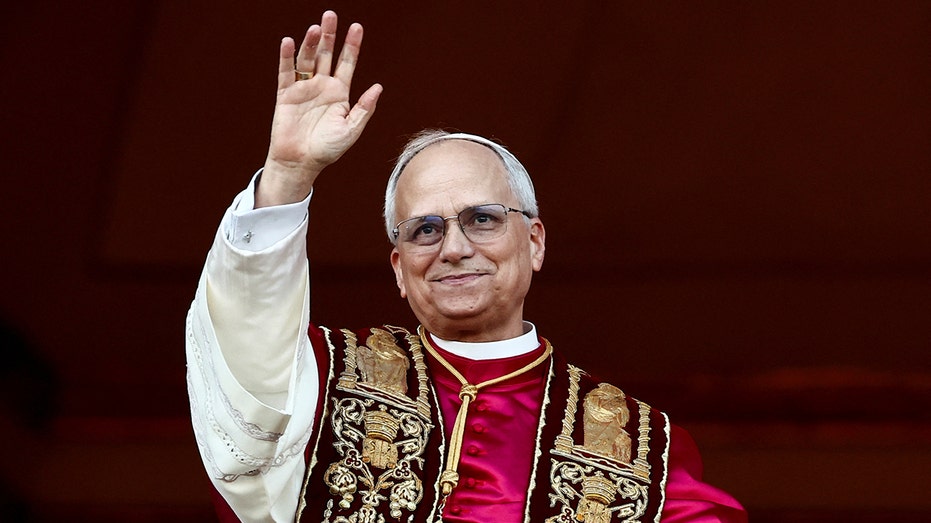
Pope Leo XIV, Cardinal Robert Prevost of the United States appears on the balcony of St. Peter's Basilica at the Vatican on May 8, 2025. (REUTERS/Yara Nardi)
POPE LEO MEETS WITH CHICAGO'S FAR-LEFT MAYOR, GEORGE FLOYD'S FAMILY LAWYER AT THE VATICAN
This month, American-born Pope Leo XIV became the first pope ever to vote in a U.S. election.
A longtime Chicago native, the Pope mailed an absentee ballot to Will County, and the clerk’s office confirmed to Fox News Digital that "Robert Prevost is on the list of individuals who requested a Vote by Mail ballot."
There is no question that the pope can vote in the Holy See. Indeed, he is the ultimate and final vote in the Vatican, but can he actually vote in Illinois races — including the governor’s race involving incumbent Democrat J.B. Pritzker? The answer appears to be yes, but it raises some novel questions.
Now, as a threshold matter, I want to shed some bias. I was raised Catholic in Chicago. No, that is not the bias. There is that lingering conflict with the pope coming out as a White Sox fan. Many of us on the North Side hoped for a conversion to restore our faith in papal infallibility. However, he has remained entrenched in his South Side allegiance.
This column rises above that historic rivalry and does not suggest that White Sox fans can be challenged at the polls. Besides, I previously explained that the pope is a Cubs fan without knowing it.

A person takes a picture of the childhood home of the new Pope Leo XIV in Dolton, Illinois, on May 9, 2025. Robert Francis Prevost became the first pope from the United States on May 8, 2025, picking the papal name Leo XIV after cardinals from around the world elected him leader of the world's 1.4 billion Catholics. (Photo by KAMIL KRZACZYNSKI/AFP via Getty Images)
Rather, what surprised me was that the head of a foreign state could vote in U.S. elections. The Vatican is a distinct nation with a diplomatic corps, a court system, a local government, and even a military in the form of the legendary Swiss Guards.
The Holy See Press Office declared, "Pope Leo XIV has exercised his right to vote as a United States citizen whenever he was eligible to do so. The Holy See Press Office confirms that, in keeping with this long-standing practice of civic participation, he has submitted his mail-in ballot in Chicago."
The Holy See maintains that Pope Leo retains his status as a U.S. citizen while serving as the head of a foreign nation. There is support for this position.
The State Department has maintained that dual citizens do not have to choose between their countries, though it does not expect them to serve as the head of another country.
"U.S. dual nationals owe allegiance to both the United States and the foreign country (or countries, if they are nationals of more than one). They are required to obey the laws of both countries, and either country has the right to enforce its laws. Claims of other countries upon U.S. dual-nationals may result in conflicting obligations under the laws of each country. U.S. dual nationals may also face restrictions in the U.S. consular protections available to U.S. nationals abroad, particularly in the country of their other nationality."
Notably, the State Department requires dual citizens to use a U.S. passport to enter the country. Does that mean that, when traveling as head of state, Pope Leo has to use a U.S. passport? Unlikely, but intriguing.
It strikes me as odd that a person can lead another country and still vote in U.S. elections. With all of those worried about Russian interference in elections, imagine if Putin could actually vote in U.S. elections. Obviously, Pope Leo is greatly loved and represents someone whose values are aligned with this country. Yet, he is also the head of state of a foreign nation.
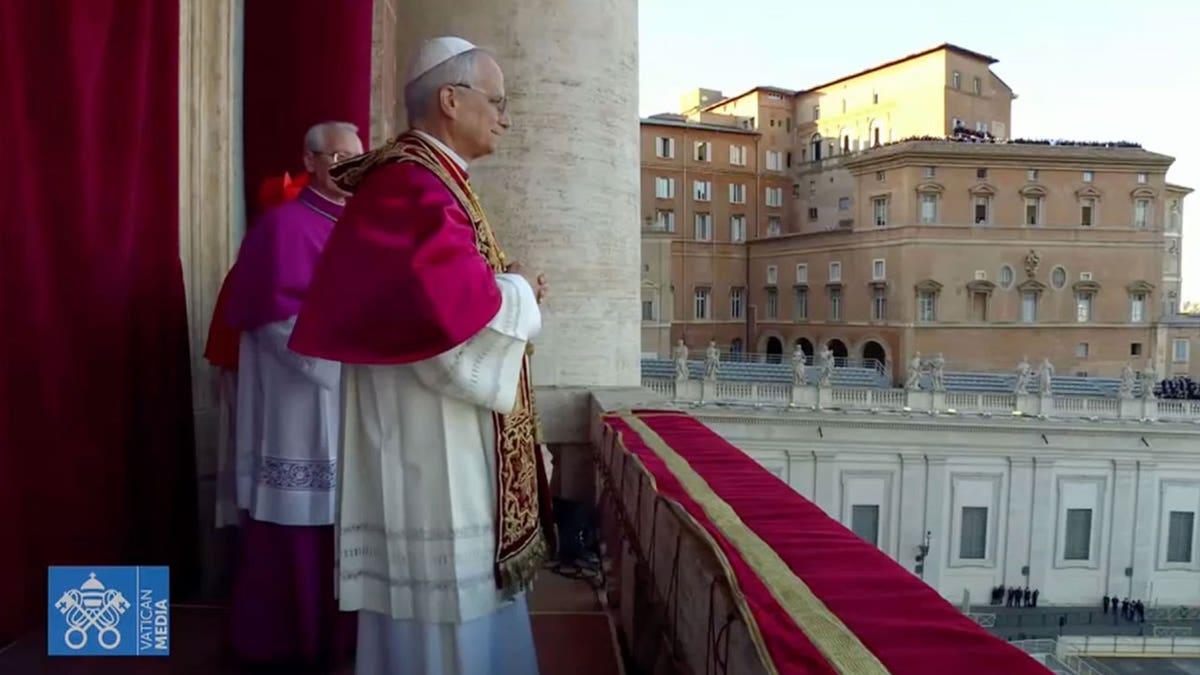
Pope Leo XIV steps out as the first American Pope in history at the Vatican, Thursday, May 8, 2025. (Vatican Media)
SUPREME COURT RULES ON MAIL-IN BALLOTS RECEIVED AFTER ELECTION DAY
Under the Uniformed and Overseas Citizens Absentee Voting Act (UOCAVA), military personnel and citizens abroad are allowed to vote in U.S. elections. It is no longer considered an absentee vote requiring an excuse but simply a mail-in ballot.
The question is whether this right should be suspended when you assume a position in a foreign nation, let alone the head of such a nation. Dual citizenship has long been debated over the difficult questions raised by nations with opposing values and interests. However, being the head of a foreign government with potentially opposing interests and actions to the United States creates a curious status.
STATE DEPARTMENT CONSIDERS SHARING PASSPORT RECORDS FOR VOTER CITIZENSHIP CHECKS
It turns out that when Gov. Pritzker met with the pope last year, he was actually meeting with a constituent and voter.
I am most surprised that the Vatican does not have a policy against such voting, though this is admittedly unprecedented. I would think that the head of the Catholic faith and the head of a foreign government would have a single national citizenship running to the Holy See. All popes are selected from the global faithful by the College of Cardinals and thus have national citizenship with other countries.
In assuming their positions, the cardinals "pledge and swear, as individuals and as a group, to observe faithfully and scrupulously the prescriptions contained in the Apostolic Constitution."
They also reaffirm that they are not subject to countervailing allegiances or pressures from outside the College: "And never to lend support or favour to any interference, opposition or any other form of intervention, whereby secular authorities of whatever order and degree or any group of people or individuals might wish to intervene in the election of the Roman Pontiff."
However, it is fascinating that, once elected, popes do not shed that status upon assuming the head of the Holy See.
It is an uncomfortable question since it also raises whether the head of a foreign government should have dual citizenship. Most people were legitimately thrilled, including myself, by the first American pope and can view this as an unlikely "one-off." However, it could just as easily happen with another nation and a dual citizen.
CLICK HERE TO DOWNLOAD THE FOX NEWS APP
At the risk of my own excommunication, it seems a worthy question for discussion, even though I doubt any politicians would relish such a debate.
For his part, Pope Leo stated before the Villanova-Notre Dame game that the pope will not take sides in the U.S. elections, but Robert Prevost will.
Jonathan Turley is a Fox News Media contributor and the Shapiro Professor of Public Interest Law at George Washington University.
He is the author of the new book "Rage and the Republic: The Unfinished Story of the American Revolution" (Simon & Schuster, Feb 3, 2026), on the 250th anniversary of the American Revolution.on the 250th anniversary of the American Revolution.
He is a nationally recognized legal scholar who has written extensively in areas ranging from constitutional law to legal history to the Supreme Court. He has written over three dozen academic articles that have appeared in a variety of leading law journals.
Professor Turley also served as counsel in some of the most notable cases in the last two decades including the representation of whistleblowers, military personnel, former cabinet members, judges, members of Congress, and a wide range of other clients.
Professor Turley testified more than 50 times before the House and Senate on constitutional and statutory issues, including the Senate confirmation hearings of cabinet members and jurists such as Justice Neil Gorsuch. He also appeared as an expert witness in both the impeachment hearings of President Bill Clinton and Donald Trump.
Professor Turley received his B.A. at the University of Chicago and his J.D. at Northwestern. In 2008, he was given an honorary Doctorate of Law from John Marshall Law School for his contributions to civil liberties and the public interest.
KioskNews shows a cleaned-up reading view extracted from the publisher’s page — the original always lives on their site, not ours.