Roaring back: Hong Kong’s 100 million-year-old dinosaur fossil makes its debut
Hong Kong’s first-ever dinosaur fossils, discovered on Port Island, belong to a sauropod measuring over 20 metres (65 feet) long that lived about 100 million years ago, with the specimens going on public display on Friday.
Traced to the Cretaceous period, the remains are among some 60 sets of rare dinosaur fossils on display at the Hong Kong Heritage Discovery Centre in Kowloon Park, including some from mainland China unveiled for the very first time in the city.
“The discovery marks the first record of this type of dinosaur along China’s southern coast,” said Xu Xing, director of the Institute of Vertebrate Paleontology and Paleoanthropology (IVPP) of the Chinese Academy of Sciences at a media preview on Thursday.
“It filled a gap in Hong Kong’s Cretaceous vertebrate fossil record and represented an important missing link in understanding dinosaur distribution along the southern Chinese coast,” he added.
The fossils were discovered in October 2024 on Port Island, part of the city’s Unesco Global Geopark.
A joint team of experts from the IVPP, the Antiquities and Monuments Office and the Agriculture, Fisheries and Conservation Department subsequently carried out excavations.
A total of 31 fossil-bearing specimens of varying sizes were recovered by the end of November 2024.
After two years of preparation and research, experts concluded that the remains belonged to a sauropod from the Cretaceous period, which spanned about 145 million to 66 million years ago.
They believe the dinosaur was probably a member of Titanosauriformes, a group of sauropods that flourished during the Cretaceous period.
Sauropods were a group of long-necked, plant-eating dinosaurs characterised by massive bodies and pillar-like legs. They were among the largest land animals to have lived and were widespread during the Jurassic and Cretaceous periods.
Although the fossils are incomplete, identifiable bones include parts of the right ilium, right pubis and right femur, as well as anterior caudal vertebrae. These bones are concentrated around the hip and nearby areas, suggesting they may have belonged to a single dinosaur.
Experts estimate the dinosaur measured more than 20 metres in length and stood over three metres tall at the hip. Bone tissue analysis also suggests it had reached a late stage of development and was approaching maturity.
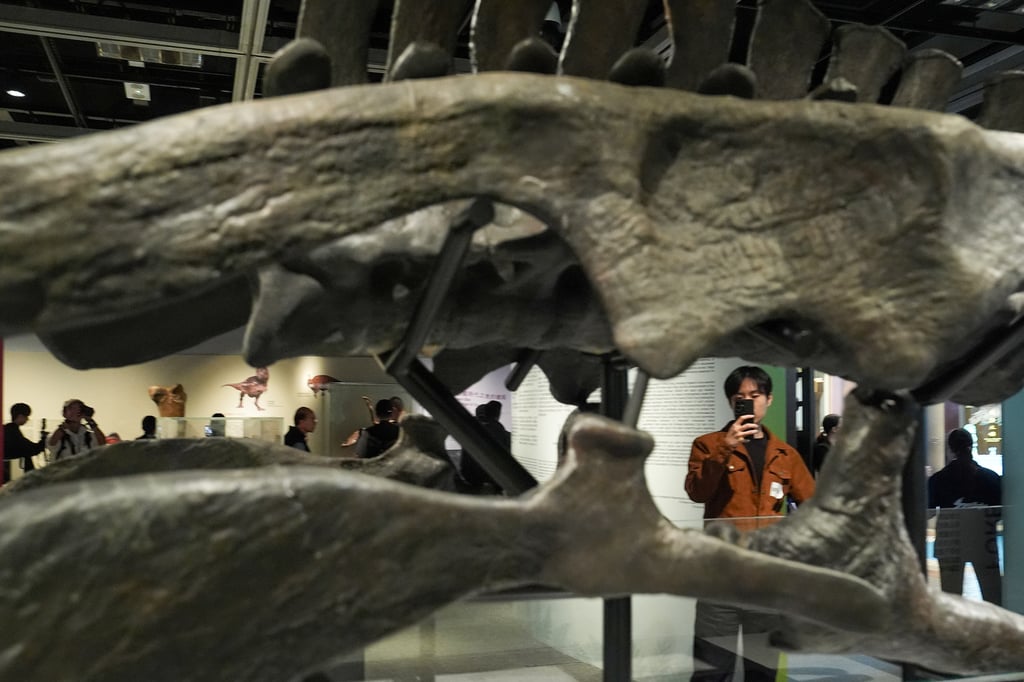
“The exhibition marked the significant discovery of Hong Kong’s first dinosaur fossils, offering visitors a glimpse into the animals’ appearance, along with the history and ancient ecological environment of Hong Kong,” development minister Bernadette Linn Hon-ho said at the exhibition’s opening ceremony.
The exhibition features 66 groups of exhibits. In addition to the dinosaur fossils from Port Island, there are 46 groups of fossils from the mainland, 34 of which are classified as National Class I key protected palaeontological fossils. Most of them are being shown in Hong Kong for the first time.
Highlights include a group of Psittacosaurus fossils whose bone analysis suggests that a three-year-old dinosaur lived alongside and cared for several two-year-old members of its species.
Another exhibit, a partial skeleton of Sinornithoides youngi from Inner Mongolia, was preserved in a sleeping posture resembling that of modern birds, with its head tucked beneath its forelimb. The specimen offers valuable evidence of dinosaur behaviour.
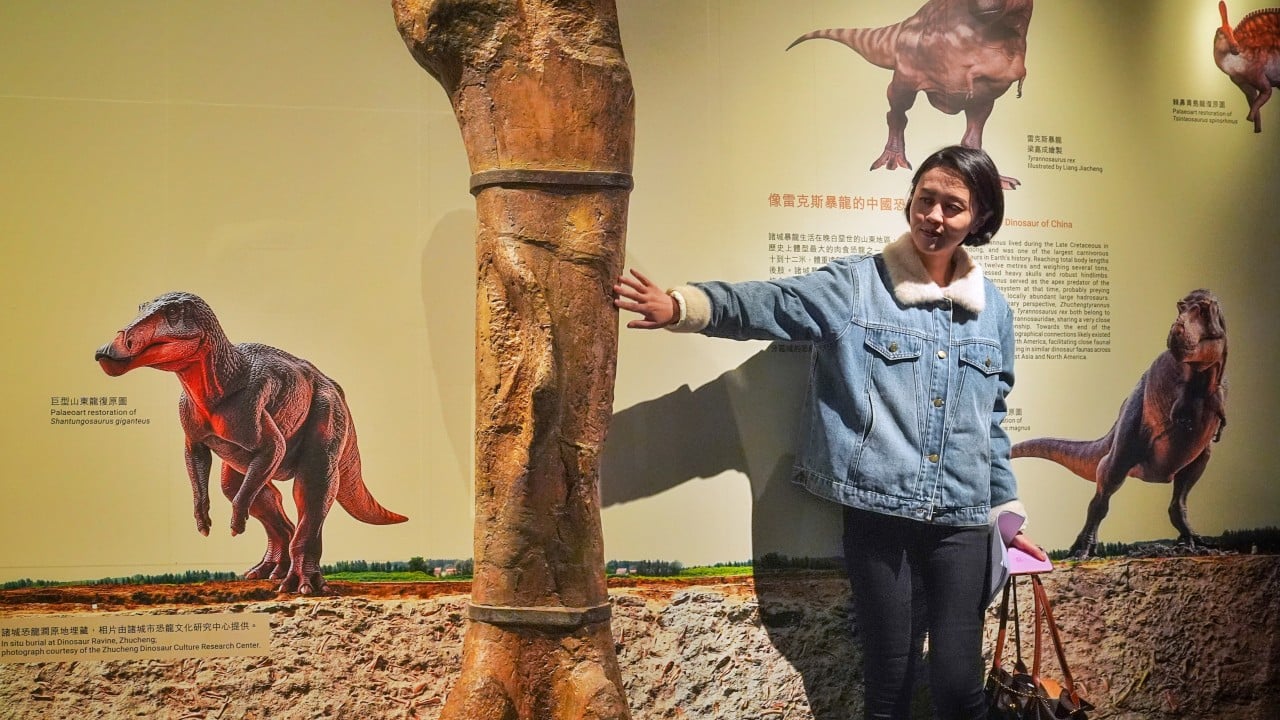
Visitors can also touch a dinosaur thigh bone in an interactive display and use their mobile phones to access an augmented reality experience that brings the Port Island dinosaur to life.
The free exhibition opens to the public on Friday and runs until May 12 next year.
KioskNews shows a cleaned-up reading view extracted from the publisher’s page — the original always lives on their site, not ours.