Let’s work to get back to 1.5° C target: COP31 draft agreement
At the start of the second week of negotiations at the ongoing climate conference in the Turkish city of Antalya, host countries Turkey and Australia circulated the first draft of a cover decision that expresses deep concern at the scientific finding that the 1.5 degree Celsius target had gone beyond reach and urges every country to work harder to limit the magnitude and duration of temperature overshoot beyond that target.
The 18-page draft decision, which is likely to undergo several amendments, also calls upon countries pursue efforts to bring back the levels of global warming to within 1.5 degree Celsius “as early as possible within this century”.
The COP31 climate meeting in Antalya is being held in the backdrop of recent scientific assessments that it was no longer possible for the world to limit the rise in global temperatures to within 1.5 degree Celsius from pre-industrial times, one of the key objectives of the 2015 Paris Agreement. The scientific assessment, put out by the UN Environment Programme earlier this year, said a warming of 1.7 to 1.8 degree Celsius was now inevitable, and the best that the world could hope for was to bring it back to the 1.5 degree Celsius level through concerted efforts over the next few decades.
The draft cover decision, which is suppose to serve as a political declaration from COP31, spends several paragraphs on the 1.5 degree Celsius target, urging countries to do more to fight climate change. It also calls upon the developed countries to strive to achieve net-zero emissions status by as early as 2030 and net-negative emissions by 2040.
Each of these requests is highly unrealistic, considering the progress made by countries so far. None of the countries are on track to achieve net-zero status by 2030, and only a couple of relatively small nations, which account for a very small part of global emissions, have set targets for achieve net-zero status by 2040. A majority of developed nations are not on track to achieve this even in 2050.
The draft decision proposes to set up a new technical ‘work programme’ on understanding the science of 1.5 degree with a particular focus on suggesting pathways to return to that level at some point. The Intergovernmental Panel on Climate Change, a scientific body that produces comprehensive assessments of climate change every 5-7 years, had, in 2018, come out with a special report on 1.5 degree Celsius target, that dealt in detail, measures needed to be taken to meet this target.
The draft decision also includes a reference to a new electrification target being pushed by Turkey and Australia, which seeks to increase the world’s share of electricity in total final energy consumption from the current 23% to 35% by 2035. Electrification is key to the global energy transition that the world has to go through to reduce its greenhouse gas emissions.
Story continues below this ad
Turkey has been trying to convince countries to sign up to a voluntary commitment to this 2035 electrification target, but just about 30 countries had agreed to do so till the last count.
Countries strongly resist any attempts to force any new climate targets, and the success of voluntary commitments, on the sidelines of these meetings, have been very limited. The draft decision does not ask every country to try and achieve 35% electrification by 2035, but only calls upon every country to recognise this as a new global goal.
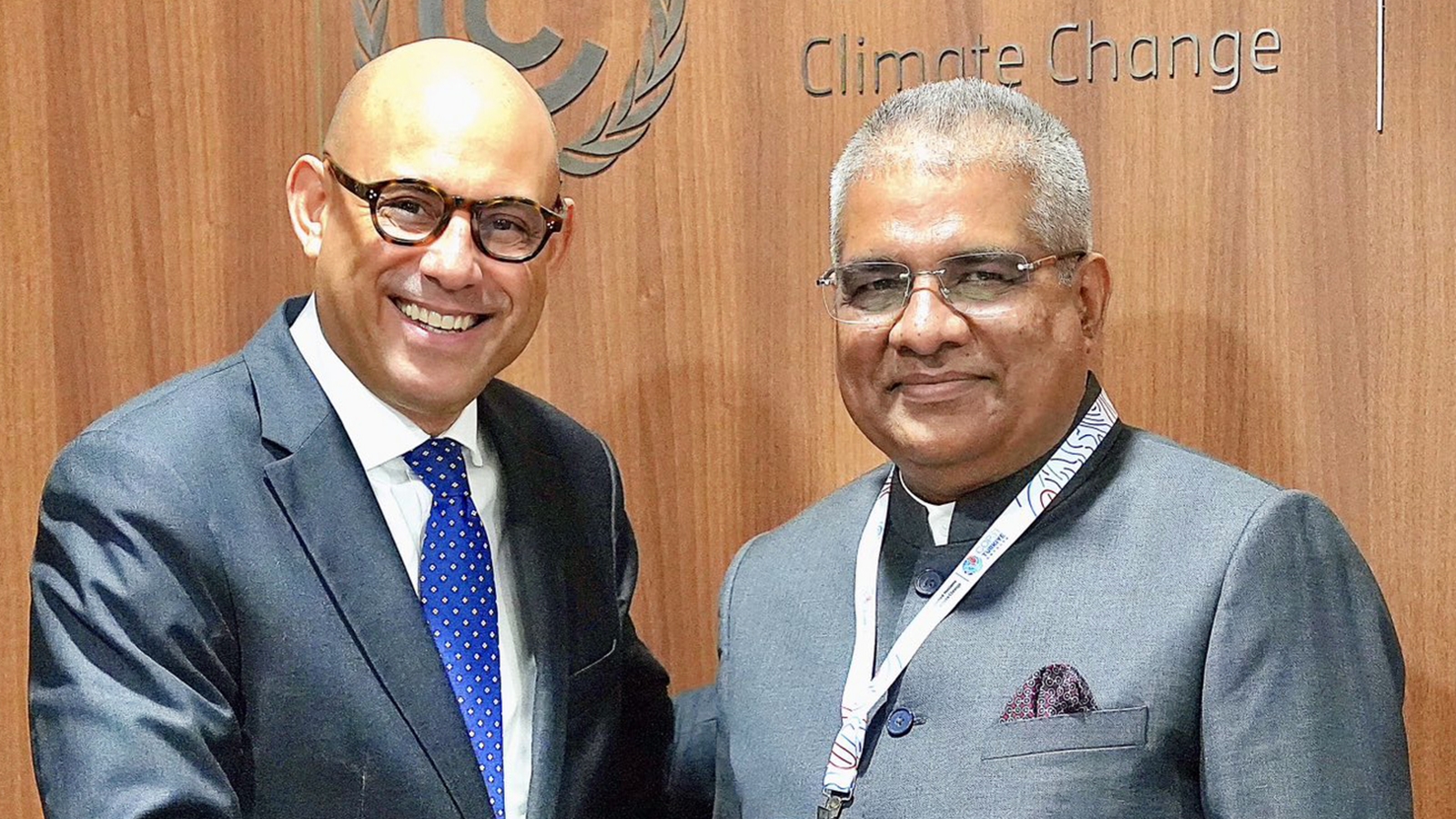
Environment Minister Bhupender Yadav reiterated India’s position that a proposed Just Transition Mechanism must not create new obligations on countries. Just Transition refers to the efforts to ensure that transition to low-emission energy sources results in a fair, inclusive and socially equitable outcomes. Under a Just Transition Work Programme established three years ago, countries are currently negotiating the creation of a mechanism that would offer technical assistance, capacity building and knowledge-sharing.
KioskNews shows a cleaned-up reading view extracted from the publisher’s page — the original always lives on their site, not ours.