Preventing school violence starts at home, but gov’t must step up
- Fatal shootings and other forms of violence in Philippine schools have raised concerns about the safety of children and the government's ability to protect them.
- Experts emphasize the importance of parental involvement and community initiatives in addressing youth violence and promoting school safety.
- The Department of Education is facing funding challenges for mental health and child protection programs.
This is AI-generated. Read the article for full context. Report any errors.
MANILA, Philippines – Just this year, fatal shootings rocked the country’s education system, raising questions on the government’s capability to keep children safe, and on the current state of Filipino youth.
In June, three students were killed after their two schoolmates opened fire in Tacloban City. By August, two students died inside a private school in Zamboanga City, including the alleged perpetrator himself.
Other cases of school violence included stabbing, viral security threats, and reports of weapon confiscation.
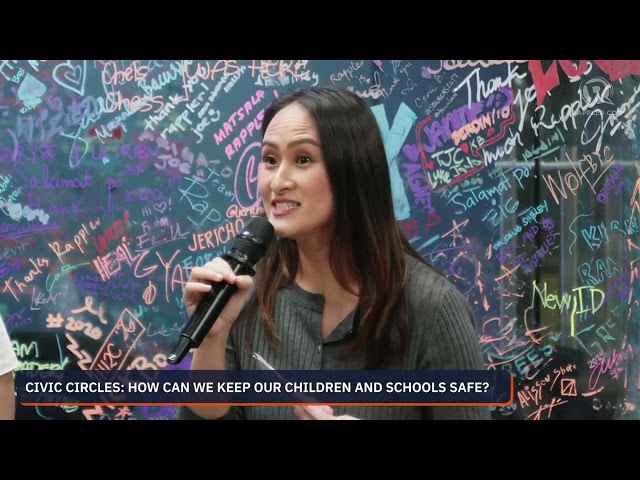
Who is to blame? Who is responsible? Dr. Princess Gairanod, a child protection specialist from the Philippine Pediatric Society, stressed that systems surrounding children must be examined.
For her, it is essential that every sector of society fulfills their role in ensuring school safety.
“It’s not just a list of things that we tick off. We have to look at the different factors that affect it,” Gairanod said during Rappler’s “Civic Circles: How can we keep our children and schools safe?” on Thursday, September 10.
Importance of parents’ involvement
During the panel discussion, Gairanod said parents’ participation in the lives of their children will go a long way to combat youth violence.
As a pediatrician, she teaches parents how to spot warning signs and other sudden changes in children’s behavior, as well as technological practices to protect minors against online harms.
It’s not micromanaging but giving children proper attention.
“If something goes wrong, if someone threatens them (the children) online, then they should be able to feel safe enough to tell parents because parents can escalate the action [to authorities],” Gairanod said.
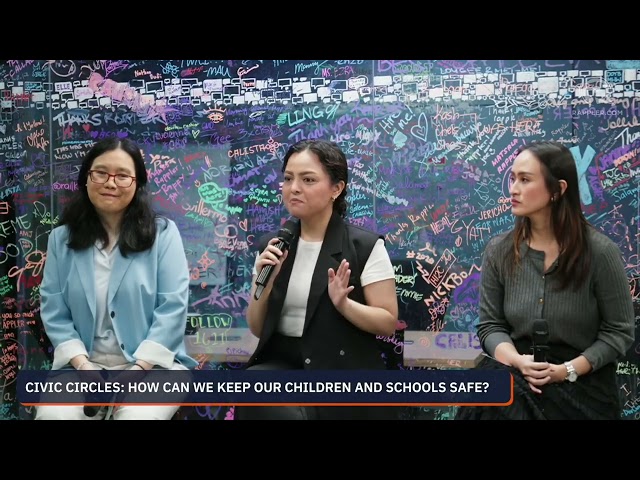
Connecting with parents is also a highlight of local initiatives. For instance, parents in Quezon City have important duties in the QC Safe Schools Whole-of-Community Framework.
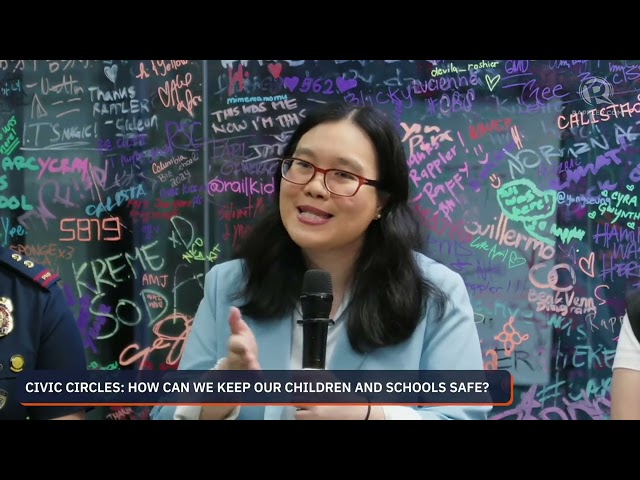
“There was already a demand from our parents to have values formation programs. So, the city has developed a five-module program wherein this will be deployed to all our public school parents,” Quezon City Councilor Aly Medalla said.
The program seeks to train parents to reinforce positive values and responsible behavior at home, while also strengthening the partnership with schools to give proper support to children.
Unfunded child protection, mental health services in schools
On the part of the Department of Education (DepEd), it recently introduced active shooter drills as one of the ways to educate students and school personnel about emergency situations.
In September, the DepEd revised its protocols to make the drills “trauma-informed,” following recommendations of medical groups. This means that there will be no active threat role players or individuals pretending to be “active shooters” and no weapons during the simulation exercises.
DepEd Director IV Razzel Anne Requesto, who works under the Office of the Assistant Secretary for Governance and Support Services, said students appreciated being taught how to prepare for threats and other incidents.
Other than reaction, prevention is also key. However, the DepEd’s response could be limited next year amid lack of funding for its critical programs to address school violence.
The agency is still lobbying for an increase in its 2027 budget, including injecting P44 million more into its child protection program, particularly to train teachers to detect red flags.
It is also through the program that schools develop their reporting mechanisms for bullying incidents, and the referral system for needed interventions and support.
And while P802 million is already earmarked for the hiring of 1,800 school counselor associates and 221 schools division office counselors next year, this would not be enough to cover all schools in the country. The DepEd is still seeking P13.81 billion more to effectively implement its mental health and guidance counseling program.
“We’ve seen over the past year how we were able to help our learners to understand better their rights and responsibilities, how we can also train and capacitate our parents and our teachers — basically, our entire stakeholder and school community — in terms of how to protect our children,” Requesto said.
“And I believe that more investment in mental health and child protection would be much needed and could help prevent these cases of school violence,” she added.
Need for better cybersecurity infra
For the Philippine National Police (PNP), targeting online influences is part of its strategy, as discussions surrounding school violence include nihilistic violent extremism (NVE).
NVE, which is a loose online subculture, glorifies violence without a coherent ideological framework.

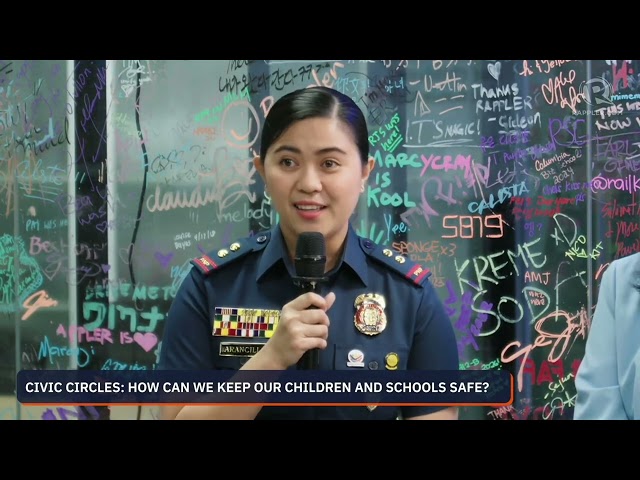
This year, authorities have rescued at least 43 minors in NVE-related cases, according to Police Captain Wallen Arancillo, spokesperson for the PNP Anti-Cybercrime Group (ACG).
The PNP is ramping up awareness campaigns on NVE networks, as the extremists target minors, specifically vulnerable youth experiencing social isolation and mental health struggles, through online platforms.
Curbing cybercrime would also entail having a better cybercrime infrastructure. Arancillo said the ACG needs upgraded tools, especially on digital forensic investigation, and 2,000 more personnel across the country.
“If you have strong cybersecurity, it would be easier for us and faster for us to investigate, monitor, and trace these cyber threats,” added Arancillo.
The experts emphasized that enhanced collaboration among sectors must continue to keep children safe.
But Gairanod also issued this reminder: “Policy is not protection, implementation is.” – Rappler.com
KioskNews shows a cleaned-up reading view extracted from the publisher’s page — the original always lives on their site, not ours.