10 Addictive Apple TV Shows That Are Impossible To Stop Watching


Sign in to your Collider account
There is no one answer to what makes a TV show impossible to stop watching. However, what is absolutely necessary is for the audience to feel an immediate urge to watch the next episode. Now, that doesn’t always require constant action or constant cliffhangers. There are plenty of ways to pique the viewers’ curiosity and make them desperate for one more answer or clue, and Apple TV has become especially good at creating that feeling.
The streamer might be one of the newer names in the game, but its shows have the kind of bingeability that only comes from momentum, strong writing, and solid character development. That’s the reason why Apple TV has built such a strong catalog, with these shows being especially addictive.
10 'Bad Monkey' (2024–Present)

Bad Monkey is weird and wacky in the best way. The series, based on Carl Hiaasen’s novel, follows former detective Andrew Yancy (Vince Vaughn), who has been demoted to working as a restaurant inspector in the Florida Keys. His new career is miserable until tourists fishing off the coast pull a human arm out of the water. Yancy becomes convinced that it belongs to a murder victim, and if he can actually prove it, he might finally have a way back into police work. However, he has no idea of the messy web this investigation is about to lead him into.
The mystery is addictive, but Vaughn is what makes Bad Monkey so entertaining. Yancy is stubborn and even irritating at times, but that’s part of his charm. The show also keeps expanding beyond the central investigation and includes a parallel storyline in the Bahamas that eventually intertwines with everything happening in Florida. The series moves from murder mystery to comedy and drama without ever jarring the audience, and that versatility is one of its greatest strengths.
9 'For All Mankind' (2019–2027)

For All Mankind takes place in an alternate reality where the Soviet Union beats the United States to the moon. The series opens with cosmonaut Alexei Leonov becoming the first man to walk on the lunar surface and sends NASA into a full-blown crisis. Instead of allowing the Space Race to wind down, that humiliation pushes America to go even harder. Female astronauts enter the program much earlier, permanent lunar bases become possible, and every breakthrough forces the Soviets to respond. For All Mankind follows astronauts including Ed Baldwin (Joel Kinnaman) and Danielle Poole (Krys Marshall) as that rivalry keeps expanding over several decades.
Every season of the show jumps roughly a decade forward so the audience really gets to see this alternate timeline evolve from the moon race of the 1960s and 1970s into a race to Mars, and eventually an established colony on the red planet. The show is constantly introducing some ridiculous new milestone, but because viewers have watched this world develop step by step, it never feels like the narrative has suddenly jumped too far ahead. Watching the newer generations inherit the ambitions and mistakes of the people before them gives the viewers a genuine sense of history unfolding in real time. By Season 5, For All Mankind moves into the 2010s, where Mars has transformed into a politically complicated society of its own, setting the stage for an epic conclusion.
8 'Presumed Innocent' (2024–Present)

Presumed Innocent is based on Scott Turow’s novel and follows Rusty Sabich (Jake Gyllenhaal), the chief deputy prosecutor in Chicago whose colleague Carolyn Polhemus (Renate Reinsve) is found murdered. The case is already personal, but the catch is that he and Carolyn were having an affair. Once that relationship comes to light, Rusty goes from helping investigate the murder to becoming the person accused of committing it. This tension makes Presumed Innocent ridiculously addictive. Rusty insists that he didn’t do it, but the audience can’t really trust him when he is out there lying to his wife Barbara (Ruth Negga), withholding information, and becoming increasingly desperate as the case against him grows. At the same time, prosecutor Tommy Molto (Peter Sarsgaard) seems almost personally determined to convict him.
The series keeps changing what the audience knows about Carolyn, Rusty, and the night of the murder, so almost every episode gives viewers another perfectly reasonable cause to change their mind about what happened. The courtroom drama eventually becomes just as compelling as the murder mystery because Rusty understands the legal system well enough to know exactly how bad he looks. Gyllenhaal plays that ambiguity brilliantly as Rusty goes from looking completely innocent to a man truly capable of dangerous things. By the time the true story is revealed, the audience has probably accused almost every character in the picture, and that’s exactly what the show aims to do.
7 'Slow Horses' (2022–Present)
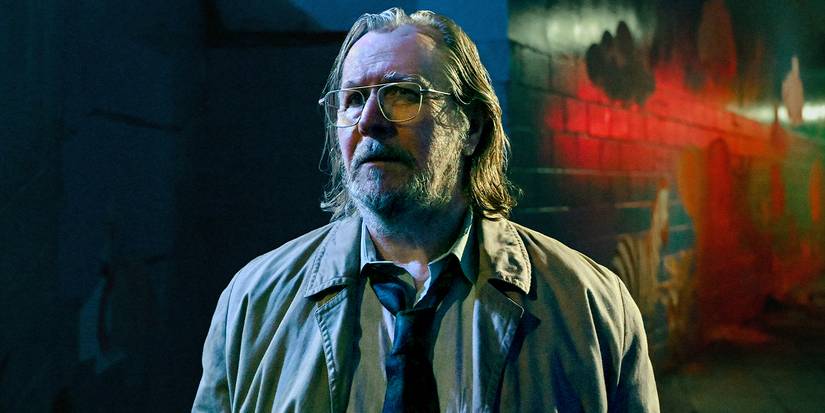
Slow Horses is one of the most bingeable shows on Apple TV. The series follows a group of disgraced MI5 agents who have been dumped at Slough House after making career-ending mistakes. River Cartwright (Jack Lowden) arrives there desperate to prove that he still belongs in the intelligence service, only to find himself working under the deeply unpleasant and unprofessional Jackson Lamb (Gary Oldman). The rest of Slough House is made up of similarly damaged agents, including Louisa Guy (Rosalind Eleazar), hacker Roddy Ho (Christopher Chung), and Catherine Standish (Saskia Reeves), who is recovering from alcoholism.
Now, the group is supposed to be doing meaningless administrative work, yet somehow they keep stumbling into kidnappings, assassinations, Russian plots, and political conspiracies. These missions that the agents find themselves dealing with rarely unfold as expected. The group is competent enough to survive, but nowhere near polished enough to do it all perfectly. Their plans fail, and they make horrible decisions, but the show’s strongest moments come when the slow horses work together to get to the bottom of things. The seasons are short, fast-paced, and nearly every episode ends with the situation getting noticeably worse. The series combines character comedy with compelling mysteries that keep the audience hooked for the next chapter.
6 'Bad Sisters' (2022–Present)
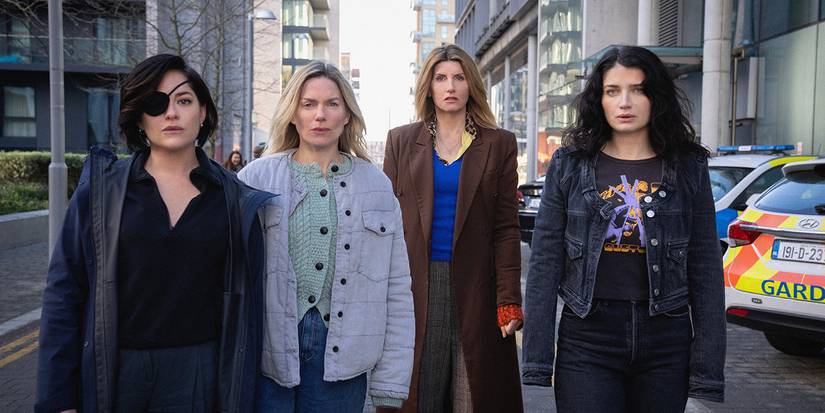
Bad Sisters is funny and heartwarming at the same time. The Apple TV series revolves around the five Garvey sisters, who are incredibly close since losing their parents at a young age. Their bond becomes much more complicated when Grace (Anne-Marie Duff) marries the emotionally abusive John Paul (Claes Bang). Now, when he suddenly dies, the remaining sisters, Eva (Sharon Horgan), Ursula (Eva Birthistle), Bibi (Sarah Greene), and Becka (Eve Hewson), immediately become suspicious of the insurance company responsible for paying out his life policy. The catch is that the audience already knows they had very good reasons for wanting him dead. Bad Sisters tells this addictive story from two directions. In the present, insurance brothers Thomas (Brian Gleeson) and Matthew Claffin (Daryl McCormack) desperately try to prove that John Paul’s death was not accidental. Meanwhile, flashbacks reveal just how awful John Paul was and gradually show the sisters considering increasingly ridiculous ways to get rid of him.
The show never relies on one giant mystery to keep things moving because the audience is constantly wondering whether the sisters actually killed him, which one of their plans worked, and how much the investigators really know. Despite all that, though, the Garvey sisters and their dynamics are the most important part of the story. Their loyalty to and love for each other makes all of their reckless decisions easy to understand. The comedy prevents the more serious themes of the show from becoming exhausting without ever trivializing what Grace experiences. Bad Sisters is the perfect definition of a dark comedy, and people need to stop sleeping on it.
Collider Exclusive · Sci-Fi Survival Quiz Which Sci-Fi World Would You Survive? The Matrix · Mad Max · Blade Runner · Dune · Star Wars
Five universes. Five completely different ways the future went wrong — or sideways, or up in flames. Only one of them is the world your instincts were built for. Eight questions will figure out which dystopia, galaxy, or desert wasteland you'd actually make it out of alive.
💊The Matrix
🔥Mad Max
🌧️Blade Runner
🏜️Dune
🚀Star Wars
01
You sense something is deeply wrong with the world around you. What do you do? The first instinct is often the truest one.
02
In a world of scarcity, what resource do you guard most fiercely? What we protect reveals what we believe survival actually requires.
03
What kind of threat keeps you up at night? Fear is useful data — if you're honest about what you're actually afraid of.
04
How do you deal with authority you don't trust? Every dystopia has a power structure. Your approach to it determines everything.
05
Which environment could you actually endure long-term? Survival isn't just tactical — it's physical, psychological, and very much about where you are.
06
Who do you want in your corner when things fall apart? The company you keep is the clearest signal of who you actually are.
07
Where do you draw the line — if you draw one at all? Every survivor eventually faces a moment that tests what they're actually made of.
08
What would actually make survival worth it? Staying alive is one thing. Having a reason to is another.
Your Fate Has Been Calculated You'd Survive In…
Your answers point to the world your instincts were built for. This is the universe your temperament, your survival instincts, and your particular brand of stubbornness were made for.
The Matrix
You took the red pill a long time ago — probably before anyone offered it to you. You're a systems thinker who can't help but notice the seams in things.
- You're drawn to understanding how the system works before figuring out how to break it.
- You'd find the Resistance, or it would find you — your instinct for spotting constructed realities is the machines' worst nightmare.
- You function best when you have access to information and the freedom to act on it.
- The Matrix built an airtight prison. You'd be the one probing the walls for the door.
Mad Max
The wasteland doesn't reward the clever or the well-connected — it rewards those who are hard to kill and harder to break. That's you.
- You don't need comfort, community, or a cause larger than the next horizon.
- You need a vehicle, a clear threat, and enough fuel to outrun it — and you're good at all three.
- You are unsentimental enough to survive that world, and decent enough — just barely — to be something more than another raider.
- In the wasteland, that distinction is everything.
Blade Runner
You'd survive here because you know how to exist in moral grey areas without losing yourself completely.
- You read people accurately, keep your circle small, and ask the questions others prefer not to answer.
- In a city where humanity is a legal designation rather than a feeling, you hold onto something that keeps you functional.
- You're not a hero. But you're not lost, either.
- In Blade Runner's world, that distinction is everything.
Dune
Arrakis is the most hostile environment in the known universe — and you are precisely the kind of person it rewards.
- Patience, discipline, and political awareness are your core strengths — and on Arrakis, they're survival tools.
- You understand that the long game matters more than any single victory.
- Others come to Dune and are consumed by it. You'd learn its logic and earn its respect.
- In time, you wouldn't just survive Arrakis — you'd begin to reshape it.
Star Wars
The galaxy far, far away is vast, loud, and in a constant state of violent political upheaval — and you wouldn't have it any other way.
- You find meaning in being part of something larger than yourself — a cause, a crew, a rebellion.
- You'd gravitate toward the Rebellion, or the fringes, or whatever pocket of the galaxy still believes the Empire's grip can be broken.
- You fight — not because you have to, but because standing aside isn't something you're capable of.
- In Star Wars, that willingness is what makes all the difference.
5 'Foundation' (2021–Present)

Foundation is an ambitious sci-fi story that keeps getting bigger without losing the audience along the way. The show, inspired by Isaac Asimov’s novels, takes place across a Galactic Empire that has ruled humanity for thousands of years. Things change when mathematician Hari Seldon (Jared Harris) develops psychohistory, a system capable of predicting the behavior of enormous populations. His calculations reveal that the Empire is destined to collapse, followed by tens of thousands of years of chaos. Hari believes that period can be dramatically shortened by creating the Foundation, a group dedicated to preserving humanity’s knowledge before everything falls apart. Of course, that is easier said than done. From there, the show follows the people building the Foundation and the Empire desperately trying to stop them.
What’s interesting is that the Empire is controlled by three genetic clones of the same emperor at different ages, and these men have spent generations convincing themselves that repeating the same ruler means preserving stability. What really adds weight to Foundation’s narrative is the sheer scale of everything its characters do. A single decision has the power to shape civilizations decades later, and the series is constantly jumping forward in time to show how that happens. All of this can be dense at times, but the show rewards attention with political betrayals, massive sci-fi spectacle, and revelations that completely change how earlier events are understood. Once the larger plan starts coming into focus, it becomes very difficult to stop at just one episode.
4 'Pluribus' (2025–Present)

Pluribus is strange in a way that no other show has attempted. The series, created by Vince Gilligan, follows successful but deeply cynical novelist Carol Sturka (Rhea Seehorn), whose life changes when, almost overnight, an alien hive mind spreads across the planet and turns nearly everyone into peaceful, endlessly cheerful people who share a collective consciousness. Now, Carol is mysteriously immune to all of this, which leaves one of the unhappiest people alive in the ridiculous position of potentially having to save humanity from happiness.
The scary part is that Pluribus never makes it obvious that humanity actually needs saving. The transformed population is friendly, cooperative, incapable of intentionally harming living things, and seemingly willing to give Carol practically anything she wants. That should sound like paradise, yet something about all of it is deeply unsettling to Carol and the audience. The series is definitely a slow burn, and the episodes feature long stretches of silence, but the audience never stops learning something new about how this bizarre new world works. There is never an easy side to root for, which is what compels the viewers to keep watching for more context.
3 'Defending Jacob' (2020)

Defending Jacob is a heavy watch, but a necessary one. The miniseries follows assistant district attorney Andy Barber (Chris Evans), whose quiet suburban life is destroyed when a 14-year-old boy from his son’s school is found murdered. Andy initially helps investigate the case, but everything changes when evidence begins pointing toward his own son, Jacob (Jaeden Martell). Suddenly, Andy and his wife Laurie (Michelle Dockery) are forced to defend their child while also confronting the possibility that the police might actually be right. Andy is all for Jacob’s innocence, but Laurie gradually becomes much less certain, and that difference starts tearing the family apart.
The mystery works because Defending Jacob never lets the audience become completely comfortable with Jacob. He can appear to be an awkward teenager one moment and then say or do something deeply unsettling the next. The series keeps introducing details about his behavior, his online activity, and even Andy’s own family history that make the case increasingly difficult to dismiss. At the same time, there is always enough reasonable doubt to make condemning Jacob feel just as uncomfortable. The series keeps tightening this noose across all eight episodes, and the ending doesn’t provide much relief either. Apple TV's Defending Jacob is bleak, yet still easy to binge in a single night in the quest for the audience’s answers to the story’s impossible questions.
2 'Ted Lasso' (2020–Present)
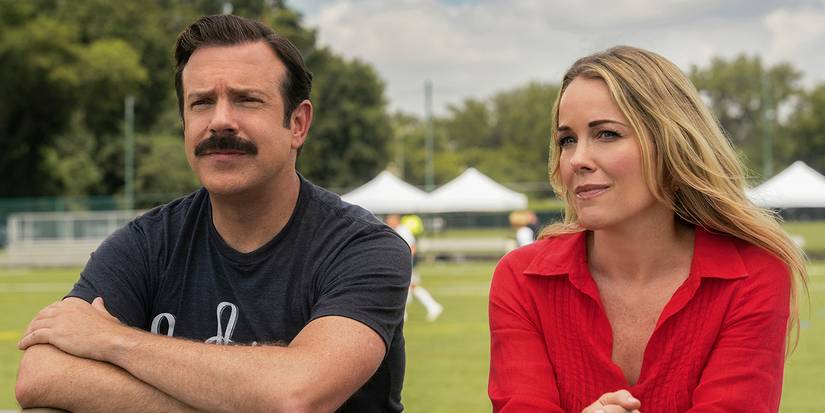
Ted Lasso has a premise that could have easily gotten annoying fast, but the show balances its relentless optimism with honest character drama. The story follows overly cheerful American football coach Ted Lasso (Jason Sudeikis), who is hired to manage struggling English soccer club AFC Richmond despite knowing practically nothing about the sport. What Ted also doesn’t know is that new club owner Rebecca Welton (Hannah Waddingham) hired him specifically to fail, since she wants to destroy the team her ex-husband loved most. In a surprising turn of events, though, Ted starts winning people over one by one, including veteran captain Roy Kent (Brett Goldstein), arrogant young star Jamie Tartt (Phil Dunster), and eventually Rebecca herself.
Before long, the audience stops caring about whether Richmond wins matches or not, because they are more interested in what this group of deeply flawed individuals can become with each other’s support. However, that only works because the series also shows Ted dealing with a collapsing marriage and increasingly severe panic attacks while all the other characters deal with their own battles. Everyone’s bad decisions and mistakes make their growth feel earned, and that emotional honesty is what the audience sticks around for. The football gives every season momentum, but the heart of the story always stays personal.
1 'Severance' (2022–Present)
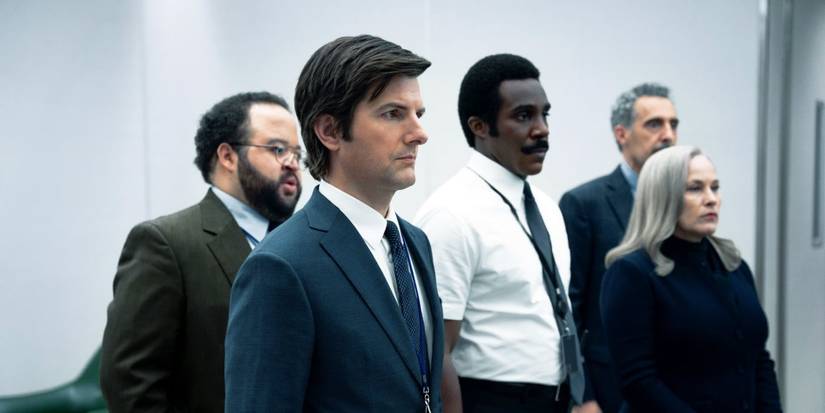
Severance is the literal manifestation of a corporate nightmare. The series follows Mark Scout (Adam Scott), an employee at the mysterious Lumon Industries who has undergone the severance procedure, which surgically divides his work memories from his personal ones. His “innie” only exists inside Lumon, while his “outtie” has no idea what happens during his time there. Mark accepts that arrangement because it gives him an escape from the grief of losing his wife, but things begin changing when new employee Helly R. (Britt Lower) arrives and immediately realizes how horrifying this situation is. What’s stranger is that Mark works in the Macrodata Refinement department alongside Helly, Irving (John Turturro), and Dylan (Zach Cherry), where they spend their days sorting mysterious numbers without knowing what any of them mean.
The company has a bunch of bizarre rules, and compliance is rewarded with strange things including melon bars, finger traps, music dance experiences, and the infamous waffle party. All of this makes it impossible for the audience to stop watching until they know exactly what the heck is going on at this organization. Every masterful episode of the sci-fi show reveals one new piece of Lumon’s world and changes the audience’s understanding of everything they thought they knew. The innies gradually begin questioning whether they are employees at all or simply people who have been created to work forever. That idea gives Severance much more weight than any other thriller. Few shows make fluorescent hallways, office parties, and corporate jargon feel this tense, and with time, the central mystery in Severance only gets better.
KioskNews shows a cleaned-up reading view extracted from the publisher’s page — the original always lives on their site, not ours.