Ghaziabad merchants unwilling to accept UPI from Oct 15 over new 0.4% MDR rule
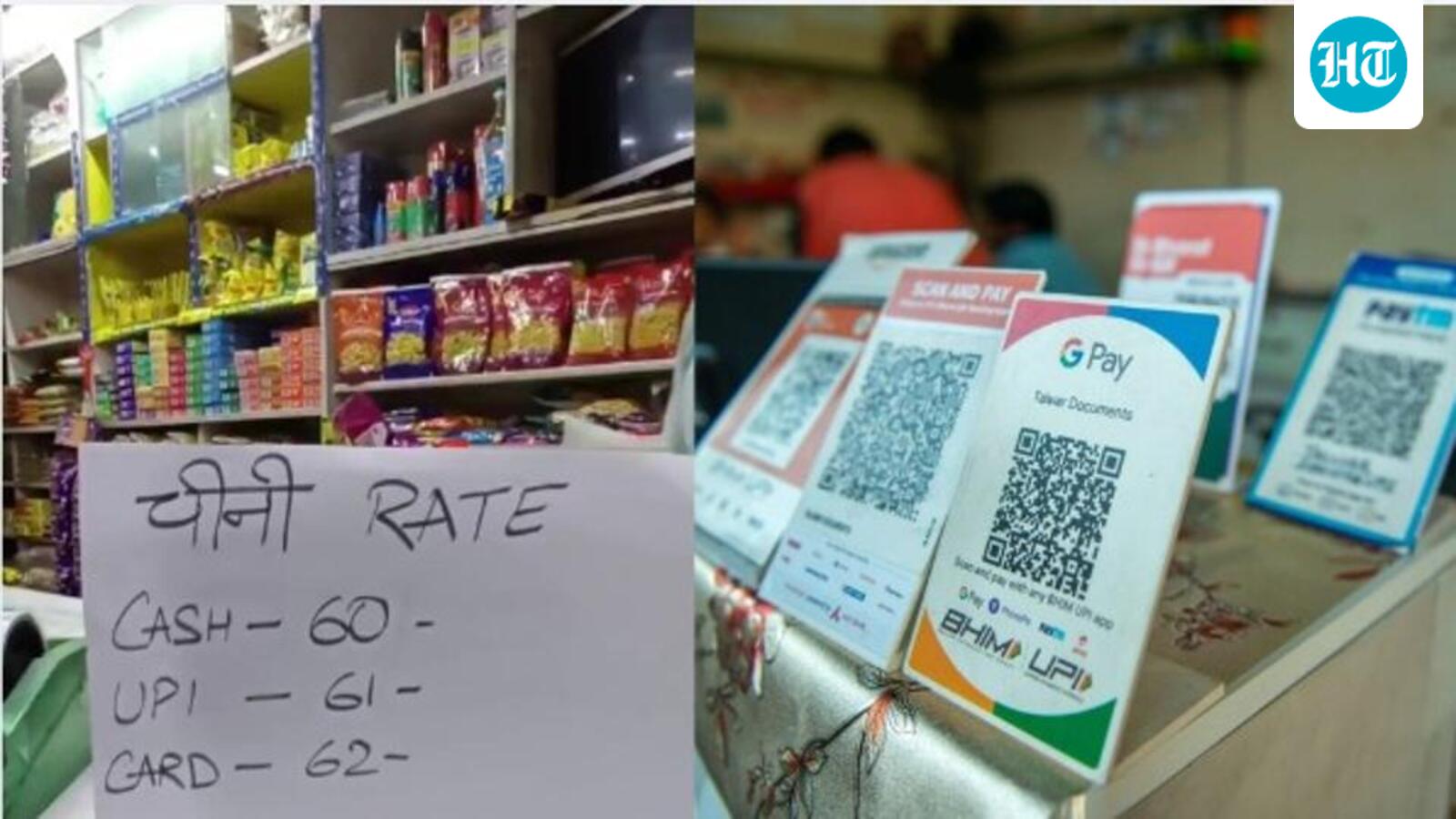
Days after the guidelines related to the 0.4% Merchant Discount Rate (MDR) on Unified Payments Interface (UPI) payments above ₹2,000 were issued, the traders and associations in Ghaziabad are concerned lot and contemplating action starting October 15.
Sanjay Bindal, a grocery shop owner in Vijay Nagar’s sector-9, has put up a poster at his shop that said that he will not accept UPI payments from customers starting October 15.
“I have put up a poster stating that I will not take payment from my customers through UPI from October 15. In such a case, paying cash will be the only option. Since we cannot charge the MDR amount from the customer, we will have to bear the cost. I am also a part of a traders’ association, and our Noida unit has sent a communication to the Union finance minister through the local administration,” Bindal, who is also state president of Rashtriya Vyapari Kalyan Sangh, said.
Also Read:What is Merchant Discount Rate and how MDR will be calculated after revised UPI charges
The members of the fuel pump association also raised concerned.
“The issue has been raised across the state, and MDR will affect the fuel stations. As of now, we have decided that we will not accept payment of over ₹2000 through UPI from October 15,” said Vipin Sharma, president of the Ghaziabad diesel-petrol dealer association.
Also Read:Fuel pump transactions, bill and insurance payments, and more: UPI FAQs as MDR kicks in
Rajnish Bansal, a trader from the city’s prominent Turab Nagar Market, said that the cost of MDR will be borne by the shop owner.
“The MDR will become a cost for us. To compensate for this, we will have to lower our discount or increase the cost. As a result of this, the traders are a worried lot, and many have put up posters that they will not accept UPI payments. We also want more cash flow in the market since we face competition from online trade. But this will be contradictory to the idea of a cashless economy,” Bansal added.
The National Payments Corporation of India (NPCI) announced on Tuesday that a 0.4% fee will be charged on UPI transactions to certain merchants when the transaction value exceeds ₹2,000. It also clarified that customers will not have to pay any fee for making UPI payments under the revised system.
As per the new rules, Person-to-Merchant (P2M) UPI payments above ₹2,000 will attract a 0.4% MDR. However, the charge will not exceed ₹300 for a single transaction.
MDR refers to the fee charged to merchants by banks and payment service providers for processing digital payments. The amount depends on factors such as the payment method, the type of merchant, the transaction value, and the agreement between the businesses involved. In a digital payment system, a customer pays a merchant electronically, while the merchant pays a small fee to the company or bank that processes the transaction.
KioskNews shows a cleaned-up reading view extracted from the publisher’s page — the original always lives on their site, not ours.